The Most Awkard Garden Items and How to Store Them – Guide
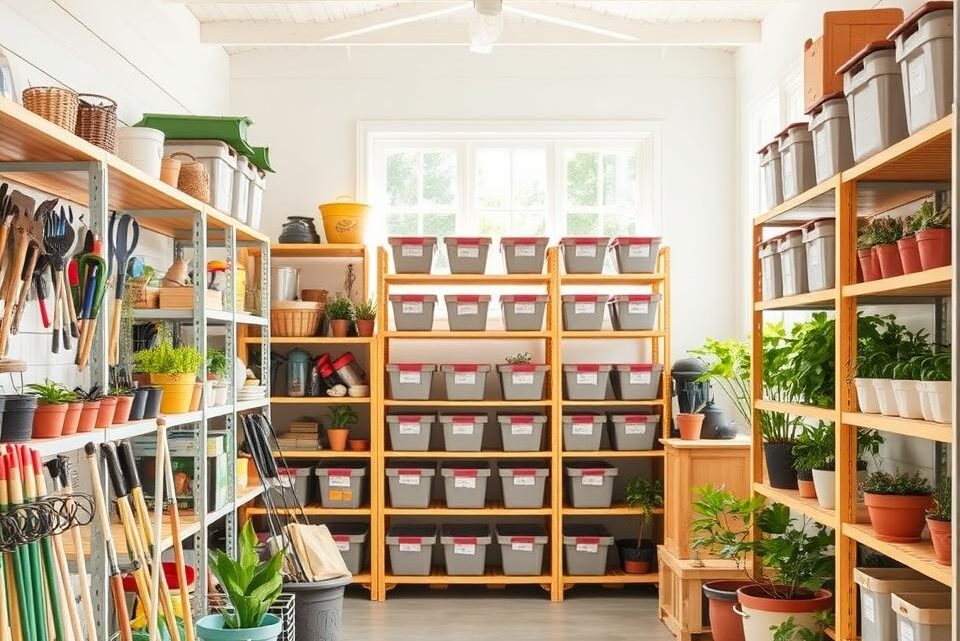
Many gardening enthusiasts across the UK face a common organisational challenge. It involves those bulky, oddly-shaped, or simply cumbersome belongings that refuse to fit into standard storage. These objects can turn a shed or garage into a cluttered mess, making it difficult to find what is needed.
This guide offers a clear path to reclaiming order. It explores practical, professional approaches for organising everything from long-handled implements to uniquely shaped equipment. Readers will discover methods to transform chaotic outdoor spaces into models of efficiency.
Solutions presented cater to all sizes of outdoor space, from compact city patios to larger suburban plots. The advice covers both do-it-yourself projects and purpose-built storage options. Implementing these strategies helps protect valuable investments in quality tools and boosts overall gardening productivity.
Inhaltsverzeichnis
Key Takeaways
- Addresses the common issue of storing bulky and awkwardly shaped outdoor equipment.
- Offers practical strategies suitable for sheds, garages, and various garden sizes.
- Explores a mix of DIY solutions and ready-made storage products.
- Aims to create a tidy, accessible, and efficient outdoor storage system.
- Helps protect your investment in gardening tools and enhances your gardening experience.
Introduction to Garden Storage Challenges
Effective organisation is a cornerstone of any successful outdoor area. Without it, even the most beautiful spaces can become difficult to manage. Tools and supplies left out can quickly spoil the view and create hazards.
Understanding the Need for Organised Garden Spaces
A well-organised space is not merely about tidiness. It is about creating a functional environment where every item has its place. This systematic approach saves considerable time and effort.
Seasonal changes dictate different needs. From spring planting to autumn clear-ups, having supplies ready is crucial. Proper storage protects these investments from damage and decay.
Impact on Gardening Efficiency and Aesthetics
Clutter directly impacts productivity. Time spent searching for a specific tool is time lost from actual gardening. An orderly system ensures that implements are always accessible.
Furthermore, the visual appeal of a neatly arranged space cannot be overstated. It enhances the overall enjoyment of your outdoor sanctuary. A clutter-free environment is more inviting and encourages regular use.
Ultimately, addressing storage challenges transforms a chaotic plot into a productive, beautiful retreat. It is a fundamental step towards a more enjoyable gardening experience.
The Most Awkward Garden Items and How to Store Them
A significant hurdle for many gardeners is the effective containment of bulky and irregular equipment. These objects often defy standard organisational systems, leading to frustration and wasted space.
Addressing this issue requires a two-step approach. First, one must correctly identify the problematic pieces. Second, it is crucial to recognise and avoid the typical errors made when stowing them away.
Identifying Unusual Tools and Supplies
Not all possessions in a garden are created equal. Some present unique challenges due to their form or function. Long-handled implements like rakes and spades are prime examples.
They tend to lean precariously and tangle easily. Garden hoses also fall into this category, often ending up in messy, inaccessible coils.
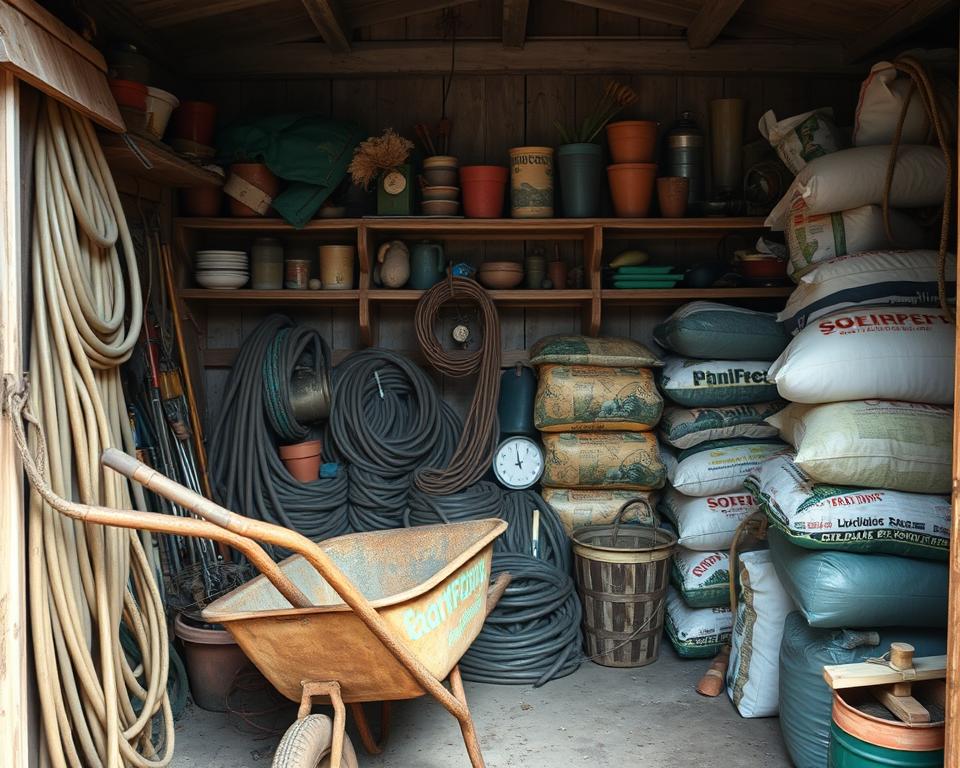
Oddly shaped things such as tomato cages and trellises resist neat stacking. A collection of terra cotta pots in various sizes can be equally troublesome. Even small supplies like spray bottles can create clutter if not managed properly.
Common Storage Mistakes in the Garden
Several frequent errors undermine storage efforts. A primary mistake is failing to separate tools by their type and size. This leads to inefficiency and can damage more delicate implements.
Another common error involves allowing frequently used supplies to become buried. Bags of compost or mulch often get hidden behind less essential items. This makes simple tasks needlessly difficult.
Small, vital objects like seed packets or twine frequently get lost in the chaos. This often results in unnecessary duplicate purchases. Seasonal equipment is another area where disorganisation thrives.
| Item Type | Common Challenge | Frequent Mistake | Initial Solution |
|---|---|---|---|
| Long-handled Tools | Tangling and falling over | Leaning in a corner | Wall-mounted racks |
| Garden Hoses | Kinking and deterioration | Piled on the ground | Reel or hanger |
| Terra Cotta Pots | Stacking instability | Keeping cracked pots | Nested by size |
| Liquid Supplies | Spills and difficult access | Unstable shelf placement | Contained caddy |
Expert DIY Storage Solutions for Garden Tools
Vertical space utilisation represents a game-changing strategy for tool organisation. DIY enthusiasts can create highly efficient systems that maximise available area. These approaches transform cluttered spaces into organised work zones.
Utilising Pegboards and Hooks
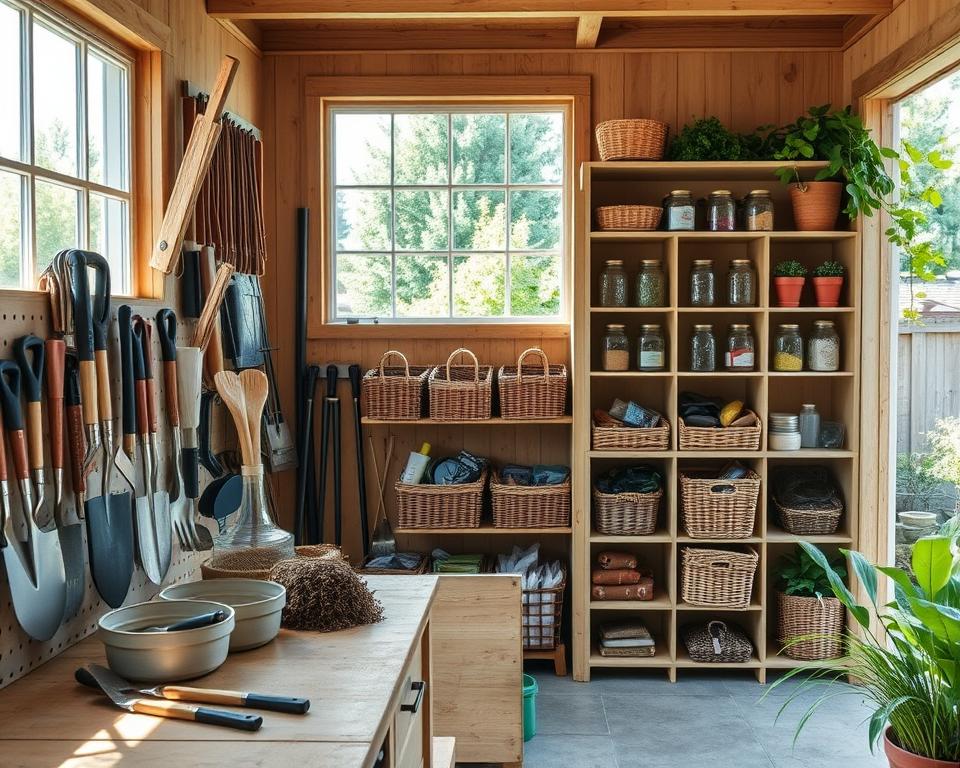
Pegboard systems offer exceptional versatility for hand tools storage. Mounting them on shed doors provides immediate access to frequently used implements. Proper hook selection ensures each tool has a secure home.
Straight hooks accommodate items with handle holes, while dual-hook configurations support trowels. Plier hooks securely hold pruners and shears. Strategic layout places smaller tools at the top and longer ones below.
Repurposing Everyday Items for Organisational Success
Creative repurposing turns ordinary objects into clever storage solutions. Kitchen hanging rods work excellently for spray bottles using S-hooks. Wire shelving with modified wires creates vertical slots for long-handled implements.
The Bucket Boss system converts standard buckets into portable organisers. Paper towel holders mounted on walls allow easy dispensing of string. Even old rakes can become unique hanging points for small tools.
Innovative Shed and Outdoor Storage Ideas
Choosing appropriate storage solutions can dramatically improve garden functionality. A well-planned shed serves as the cornerstone of efficient outdoor organisation.
Customising Sheds with Shelves and Hooks
Upright sheds measuring 4×6-foot or 4×4-foot offer superior accessibility compared to horizontal bin-style units. These structures accommodate bulky equipment like lawnmowers while housing smaller tools and seasonal accessories.
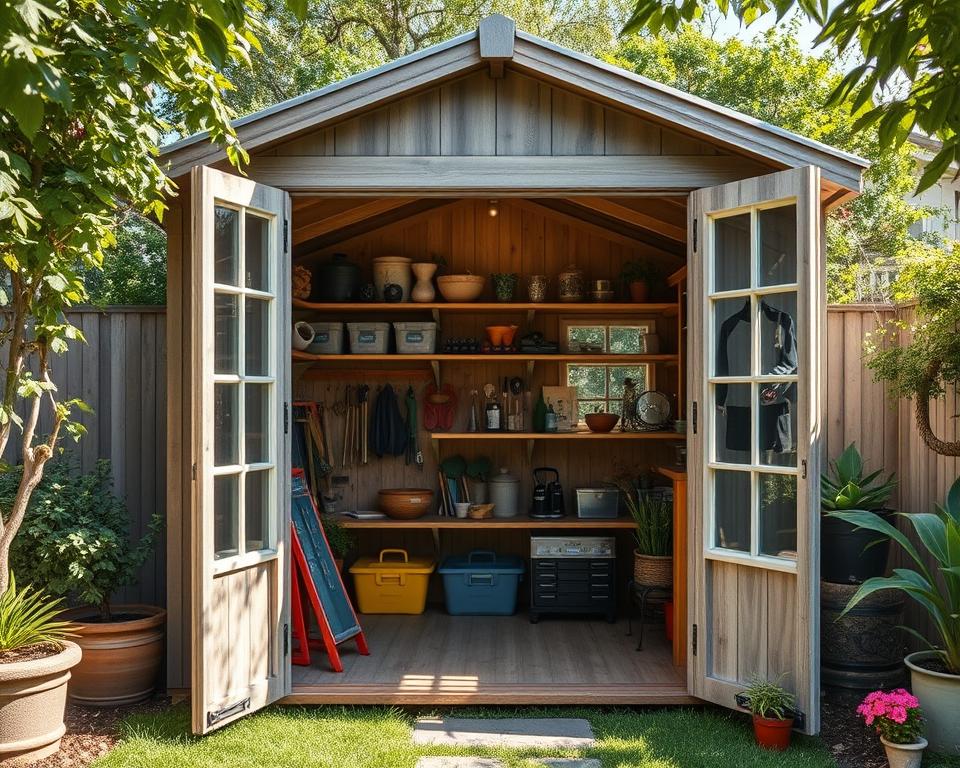
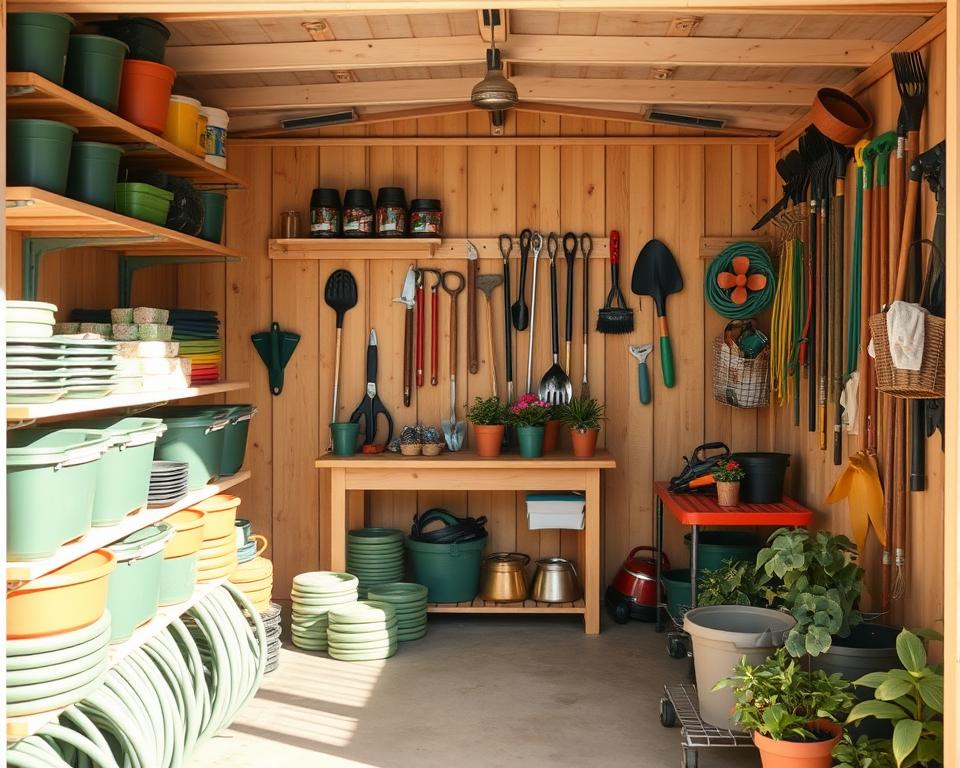
Interior customisation transforms basic sheds into highly efficient systems. Wall-mounted hooks provide secure hanging points for implements. Floating shelves create organised spaces for supplies like pot liners and plant food.
Advanced concepts include built-in countertops for planting preparation. Open closet configurations accommodate tall tools effectively. Proper weight distribution is crucial, with heavier items like soil bags positioned on lower shelves.
Using Purpose-Built Containers and Log Storage
Weatherproof storage boxes offer attractive alternatives to traditional sheds. Constructed from materials like all-weather wicker, these containers suit smaller spaces perfectly.
They accommodate outdoor cushions, children’s toys, and seasonal accessories. Many designs serve double duty as decorative garden features or additional seating.
Purpose-built log storage in corten steel or reclaimed timber adds rustic charm. These open-air designs keep firewood seasoned and dry while creating sculptural elements. Integration under existing benches maximises space utilisation effectively.
Maximising Small Spaces with Creative Organisational Systems
For those with compact outdoor areas, ingenuity becomes the most valuable tool. Effective organisation in limited square footage relies on clever multi-functional ideas and a strategic approach to vertical space.
Every nook offers potential. The goal is to create a system that feels spacious and uncluttered.
Optimising Corners and Narrow Spaces
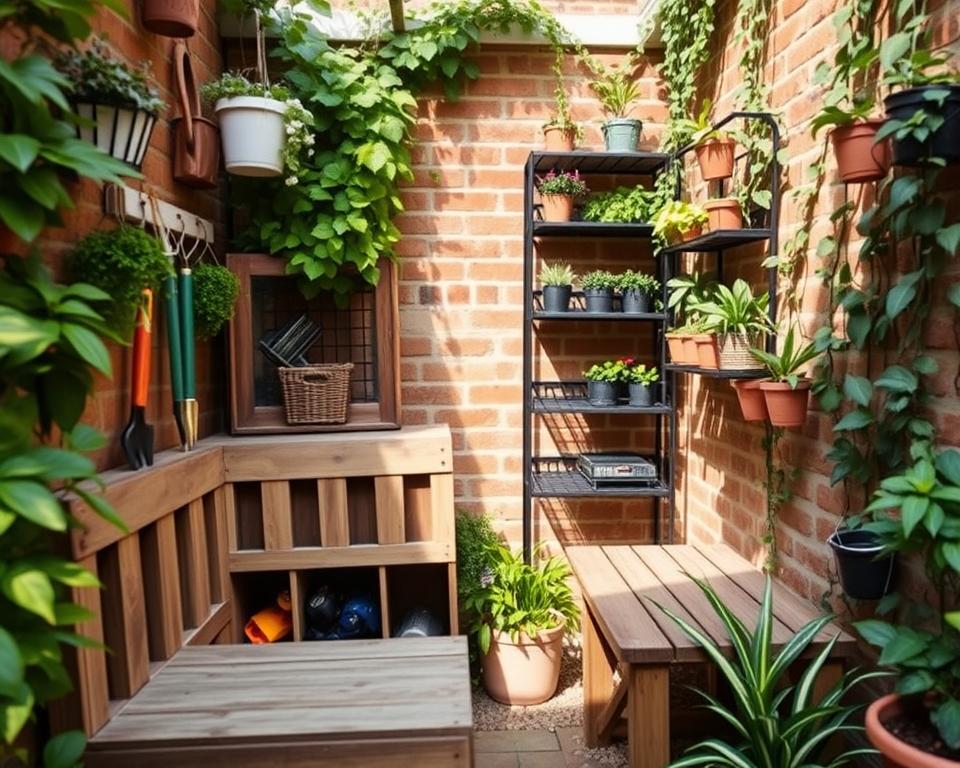
Corners are frequently underutilised in a garden shed or garage. Installing a dedicated corner shelving unit transforms this dead space into valuable storage for pots or supplies.
Narrow wall sections between doors or windows are perfect for vertical solutions. A tall, slim unit or a series of wall-mounted hooks can hold long-handled tools neatly. This approach keeps pathways clear and items accessible.
Integrating Kitchen Rods, Wire Shelves and Hidden Storage
Repurposing household items yields brilliant results. A simple kitchen tension rod mounted inside a shed door creates instant hanging storage for spray bottles.
Adding small clamp hooks to the rod keeps gardening gloves organised in pairs. This eliminates the common frustration of searching for a missing glove.
Wire shelving is another versatile option. With careful modification, it can hold tools upright by their handles, saving considerable floor space.
Hidden storage options are key for aesthetics. A sturdy bench with a lift-up seat conceals cushions or smaller tools. Nestable rattan boxes function as stylish side tables while hiding garden accessories.
Even an ordinary outdoor table can become a compact potting station. Hooks on the side hold essential tools, and bins tucked underneath store soil and fertiliser.
Practical Tips for Maintaining an Organised Garden
Establishing an organised system is only half the battle; the real key to success lies in consistent upkeep. A well-maintained storage area saves considerable time and effort during busy gardening seasons. It also protects your investment in quality tools.
Seasonal Cleaning and Decluttering Strategies
A thorough clear-out at the end of each season prevents clutter from accumulating. This involves removing everything from the shed or storage area for a deep clean.
All tools should be cleaned of mud and inspected for rust before being put away. This ensures they are ready for immediate use. Decluttering is essential; remove cracked pots and unused items.
Categorising equipment by size and function makes retrieval logical. Long-handled implements like rakes need vertical storage to prevent tangling. Seasonal rotation keeps current needs accessible.
Ensuring Long-Term Usability and Safety
Safety is a primary concern. Heavy items, like bags of soil, belong on lower shelves for stability. This reduces the risk of injury if something falls.
Keeping tool blades and working ends elevated off the ground prevents damage and rust. A good system gives each item its own place with adequate space. This is the best way to ensure everything stays easy to find and access for years to come.
| Task Frequency | Primary Action | Benefit |
|---|---|---|
| End of Season | Full tool cleaning and shed declutter | Prevents rust and clutter buildup |
| Seasonal Rotation | Swap accessible and deep storage items | Optimises workflow for current tasks |
| Ongoing | Return tools to designated places after use | Maintains system integrity and saves time |
Conclusion
A well-organised outdoor space elevates the entire gardening experience. When every tool has its place, gardeners can focus on planting and nurturing.
Implementing the right storage system transforms a chaotic shed or garage corner into a model of efficiency. It protects valuable tools from damage, saving both time and money.
From simple DIY hooks for long-handled implements to customised shelving for pots and supplies, the best way forward is clear. A tidy garden becomes an inviting extension of the home, a place to unwind and enjoy every season.
FAQ
What is the best way to store long-handled tools like rakes and shovels?
Storing long-handled tools upright with their handles down is highly effective. Wall-mounted racks or hooks inside a shed or garage prevent them from leaning and taking up excessive floor space. This method also protects the tools from damage.
How can I create more storage space in a small garden shed?
Utilising vertical space is key. Installing shelves, pegboards, and hooks on the walls maximises storage capacity. Hanging items like hand tools and securing long-handled tools on walls frees up valuable floor space for larger items.
What are some clever storage ideas for awkwardly shaped pots?
Stacking pots of the same type together saves considerable room. For pots that cannot be stacked, using a sturdy shelving unit or a tiered plant stand keeps them organised and accessible. Storing them upside down prevents soil and water accumulation.
How should I organise my gardening supplies for easy access?
Grouping similar items together streamlines gardening tasks. Keep all hand tools in one area, potting soil and fertilisers in another, and seeds and plant markers together. Clear containers or labelled bins make it simple to find what you need quickly.
What is a good DIY solution for storing small hand tools?
A pegboard system offers excellent flexibility. By arranging hooks and small shelves on a pegboard, you can create a custom organiser for trowels, pruners, and gloves. This keeps them visible and within easy reach.
Can everyday household items be repurposed for garden storage?
A> Absolutely. An old kitchen cutlery tray is perfect for organising small items like plant labels and twine. Hanging shoe organisers on a shed door provide pockets for seed packets, gloves, and other lightweight supplies.
How do I protect my metal garden tools from rust?
Storing them in a dry place is essential. After cleaning tools, a light coating of oil helps prevent rust. Ensure they are completely dry before putting them away. Proper storage extends their lifespan significantly.