
Build a stream yourself: A DIY guide for your garden pond

Transforming your outdoor space into a tranquil retreat can be achieved by adding a stream to your garden. The soothing sound of gently flowing water and the sight of local wildlife visiting to drink can be incredibly therapeutic.
Building a DIY garden stream may seem daunting, but with the right planning and basic tools, it’s a feasible project for any homeowner. Even a small backyard can benefit from the beauty of running water.
This comprehensive guide will walk you through the process, from initial planning to final touches, helping you create a peaceful oasis in your garden.
Inhaltsverzeichnis
Key Takeaways
- Learn how to plan and execute a DIY garden stream project.
- Discover the benefits of having a stream in your garden for you and local wildlife.
- Explore different design options for garden streams to suit your space.
- Understand the essential tools and materials needed for the project.
- Find solutions to common challenges when building a garden stream.
The Benefits of Adding a Stream to Your Garden
A well-designed stream can transform your garden into a tranquil oasis. The addition of a stream brings numerous benefits, enhancing the overall appeal and functionality of your outdoor space.
Creating a Relaxing Atmosphere
A stream in your garden creates a soothing atmosphere, with the gentle sound of flowing water helping to mask background noise and promote relaxation.
Attracting Wildlife to Your Garden
A garden stream can attract a variety of wildlife, including birds, insects, and amphibians, adding to the biodiversity of your garden and creating a dynamic ecosystem.
Adding Visual Interest to Your Landscape
The mix of rocks, plants, and moving water adds layers of visual appeal to your garden design. Here are some ways a stream enhances your landscape:
- A stream creates natural focal points and sight lines that guide the eye through your garden landscape.
- The combination of water, stone, and plants creates textural contrast that adds depth and dimension to your garden design.
- Reflective water surfaces change throughout the day, capturing sky colours and creating dynamic light effects in your garden.
| Benefits of a Stream | Description |
|---|---|
| Relaxing Atmosphere | The sound of flowing water creates a soothing ambiance. |
| Wildlife Attraction | A stream attracts various forms of wildlife, enhancing biodiversity. |
| Visual Interest | The combination of water, rocks, and plants adds depth and visual appeal. |
Planning Your Garden Stream Project
When building a garden stream, careful planning is essential to achieve a natural and visually appealing water feature. This involves considering several key factors to ensure your stream complements your garden’s overall aesthetic.
Assessing Your Available Space
You need to evaluate the available space in your garden to determine the feasible size and layout of your stream. Consider the area’s topography and how the stream will fit into your existing landscape.
Determining the Ideal Location
The location of your stream is crucial. It should be positioned in a way that creates a natural flow and is visually appealing. Consider the surrounding landscape and how the stream will interact with other garden features.
Designing Your Stream’s Path and Flow
Designing the path and flow of your stream is critical. A natural, meandering path with varying widths and gentle drops or shallow pools will create a more interesting and dynamic water feature. Aim for a series of gentle curves rather than straight lines to mimic natural streams.
| Design Element | Purpose | Benefits |
|---|---|---|
| Gentle Curves | Create a natural appearance | Mimics natural streams, visually appealing |
| Varying Widths | Control water flow | Creates faster flow in narrower sections and calmer pools in wider areas |
| Shallow Pools and Gentle Drops | Enhance visual interest and sound | Creates a more dynamic water feature, anchors rocks and plants |

By carefully planning your garden stream project, you can create a beautiful and functional water feature that enhances your outdoor space. Consider sketching your design on paper, including major rocks, waterfalls, and planting areas, to visualize the final result.
Understanding Stream Design Options
There are multiple stream design options available, each with its unique benefits. When planning your garden feature, it’s essential to consider the different types to choose the one that best suits your space and preferences.
Continuous Flowing Streams
A continuous flowing stream creates a soothing, constant movement of water. This design is ideal for larger gardens where you can enjoy the uninterrupted flow.
Stepped Waterfalls and Pools
Stepped waterfalls and pools offer a more dynamic visual effect. The cascading water creates a sense of movement, while the pools provide resting places for water features.
Pondless Stream Options
 stream options are perfect for smaller gardens or where safety is a concern. They feature a hidden underground reservoir, eliminating the need for a visible pond or pool.
Essential Tools and Materials for Building a Stream Yourself
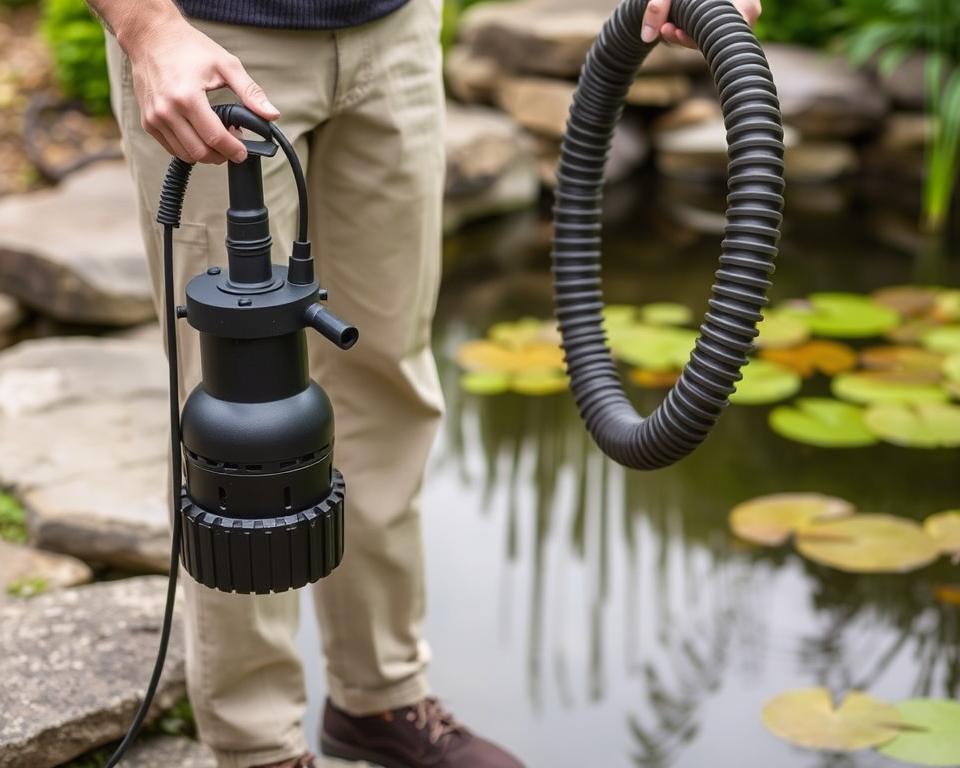
Before you start constructing your stream, it’s essential to gather the necessary tools and materials. Building a stream yourself can be a rewarding DIY project, but it requires careful planning and the right equipment to ensure a successful outcome.
Required Tools for Construction
To construct your garden stream, you’ll need a variety of tools. These may include a shovel for digging, a spirit level to ensure the stream bed is properly aligned, and a spade for removing soil and edging.
Liner and Underlay Materials
A durable liner is crucial for preventing leaks in your stream. You’ll also need an underlay to protect the liner from sharp stones and roots. Choose materials that are specifically designed for pond and stream construction to ensure longevity.
Pumps and Plumbing Components
A submersible pump is necessary to circulate the water in your stream. Select a pump with a sufficient flow rate—typically 2,000-3,000 litres per hour for small streams. You’ll also need a flexible hose (usually 20-25mm diameter) to return stream water from the pump to the top of the stream. Consider a pump with an integrated filtration system to keep the water clear.
Choosing the Right Pump for Your Garden Stream

When it comes to building a garden stream, one of the most critical decisions you’ll make is choosing the right pump. Choosing the right pump at the start saves time and hassle later — and ensures your water feature runs smoothly year-round.
Understanding Flow Rate and Head Height
The flow rate and head height are crucial factors in selecting a pump. The flow rate determines the volume of water that is circulated, while the head height affects the pump’s ability to push water upwards.
Filtration Options for Clear Water
A good filtration system is essential for maintaining clear water in your garden stream. Look for pumps with integrated filtration or consider separate filtration units.
Energy Efficiency Considerations
Modern energy-efficient pumps can save up to 50% on electricity costs compared to older models. Consider pumps with an ‘A’ energy rating and low wattage relative to their flow rate.
- Consider solar-powered pump options for smaller streams, eliminating running costs entirely while being environmentally friendly.
- Variable speed pumps allow you to adjust flow rates according to seasonal needs, using less energy during periods when less flow is desired.
- Calculate the annual running cost of your pump before purchase by multiplying its wattage by your electricity cost per kWh and the hours of operation.
Step-by-Step: Marking and Digging Your Stream Bed
Before you can enjoy the soothing sounds of your garden stream, you need to dig its bed. This process involves careful planning and precise execution to create a natural-looking stream that enhances your garden’s beauty.
Creating a Natural-Looking Stream Path
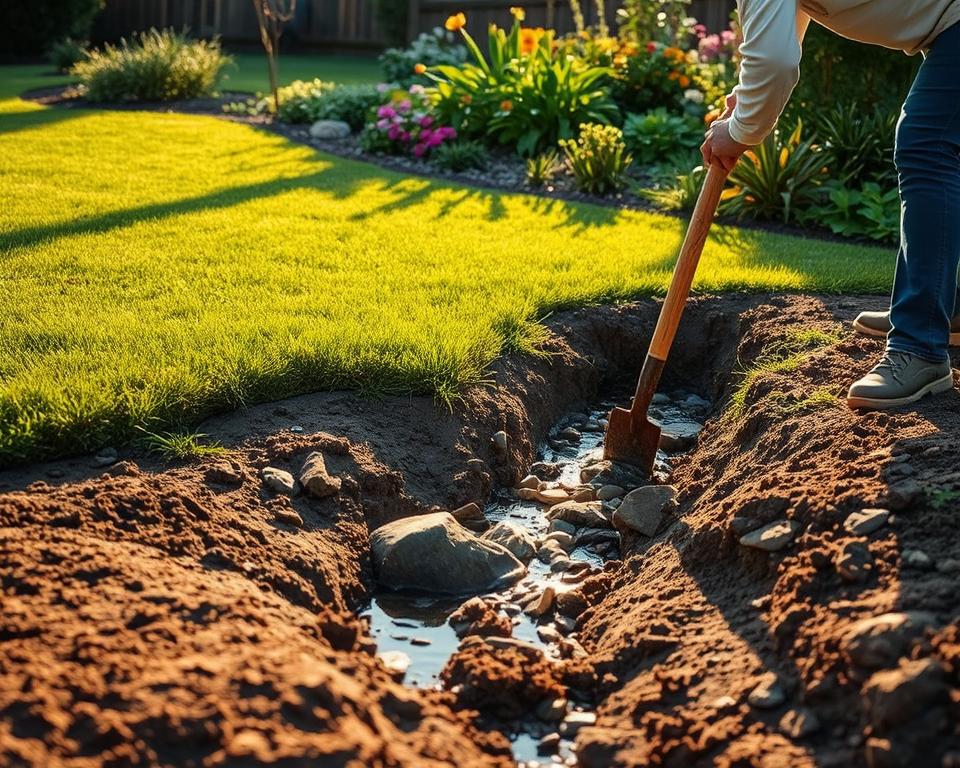
To create a natural-looking stream path, vary the width and depth of the streambed. Use your spade to dig the stream bed, making sure it’s not uniform. The top sections can be shallower, deepening gradually toward the bottom. This variation will help create a more natural appearance.
Establishing the Proper Slope and Gradient
When digging your stream bed, it’s essential to establish the proper slope and gradient. Dig the streambed approximately 20-30cm deep for most garden streams, with deeper sections (40-50cm) where you want to create pools. This will help achieve a gentle flow of water.
Digging Techniques for Different Stream Designs
Different stream designs require different digging techniques. For a continuous flowing stream, maintain a consistent slope. For stepped waterfall designs, create level shelves with distinct vertical drops. Shape the sides of your streambed with sloping edges to prevent liner slippage and create a natural profile. Remove any sharp stones, roots, or debris from the excavated streambed to prevent damage to the liner.
Installing the Liner and Plumbing System
To bring your garden stream to life, you need to carefully install the liner and plumbing system. This crucial step ensures that your stream functions properly and remains leak-free.
Laying the Protective Underlay
Begin by laying a protective underlay in the stream bed. This layer protects the liner from sharp stones and roots, ensuring its longevity. Make sure to cover the entire stream bed and extend the underlay slightly beyond the edges.
Fitting and Securing the Pond Liner
Next, place the pond liner in the stream bed, ensuring it fits snugly and evenly. Secure the liner with stones or sandbags, and carefully trim any excess liner material. It’s essential to handle the liner gently to avoid punctures.
Setting Up the Pump and Pipe System
Position your pump in the deepest part of your pond or reservoir, ideally within a pump cage or on a flat stone to prevent clogging. Run flexible hose from the pump to the stream source, checking for kinks or sharp bends that could restrict water flow. Consider installing a valve near the stream source for flow adjustment.
| Component | Purpose | Installation Tip |
|---|---|---|
| Pump | Circulates water | Place in deepest part of pond |
| Flexible Hose | Transports water to stream | Avoid kinks and sharp bends |
| Valve | Adjusts water flow | Install near stream source |
Run the hose from your pond water pump up to the top tool, hiding it under the liner and checking for kinks. Ensure the flow of water is consistent before covering the hose and liner.
Build a Stream Yourself: Constructing Waterfalls and Pools
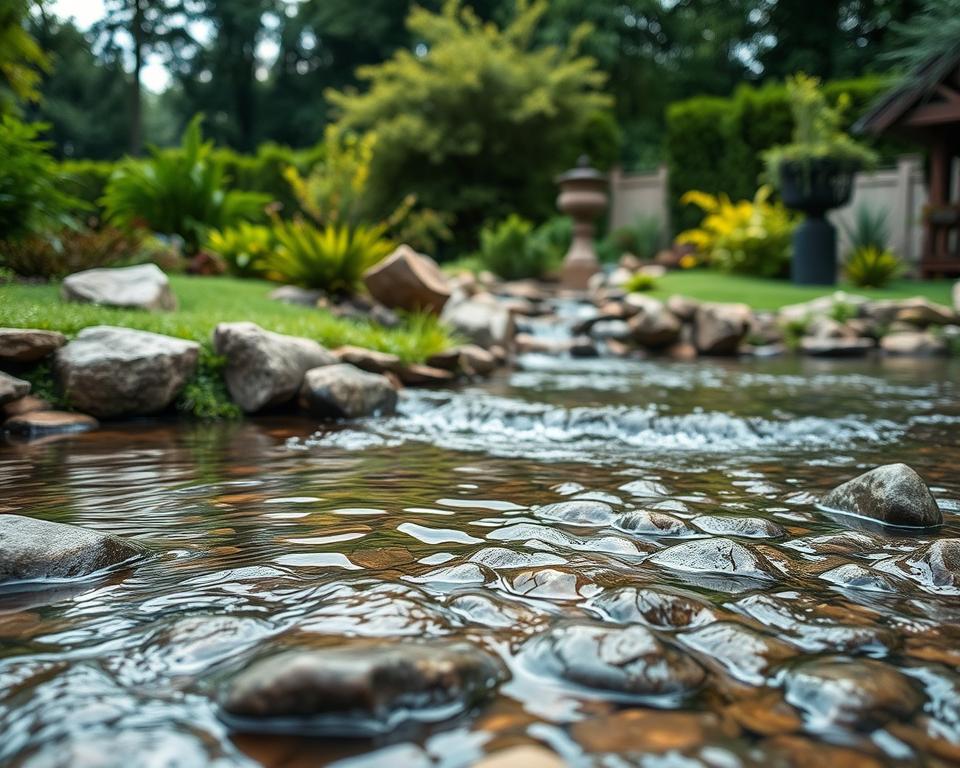
Now that you’ve planned your stream, it’s time to construct the waterfalls and pools that will bring it to life. This stage is crucial in creating a natural and visually appealing water feature.
Creating Natural-Looking Waterfall Steps
To create natural-looking waterfall steps, use rocks and stones of varying sizes. Place them in a way that allows water to flow smoothly from one level to the next. The key is to create a gentle slope that mimics nature.
Building Small Pools Along the Stream
Small pools along your stream add variety and create habitats for wildlife. Dig these pools slightly deeper than the stream bed and line them with the same underlay and liner as your stream.
Using Expanding Foam to Direct Water Flow
Instead of using concrete, which can reduce water volume and be difficult to adjust, use expanding pond foam to secure rocks and create natural-looking contours. Apply black expanding pond foam between and beneath rocks to seal gaps and prevent water from finding unwanted paths. Use it sparingly and shape it to create natural-looking contours. This helps direct the water’s flow and holds stones firmly in place.
| Feature | Purpose | Benefits |
|---|---|---|
| Expanding Pond Foam | Secures rocks and directs water flow | Creates natural contours, prevents leaks |
| Waterfall Steps | Creates a multi-level water feature | Enhances visual appeal, creates soothing sounds |
| Small Pools | Provides habitat for wildlife | Increases biodiversity, adds visual interest |

Adding Rocks and Decorative Elements
To give your garden stream a more authentic look, consider incorporating various rocks and natural elements. This step is crucial in enhancing the overall aesthetic of your garden stream.
Feature Stones and Their Placement
Selecting and positioning large feature stones can significantly impact the visual appeal of your stream. Choose stones that complement the surrounding landscape and place them in a way that appears natural.
Gravel and Small Stones for a Natural Finish
Using gravel and small stones around your stream can help achieve a natural appearance. You can cover the excess liner and soil with small stones, such as ‘gold light’ gravel, to create a seamless transition between the stream and its surroundings.

Incorporating Driftwood and Other Elements
Decorate the area around your stream with driftwood, logs, slate, granite, and beach stones to create a unique and inviting atmosphere. Consider incorporating weathered driftwood or logs partially extending into the stream to enhance water movement.
| Decorative Element | Purpose |
|---|---|
| Large Feature Stones | Create visual impact and anchor the stream |
| Gravel and Small Stones | Blend the stream with its surroundings |
| Driftwood and Logs | Add natural obstacles and enhance water movement |
Planting Around Your Garden Stream
Now that your garden stream is built, planting the surrounding area can elevate its natural charm. Planting around your stream not only enhances its visual appeal but also contributes to a healthy ecosystem.
Choosing the right plants is crucial for creating a balanced and thriving environment.
Best Plants for Stream Edges
For the edges of your stream, consider plants that thrive in moist conditions. Marginal plants like iris and rushes are ideal as they help stabilize the soil and provide habitat for wildlife.
Aquatic Plants for In-Stream Planting
Aquatic plants such as water lilies and oxygenators play a vital role in maintaining water quality and clarity. They help in controlling algae growth and provide shade, which can reduce the growth of unwanted aquatic life.
Creating a Natural Ecosystem
To create a self-sustaining ecosystem, aim for a balance of different plant types—marginal, floating, and submerged. Incorporate plants that flower at different times to provide continuous interest and resources for pollinators. Allow beneficial insects and amphibians to colonize naturally, and consider adding small fish to deeper pool sections after the ecosystem has established.
Some key tips for planting around your garden stream include:
- Aim for a diverse range of plant species to create a balanced ecosystem.
- Incorporate plants that provide continuous interest throughout the growing season.
- Allow natural colonization of beneficial insects and amphibians.
By following these guidelines, you can create a beautiful and thriving garden stream that enhances your outdoor space.

Testing and Troubleshooting Your DIY Stream
Your new garden stream requires some fine-tuning to look its best. After completing the installation, it’s crucial to test the system to ensure it’s functioning as expected.

To begin, inspect your stream for any signs of leaks or water loss. Check the liner and plumbing connections for any damage or misalignments.
Checking for Leaks and Water Loss
Inspect the stream’s liner and plumbing connections for any damage or misalignments. To prevent water loss, ensure that all connections are secure and the liner is properly seated.
Adjusting Water Flow and Distribution
To achieve a natural stream flow, you may need to adjust the pump settings or reposition rocks and other decorative elements. Check the water flow rate and adjust as necessary to maintain a smooth, consistent flow.
| Issue | Solution |
|---|---|
| Green water | Use UV clarifiers, beneficial bacteria treatments, and increase plant coverage |
| Inadequate water flow | Check pump intake blockages, clear debris, or upgrade the pump |
| Splashing or water loss | Adjust rock positions at waterfall points |
Solving Common Stream Problems
Some common issues you may encounter include green water, inadequate flow, or uneven distribution. Refer to the table above for troubleshooting tips.
Regular maintenance, such as cleaning the pump and removing debris, will help prevent many of these issues. By following these guidelines, you can enjoy a beautiful and functional garden stream.
Maintaining Your Garden Stream Throughout the Seasons
Maintaining your garden stream is a year-round task that requires attention to different aspects of the system. To keep your stream in good condition, you’ll need to perform regular cleaning and maintenance tasks.
Regular Cleaning and Debris Removal
Regularly removing debris and cleaning the stream is essential to prevent clogging and maintain water quality. You’ll need to check the pump and plumbing system regularly to ensure they’re working efficiently.
Seasonal Maintenance Requirements
Different seasons bring different maintenance needs. For example, during autumn, you’ll need to remove fallen leaves and debris from the stream and surrounding areas.
| Season | Maintenance Task |
|---|---|
| Spring | Check and clean the pump and plumbing system |
| Autumn | Remove fallen leaves and debris from the stream |
| Winter | Consider installing a de-icer or draining the pump and plumbing system |
Winterising Your Stream System
When winter approaches, you’ll need to decide whether to keep your stream running or shut it down. If you live in an area prone to freezing temperatures, it’s essential to take steps to protect your pond and stream system.
You can either install a small floating de-icer in deeper pool areas or completely drain the pump and plumbing system and store them in a frost-free location. Additionally, trim back marginal plants and remove any dead or decaying plant material to maintain water quality.

Conclusion
As you complete your garden stream, you’ll enjoy a tranquil retreat that also supports biodiversity. Building a stream yourself is a fulfilling DIY project that enhances your garden’s aesthetic appeal and creates a habitat for local wildlife.
With minimal maintenance required, your water feature will continue to evolve, becoming a natural part of your garden landscape. The skills you’ve developed can be applied to future projects, potentially inspiring more ambitious water features in your backyard.
FAQ
What size pump do I need for my garden stream?
The size of the pump required depends on the length and depth of your stream, as well as the desired flow rate. A general rule of thumb is to choose a pump that can circulate the total volume of water in your stream every hour.
How do I prevent leaks in my stream liner?
To prevent leaks, ensure the liner is properly sized for your stream, and use a protective underlay to prevent punctures. Inspect the liner regularly for damage and repair any tears or holes promptly.
What type of plants are suitable for stream edges?
Plants that thrive in moist environments, such as irises, rushes, and sedges, are ideal for stream edges. These plants help stabilise the soil and create a natural ecosystem.
How do I maintain clear water in my stream?
Regularly clean the stream and remove debris, and consider installing a filtration system to keep the water clear. Regular water testing can also help identify any issues before they become major problems.
Can I install a stream in a shaded area?
Yes, you can install a stream in a shaded area, but it may require more maintenance to prevent algae growth. Choose plants that thrive in shade, and consider using a UV filter to control algae.
How do I create a natural-looking stream path?
To create a natural-looking stream path, use a combination of large rocks, gravel, and sand to create a meandering course. Avoid straight lines and sharp turns, and try to mimic the natural contours of the surrounding landscape.
What are the benefits of a pondless stream?
A pondless stream is a great option for small gardens or areas with limited space. It also reduces the risk of water accumulation and associated safety hazards.
How often should I clean my stream?
Regular cleaning is essential to maintain the health and appearance of your stream. Remove debris and sediment regularly, and perform more thorough cleaning tasks seasonally.

