Build Your Own Garden Spring Stone – Ideas with Boulder, Pond, Lighting, Spheres & More
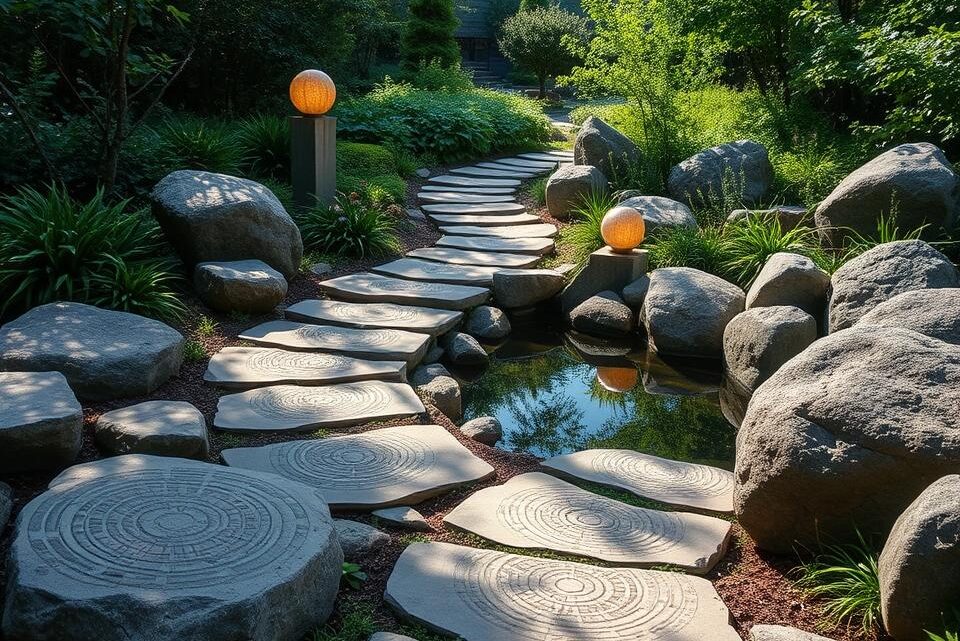
Creating personalised stepping stones for your garden can be a rewarding DIY project that adds unique, handcrafted elements to your outdoor space.
By making your own stepping stones, you can transform ordinary garden paths into artistic statements that reflect your personal style and creativity.
Not only is this project cost-effective compared to purchasing pre-made options, but it also allows you to create something truly unique.
The versatility of garden stones means they can be used as practical pathway solutions or decorative focal points, incorporating various materials like boulders, water features, and illuminated designs.
Inhaltsverzeichnis
Key Takeaways
- Craft personalised stepping stones to enhance your garden’s aesthetic.
- Transform garden paths into artistic statements with unique designs.
- Utilise various materials, such as boulders and illuminated features, for diverse designs.
- Enjoy a cost-effective DIY project that offers creative satisfaction.
- Explore different design possibilities, including natural and geometric styles.
Getting Started with Garden Stepping Stones
DIY garden stepping stones offer a unique opportunity to combine functionality with artistic expression in your garden design. By creating your own stepping stones, you can add a personal touch to your outdoor space while also providing a practical pathway for visitors.
Benefits of DIY Garden Stones
Creating your own garden stones can be a cost-effective and therapeutic project. It allows for personalisation options and can be a fun, hands-on activity. The process of making garden stepping stones can be adapted for individual crafters or as a group activity for families or garden clubs.
Planning Your Garden Stone Project
Before you begin, consider the placement, size, and shape of your stepping stones. Measure and map out your garden area to determine the number and size of stones needed. Think about how the stones will integrate with existing garden elements and the overall style of your garden.
Types of Garden Stones You Can Create
You can create various types of garden stones, from simple concrete rounds to more elaborate designs incorporating decorative elements. The choice depends on your garden’s style, climate conditions, and the amount of foot traffic the stones will need to withstand.
| Type of Stone | Description | Suitability |
|---|---|---|
| Simple Concrete | Basic concrete design | Most gardens |
| Decorative Concrete | Concrete with added decorations | Gardens with a decorative theme |
| Natural Stone | Using natural stones or boulders | Rustic or natural gardens |
Essential Materials and Tools
Gathering the essential supplies is the first step in making your own garden stepping stones. To create durable and visually appealing stones, you’ll need the right materials and tools.
Basic Supplies for Concrete Stones
For concrete stepping stones, you’ll need a concrete mix, sand, cement, water, buckets, trowels, and measuring cups. The quality of your concrete mix is crucial for withstanding various weather conditions.
Decorative Elements and Embellishments
You can embellish your stones with various decorative items such as sea glass, broken tiles, pebbles, shells, and garden debris. These pieces add a personal touch to your stepping stones.
Mould Options and Alternatives
Choosing the right mold is vital for the shape and design of your stepping stones. You can use a commercial concrete mold or repurpose household items like tin pie molds or plant saucers. Ensure the surface of your mold is prepared with a release agent like cooking oil or petroleum jelly.
How to Build Your Own Garden Spring Stone
To build your own garden spring stone, you’ll need to start with a well-prepared work area. This initial step is crucial for a successful project.
Preparing Your Work Area
Choose a work area that is preferably outdoors and can accommodate your project. Use a large drop cloth to define the work space and contain debris. This will help keep your workspace organised and make cleanup easier.
Mixing and Pouring the Concrete
Mix the concrete according to the instructions provided, ensuring you achieve the right consistency. Pour the mixed concrete into your mold, distributing it evenly. Make sure the concrete is reasonably thick to withstand foot traffic.
Adding Decorative Elements
Add decorative elements to the wet concrete quickly, as you have a limited window before it begins to set. Use a gentle pressing motion to ensure they are fully embedded.
Curing and Finishing Your Stones
Let the stones set and cure for 24-48 hours. Occasionally spray with water to prevent too-rapid drying. Once cured, you can remove the stones from the mold and apply a sealant to protect them from the elements.
Creative Design Ideas for Garden Stones
Garden stones offer a canvas for creativity, allowing you to add a personal touch to your outdoor space. You can draw inspiration from various sources, including nature, architecture, and art movements, to create unique and captivating designs.
Boulder and Natural Stone Designs
You can create boulder-inspired designs that mimic natural stone formations by using techniques such as texturing concrete and applying earth-toned pigments. This approach gives your garden stones a realistic rock appearance, blending seamlessly with the surrounding landscape.

Water Features and Pond-Themed Stones
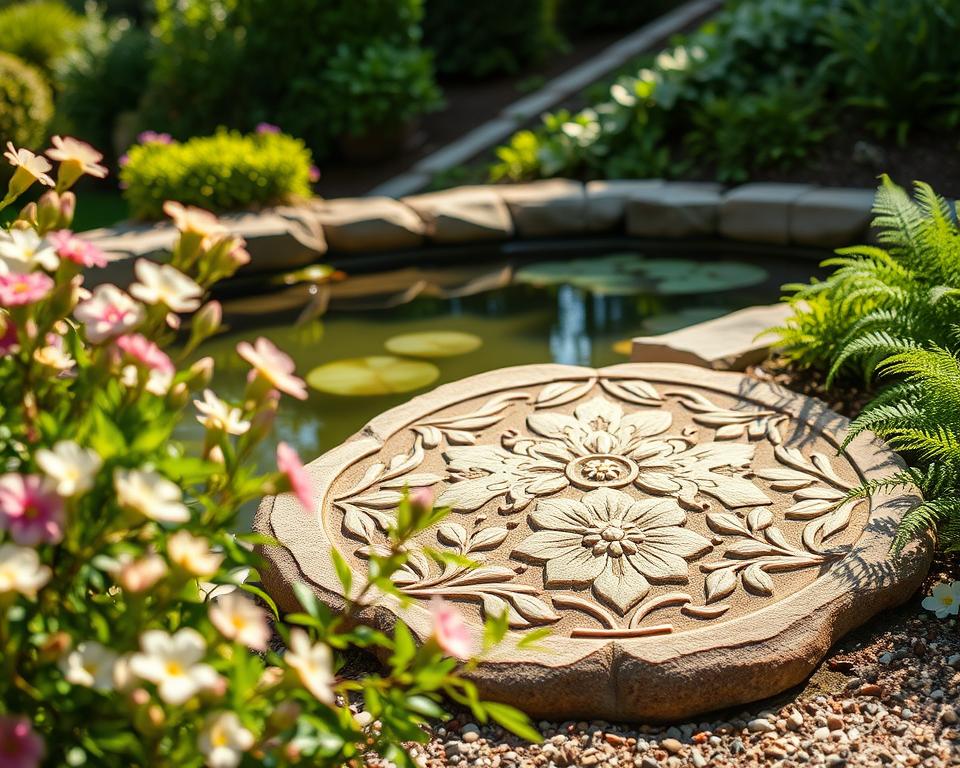
Incorporating water-themed elements into your stepping stones can add a soothing ambiance to your garden. You can achieve this by embedding glass pieces to create the illusion of water, or using shell patterns and motifs of fish or aquatic plants.
Illuminated Stepping Stones with Lighting
To create illuminated stepping stones, you can use embedded solar lights, glow-in-the-dark aggregates, or reflective materials that catch garden lighting at night. This not only enhances the visual appeal of your garden but also improves safety by illuminating pathways.
Spheres and Geometric Patterns
Crafting perfectly shaped spheres and geometric patterns in concrete can be achieved using specialized molds and tools. These designs can add a modern and sleek touch to your garden, creating a visually appealing pathway.
When designing your garden stones, consider the overall aesthetic you want to achieve and the atmosphere you wish to create. Whether you prefer a playful, vibrant look or a serene, natural ambiance, your garden stones can be tailored to suit your taste.
Conclusion
The art of making garden stepping stones is a journey that combines creativity with functionality, resulting in a beautiful and unique garden feature. By following the steps outlined in this article, you can create your own DIY garden stepping stones that enhance your outdoor space and reflect your personal style.
You can adapt the process of making garden stepping stones to suit your skill level, time constraints, and design preferences. This flexibility makes it an accessible project for anyone looking to add a personal touch to their garden.
Involving children and family members in the creative process can make it an educational and bonding activity, resulting in lasting garden features that everyone can enjoy. Moreover, garden stepping stones provide practical benefits, including defined pathways and reduced soil compaction.
To maintain your garden stones over time, consider seasonal cleaning and repositioning as needed. You are encouraged to share your own garden stone creations and experiences, fostering a community of DIY garden enthusiasts who can inspire each other with innovative designs and techniques.
FAQ
What type of concrete mix is best for making stepping stones?
A high-strength, fast-setting concrete mix is ideal for making stepping stones. You can also add a waterproofing admixture to protect the stones from the elements.
How do I prevent air bubbles from forming in my concrete stepping stones?
To prevent air bubbles, make sure to mix the concrete thoroughly and tap the mould gently after pouring in the concrete. You can also use a vibrating tool or a hammer to release any trapped air.
Can I use cooking spray to release the stone from the mould?
Yes, cooking spray can be used to release the stone from the mould. Spray a thin layer of cooking spray onto the mould before pouring in the concrete. This will help prevent the stone from sticking to the mould.
How long does it take for the concrete to cure?
The curing time for concrete stepping stones can vary depending on the mix and environmental conditions. Typically, it takes around 24-48 hours for the concrete to cure fully. Keep the stones moist during this time to ensure proper curing.
Can I add colour to my stepping stones?
Yes, you can add colour to your stepping stones using concrete pigments or dyes. Mix the colourant into the concrete before pouring it into the mould. You can also add decorative elements like tiles or stones to create a unique design.
Are DIY stepping stones suitable for children to help with?
Yes, making stepping stones can be a fun and educational project for children. They can help with mixing the concrete, adding decorative elements, and placing the stones in the garden. Just ensure they wear protective gloves and follow safety guidelines.
How do I seal my stepping stones to protect them from the weather?
To seal your stepping stones, apply a clear concrete sealer or waterproofing spray. This will help protect the stones from weathering, staining, and damage from moisture. Reapply the sealer periodically to maintain its effectiveness.