How to Move Your Garden Shed: A Step-by-Step Guide

Relocating a garden shed is a significant undertaking that many property owners consider. Whether for a new landscape design or a house move, the task requires careful thought. This comprehensive guide outlines the practical realities of shifting this substantial structure.
The process is far from simple. A standard 8×6 garden shed can weigh between 200kg and 225kg. This weight makes it a labour-intensive project that demands proper planning and equipment. There are three main methods to consider for a successful move.
One can hire professional shed movers, completely dismantle the building, or attempt to shift it in one piece. Each option carries its own set of challenges and risks. Moving an intact shed risks twisting its frame. It often necessitates a new base and could void any existing warranty.
Understanding the specific requirements of your shed is essential. Its age, construction quality, and current foundation all influence the best approach. This guide will provide a clear path from initial assessment to final positioning, ensuring a safe and effective move.
Inhaltsverzeichnis
Key Takeaways
- Relocating a garden shed is a feasible but challenging project that requires meticulous preparation.
- A standard-sized shed is very heavy, often weighing over 200 kilograms.
- There are three primary methods: hiring professionals, dismantling first, or moving the whole structure.
- Moving a shed without taking it apart risks damage to its frame and may void its warranty.
- A new, level base is frequently required at the new location for the shed.
- Assessing the shed’s age and condition is a critical first step before deciding on a method.
- Successful relocation depends on having the right equipment, enough helpers, and a focus on safety.
Introduction: Benefits and Reasons for Relocating Your Shed
The placement of an outdoor storage building often determines its practical value over time. Property owners may find their current arrangement no longer meets their needs effectively.
Understanding the Need for a Shed Move
Several circumstances prompt consideration of relocation. A shed might block sunlight to other garden areas or restrict access to its entrance. The building could sit too close to boundary fences, creating potential disputes.
Exposure to harsh weather conditions can accelerate deterioration of the structure. Moving it offers protection from prevailing winds and excessive moisture. This action can significantly extend the lifespan of the building.
Advantages of Optimising Your Garden Space
Relocating a shed creates opportunities for better garden layout. It allows for improved traffic flow through outdoor spaces. The change can enhance the overall aesthetic appeal of the property.
This approach represents a cost-effective solution. Property owners maximise their outdoor space without purchasing a new structure. It’s an efficient way to address multiple garden challenges simultaneously.
| Before Relocation | After Relocation | Benefits Gained |
|---|---|---|
| Blocked sunlight | Improved light distribution | Better plant growth |
| Poor access | Convenient entry | Easier tool retrieval |
| Weather exposure | Protected position | Longer structure life |
| Space wastage | Optimal layout | Enhanced usability |
Careful planning ensures the new location serves all intended purposes. It’s a practical approach to garden improvement that yields lasting benefits.
Planning Your Shed Move Safely
A successful relocation begins long before any physical effort is applied. Careful planning is the cornerstone of a safe and effective operation.

This phase focuses on a thorough assessment of the shed itself and the potential risk factors involved. Skipping this step can lead to significant damage.
Assessing the Shed’s Condition and Suitability
Not every building is a good candidate for relocation. Age is a primary factor. An older shed might not withstand the stress of the moving process.
Inspect for signs of rot, water damage, and weakened joints. If the structure is compromised, replacement is often safer than relocation.
The size and weight of the shed are also critical. Larger sheds present greater challenges. They may need professional equipment to move safely.
Evaluating Safety Measures and Risk Factors
A key risk involves how the shed is anchored. Those fixed with cement pose a serious challenge. Removing them often ruins the floor panels.
Most manufacturers do not sell replacement panels. This may need consideration before proceeding. Another vital safety check is the warranty.
Moving a shed can void its guarantee. Review the terms to understand the financial risk. An honest assessment of one’s own ability is a crucial safety measure.
How to Move Your Garden Shed: A Step-by-Step Guide
The physical movement of a garden storage structure demands careful planning and execution. This process requires attention to detail at every step.
Preparing the Shed for the Move
Begin by removing all items from inside the shed. An empty building is significantly lighter and safer to transport.
Next, secure the structure at vulnerable points. Remove glass panels from windows to prevent breakage. Take doors off their hinges entirely.
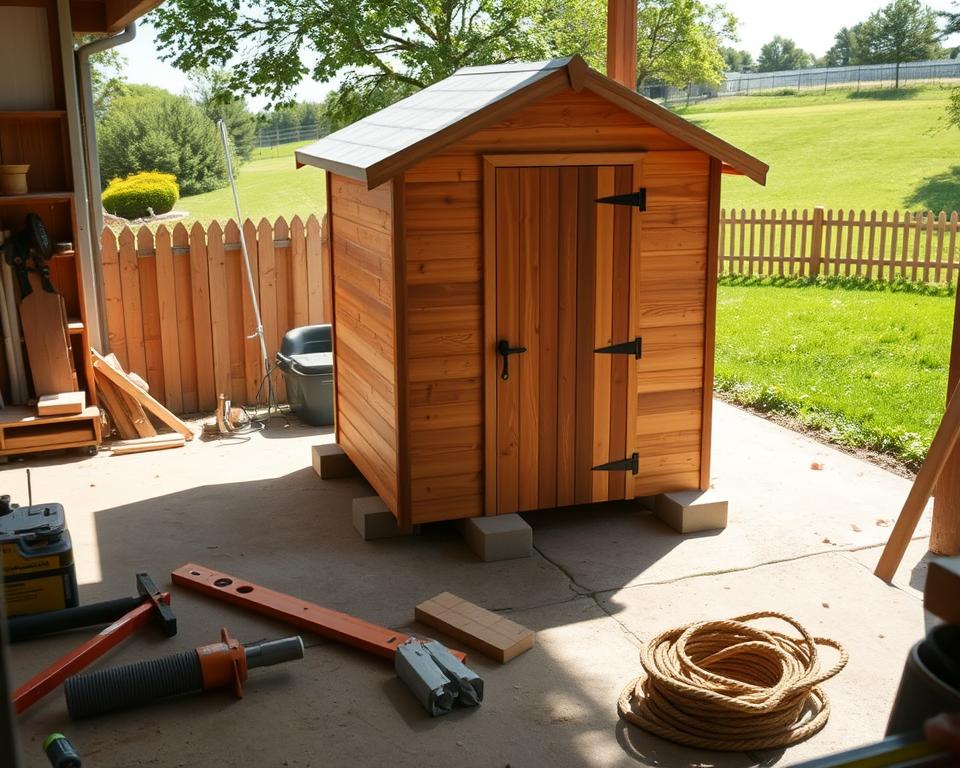
Install wooden braces across window and door openings. Create X-shaped supports between studs for maximum stability. This reinforcement prevents twisting during the moving process.
Selecting the Appropriate Moving Method
Choose equipment based on distance and shed size. Each option suits different scenarios.
For short garden moves, rollers work effectively. Place PVC or metal pipes under the building and push it along. This step requires multiple people.
| Method | Best For | Limitations |
|---|---|---|
| Rollers | Short garden distances | Requires flat, clear path |
| Pickup Truck | Sheds under 6 feet | Limited to small structures |
| Trailer | Larger sheds (8ft+) | Needs vehicle towing capacity |
| Forklift | 8×6 sheds or smaller | Operator experience required |
Larger sheds may need trailer transport. Always ensure the destination area is properly prepared beforehand. Clear access is vital for a smooth move.
Preparing the New Location for Your Shed
The final stage of relocation involves meticulous preparation of the destination site. A properly prepared base ensures the shed remains stable and durable for years. This work prevents future issues with the building’s structure.

Clearing, Levelling and Creating a Stable Base
Begin by thoroughly clearing the new location. Remove all debris, stones, and vegetation. Rake the area and mow any grass to create a clean surface.
Check the ground is perfectly level. Even a slight slope can cause doors to stick and floor panels to warp. A level surface is essential for the shed’s balance.
Choosing the right foundation material is crucial. The options vary based on the shed’s size and intended permanence.
| Base Type | Best For | Key Advantage |
|---|---|---|
| Concrete Slabs | Permanent, heavy structures | Maximum stability and longevity |
| Paving Slabs | Moderate stability needs | Easier installation and adjustment |
| Timber Frames | Lighter garden buildings | Good drainage and cost-effectiveness |
Considering Ground Conditions and Weather Factors
Assess the ground conditions before starting. Wet or soft earth requires a temporary wooden platform for equipment. This prevents sinking and ensures safe transport to the new location.
Timing the operation is critical. Choose a calm, dry day for the task. Wet weather makes the ground slippery and unstable.
Windy weather increases the risk of the building catching wind during movement. Proper planning saves time and reduces hazards on your property.
Tools, Techniques and Equipment for Moving a Shed
The right tools and techniques can transform a challenging shed move into a manageable task. Proper equipment ensures both safety and efficiency throughout the process.
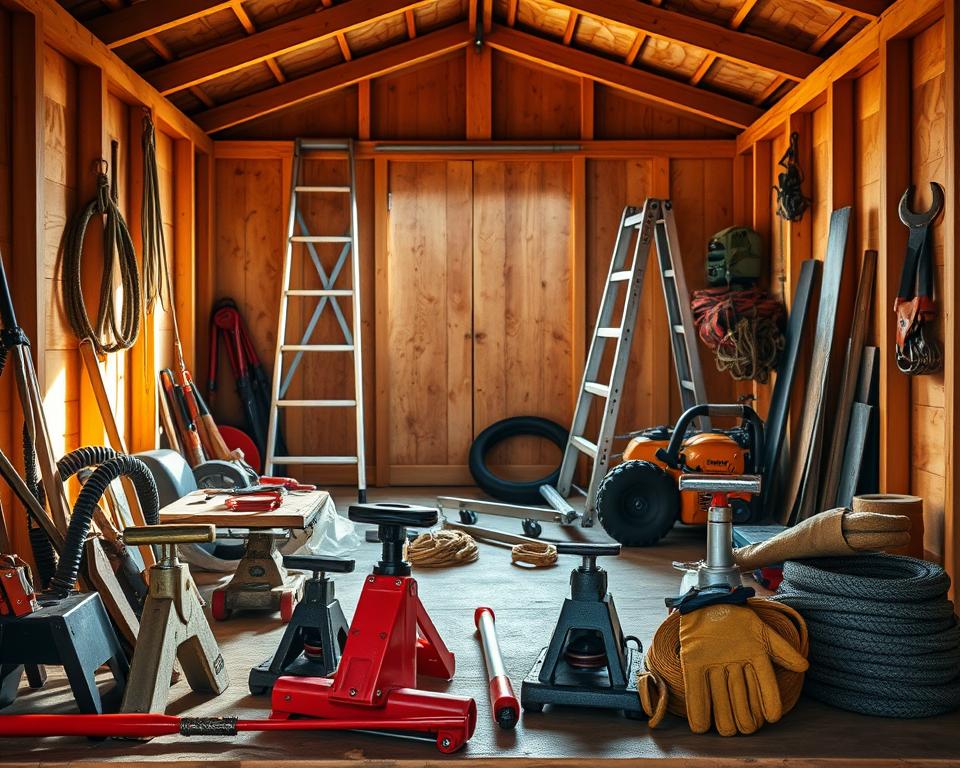
Using Rollers, Jacks and Other Essential Tools
Essential tools include PVC or metal pipes with at least 4-inch diameter, serving as rollers. A car jack is vital to lift the shed incrementally at each corner. This creates clearance for placing rollers underneath.
Wooden braces provide crucial support to prevent panels from separating during movement. The size of the building determines how many rollers are needed – typically 4-6 pipes.
Safe Lifting, Transport and Handling Procedures
To lift the shed, use the jack methodically at each corner. Maintain balance by raising ends slowly and systematically. Once lifted, position rollers perpendicular to the direction of travel.
For transport over significant distance, heavy-duty straps secure the structure to a trailer or truck. This prevents shifting that could damage parts of the building.
Adapting Methods for Different Shed Sizes
Smaller sheds under 6 feet may only require basic tools and manpower. Larger structures demand professional-grade equipment and experienced handling.
The weight distribution and overall size dictate the best way to approach the move. Furniture dollies work well on hard surfaces, while wooden planks create stable pathways on soft ground.
Avoiding Common Challenges and Mistakes in Shed Relocation
Many property owners underestimate the potential pitfalls involved in shed relocation. A successful outcome depends on recognising and avoiding common errors that can lead to significant damage or personal injury. This section outlines critical mistakes to watch for during the relocation process.

Preventing Structural Damage and Injury
One of the most frequent errors involves moving a compromised structure. Attempting to relocate a shed with rotted floor sections or weakened joints often results in catastrophic failure. Parts may break away during lifting, causing the entire building to collapse.
Skipping bracing is another critical mistake. Proper bracing prevents panels from separating and windows from cracking during movement. Even doors can become permanently jammed without adequate support.
| Common Mistake | Potential Consequence | Prevention Method |
|---|---|---|
| Insufficient rollers | Shed becomes stuck, floor damage | Use 4-6 proper diameter rollers |
| Uncleared pathway | Tripping hazards, structural damage | Clear all debris before moving |
| Poor weather timing | Slippery surfaces, wind accidents | Choose dry, calm conditions |
| Inadequate manpower | Back injuries, dropped structure | Have sufficient helpers available |
Managing Potential Warranty Risks
Many manufacturers void guarantees if a shed is relocated without proper procedures. This leaves owners without recourse if damage occurs. Always check warranty terms before beginning any relocation work.
After the move, inspect the structure thoroughly. Look for new cracks in panels, gaps between sections, and unstable floor areas. Prompt identification of problems prevents further damage.
Proper planning and attention to safety measures are the best way to avoid these common relocation challenges. Taking the time to prepare properly saves both time and money in the long run.
Professional Shed Moving Services versus DIY Approaches
Choosing between a professional team and a DIY project is a crucial decision. This choice significantly impacts the cost, safety, and success of the entire operation. Each option presents a distinct set of advantages and challenges.

Cost Considerations and Equipment Requirements
Hiring professionals for shed removals in the UK typically ranges from £150 to £500. The final cost depends on the shed size, the distance of the move, and site accessibility. Larger buildings or complex property access can increase the price.
A DIY approach might seem cheaper initially. However, it requires investment in equipment like jacks, rollers, and straps. Renting a trailer or truck for transport adds further expense. These costs can accumulate, making the DIY job less economical than it first appears.
Weighing Experience and Safety Benefits
Professionals bring invaluable experience to the job. They can assess structural integrity and choose the safest way to handle the moving shed. Their experience minimises the risk of damage to the shed and surrounding property.
For complex situations, professional removals are strongly advised. This includes sheds with electrical fittings, difficult access, or those on a permanent concrete base. The time saved is also a major factor. What takes a professional team a few hours could consume an entire weekend for DIYers.
Ultimately, the decision balances budget against risk, effort, and time. For many, the peace of mind offered by professionals is a worthwhile investment.
Conclusion
A well-executed relocation transforms a garden layout without the expense of a new purchase. This guide has detailed a clear step-by-step process, demonstrating that while challenging, the move is an achievable one for many property owners.
Success hinges on key principles. Empty the building completely, assess its structure thoroughly, and brace it properly. Patient execution with the right equipment is non-negotiable for safety.
Recognising when a shed is too large or complex for a DIY move is a sign of prudent planning. Hiring professionals for such sheds ensures the job is done safely and efficiently.
By following this guide and preparing the new location correctly, you can confidently reposition your garden shed. The result is a revitalised outdoor space and a building set for many more years of use.
FAQ
Can any garden shed be moved?
Not all sheds are suitable for relocation. The structure’s condition, size, and construction materials determine its movability. A shed with significant rot, a weak frame, or heavy, non-modular panels may be too fragile. It is often safer and more cost-effective to dismantle a compromised shed and build a new one on the preferred site.
What is the safest way to lift a shed?
The safest method involves using specialised equipment like a shed jack or rollers. Professionals often use hydraulic jacks to lift the structure evenly, preventing twisting that can cause damage. For smaller sheds, a team can lift it manually, but proper lifting techniques are essential to avoid personal injury.
Do I need to empty the shed completely before moving it?
Yes, removing all items from inside is a critical safety step. This reduces the overall weight and prevents contents from shifting during transport, which could destabilise the structure or damage the shed’s interior, doors, and windows.
How do I prepare the ground at the new location?
The new site requires a level, stable base. This involves clearing debris, levelling the ground, and often constructing a new foundation, such as a concrete slab or pressure-treated timber bearers. Proper preparation ensures the shed remains stable and prevents future issues like doors sticking or water pooling.
When should I hire professional shed removals services?
Engaging professionals is advisable for large, heavy structures, moves over a long distance, or when the property has difficult access. Their experience, insurance, and specialist equipment for transport on a truck or trailer mitigate the risk of damage to the shed and your property.
Could moving my shed void its warranty?
It is possible. Many manufacturers’ warranties become invalid if the structure is moved from its original installation site. It is crucial to check the warranty terms before starting the process. Professional movers may offer their own guarantees for the relocation work.
What are the main risks of a DIY shed move?
The primary risks include personal injury from improper lifting, structural damage to the shed from mishandling, and damage to garden features during transport. Without the correct tools and experience, individuals may underestimate the weight and complexity of the job.