Your Guide to Building a Homemade Garden Shower

Creating an outdoor shower in your garden can be a fantastic way to enhance your outdoor living space. Not only does it provide a refreshing way to cool off during warm weather, but it also adds a touch of luxury and can increase the value of your property.
You can enjoy the benefits of an DIY shower without the need for professional installation. With a homemade garden shower, you can rinse off after a swim or a gardening session, or simply enjoy the invigorating experience of showering under the open sky.
Inhaltsverzeichnis
Key Takeaways
- Create a refreshing outdoor space with a homemade garden shower.
- Enhance your property value with a luxurious outdoor feature.
- Enjoy the convenience of rinsing off outdoors.
- DIY installation allows for personalisation and cost savings.
- Increase your outdoor living enjoyment with a unique feature.
The Benefits of Having a Garden Shower
A garden shower can be a game-changer for your outdoor space. Not only does it provide a refreshing way to cool off during the warmer months, but it also offers numerous benefits that can enhance your overall outdoor living experience.
Enhancing Your Outdoor Living Experience
Having a garden shower can significantly enhance your outdoor living experience by providing a convenient way to clean up after gardening or outdoor activities. It also creates a spa-like ambiance, allowing you to relax and unwind in the fresh air. Moreover, a garden shower can be a stylish addition to your garden, complementing your existing outdoor decor.
The benefits of a garden shower are not limited to aesthetics; they also offer practical advantages. For instance, having a shower outdoors can reduce the amount of dirt and debris tracked into your home, keeping your indoor spaces cleaner.
Practical Uses Beyond Summer Swimming
Garden showers are not just for summer use; they have practical applications throughout the year. In the spring and autumn, they can be used to clean off after gardening or outdoor chores. Even in the winter, a heated outdoor shower can provide a warm and refreshing way to clean up.
| Benefits | Description |
|---|---|
| Enhanced Outdoor Experience | Provides a spa-like ambiance and a convenient way to clean up |
| Practical Uses | Can be used year-round for various outdoor activities |
| Aesthetic Appeal | Complements existing outdoor decor and adds style to the garden |
Planning Your Garden Shower Project
Before you start building your garden shower, it’s essential to plan it thoroughly. Proper planning ensures that your garden shower is functional, efficient, and enhances your outdoor living space.
Assessing Your Garden Space
Begin by assessing your garden space to determine the best location for your shower. Consider the layout of your garden, existing features, and how you use the space. Measure the area where you plan to install the shower and ensure it’s easily accessible. Think about the privacy you need and whether you want the shower to be near other outdoor facilities.
Determining Water Supply Options
Next, you’ll need to determine your water supply options. You can connect your garden shower to your home’s water system, or consider a rainwater harvesting system. The choice depends on your garden’s layout, water availability, and personal preference. As one expert notes, “Using rainwater for your garden shower can significantly reduce your water bills and is more environmentally friendly.”
“Using rainwater for outdoor purposes can make a significant difference in reducing your overall water consumption.”
Setting a Realistic Budget
Setting a realistic budget is crucial for the success of your garden shower project. Consider the costs of materials, tools, and any additional features you want. Create a detailed list of expenses, including plumbing fixtures, drainage solutions, and decorative elements. A well-planned budget will help you stay on track and avoid unexpected expenses.
| Component | Estimated Cost |
|---|---|
| Plumbing Fixtures | £100-£300 |
| Drainage Solutions | £50-£150 |
| Decorative Elements | £50-£100 |
| Total | £200-£550 |
Essential Tools and Materials Needed
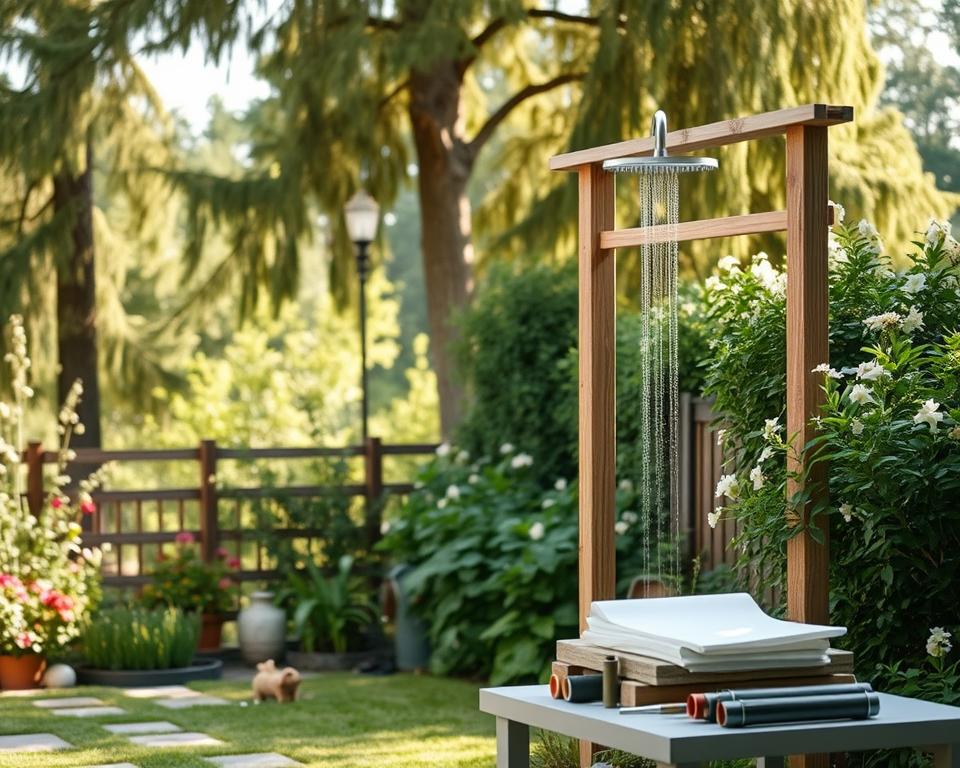
Before you start building your garden shower, it’s crucial to gather all the necessary tools and materials. Having everything on hand will make the process smoother and help you avoid unnecessary delays.
Basic Tools Required
To begin, you’ll need some basic DIY shower tools. These include a shovel for digging, a level to ensure everything is properly aligned, and a drill for making holes for pipes and screws. You’ll also need a wrench for tightening fittings and a tape measure for measuring distances accurately.

Materials Shopping List
For the materials, you’ll need to gather outdoor shower materials such as pipes, fittings, and shower heads. The type of materials you choose will depend on your design and whether you’re connecting to your home’s water system or using a rainwater collection system. Don’t forget to include wood or other materials for the frame and any enclosures you plan to build.
Optional Extras for Enhanced Functionality
Consider adding some optional extras to enhance the functionality of your garden shower. These might include a water heater to provide warm water, lighting to illuminate the area, or storage for towels and shower products. You might also want to include a drainage system or a soakaway to manage water runoff effectively.
Choosing the Perfect Location
Finding the perfect spot for your garden shower involves considering several important factors to ensure it is both functional and enjoyable. The location of your garden shower can significantly impact your outdoor living experience.
Privacy Considerations
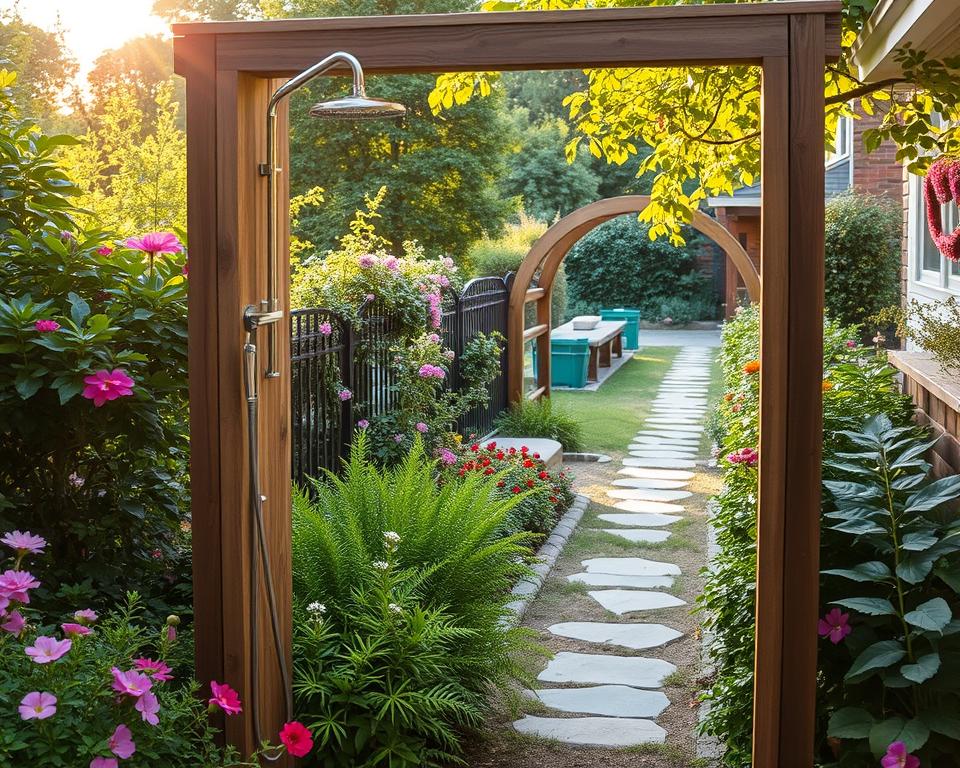
When it comes to outdoor shower privacy, you need to consider the visibility of your shower from neighbouring properties or public areas. You can enhance privacy by using natural barriers such as hedges or trees, or by installing privacy screens around your shower area.
- Assess the surrounding area to determine the level of privacy needed.
- Use landscaping to create natural barriers.
- Consider installing screens or fencing for added privacy.
Proximity to Water Supply
The proximity of your garden shower to the water supply is another critical factor. You need to determine whether you can connect your shower to your home’s water system or if you need to consider alternative water sources such as rainwater harvesting.
Drainage Requirements
Proper drainage is essential to prevent water from accumulating around your shower area, which can lead to slip hazards and other issues. You should consider how you will manage water runoff, whether through a soakaway system or by connecting to existing drainage.
Different Garden Shower Designs to Consider
Exploring different garden shower designs can help you create a unique and refreshing outdoor experience. Your garden shower is not just a practical addition; it can also be a stylish element that enhances your outdoor living space.
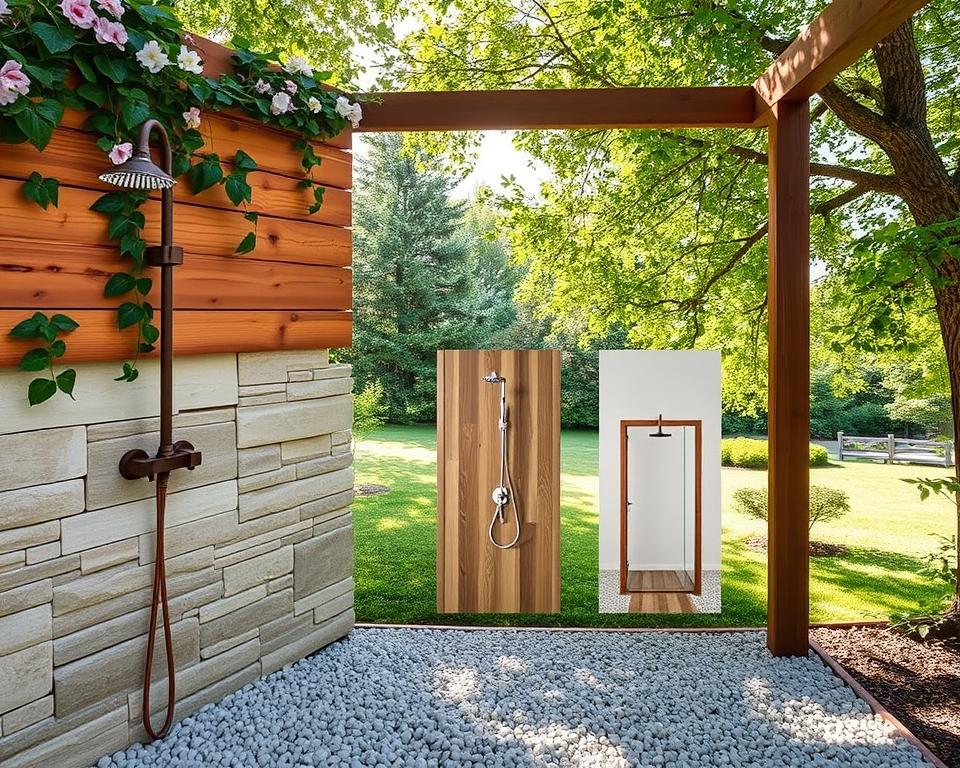
When it comes to designing your garden shower, there are several styles to consider. You can opt for simplicity or go for a more elaborate design, depending on your preferences and the layout of your garden.
Simple Standalone Showers
Simple standalone showers are a great option if you’re looking for a straightforward and cost-effective solution. These showers are typically freestanding and can be placed in a convenient location within your garden. They are ideal for those who want a functional outdoor shower without the need for elaborate installations.
As David Montgomery, a gardening expert, notes, “A simple shower can be a wonderful addition to any garden, providing a refreshing way to cool off during the warmer months.”
Enclosed Shower Cabins
For those seeking more privacy, enclosed shower cabins are an excellent choice. These structures provide a secluded area for showering, shielding you from the rest of the garden. Enclosed cabins can be designed to match your garden’s aesthetic, using materials such as wood or bamboo to blend in with the surroundings.
An enclosed shower cabin can be a luxurious addition, offering not just privacy but also protection from the elements. As noted in a recent article on outdoor living, “Enclosed outdoor showers have become increasingly popular as they offer a spa-like experience in the comfort of your own garden.”
Eco-Friendly Solar Options
Eco-friendly solar showers are another option to consider, especially for those looking to reduce their environmental footprint. Solar showers use energy from the sun to heat the water, providing a sustainable and cost-effective way to enjoy your outdoor shower. These systems can be integrated into various garden shower designs, from simple standalone units to more complex enclosed cabins.
By choosing an eco-friendly solar shower, you’re not only reducing your carbon footprint but also enjoying a unique outdoor experience. As environmental advocate, Jane Smith, remarks, “Solar showers represent a significant step towards more sustainable living, allowing us to enjoy modern conveniences while minimizing our impact on the planet.”
Whether you opt for a simple design or something more elaborate, the key is to choose a garden shower that complements your outdoor space while meeting your needs.
How to Build a Garden Shower Yourself: Step-by-Step Guide
With the right guidance, you can successfully install a garden shower that meets your needs. Building a DIY garden shower requires careful planning and execution, but the process can be manageable and rewarding when broken down into steps.
Preparing the Foundation
Preparing the foundation is the first crucial step in your outdoor shower installation. You need to choose a flat area to ensure that water drains properly and doesn’t accumulate around the shower. Start by clearing the area of any debris, vegetation, or obstructions. Then, level the ground to create a stable base. If necessary, lay a compacted gravel base to improve drainage and stability.
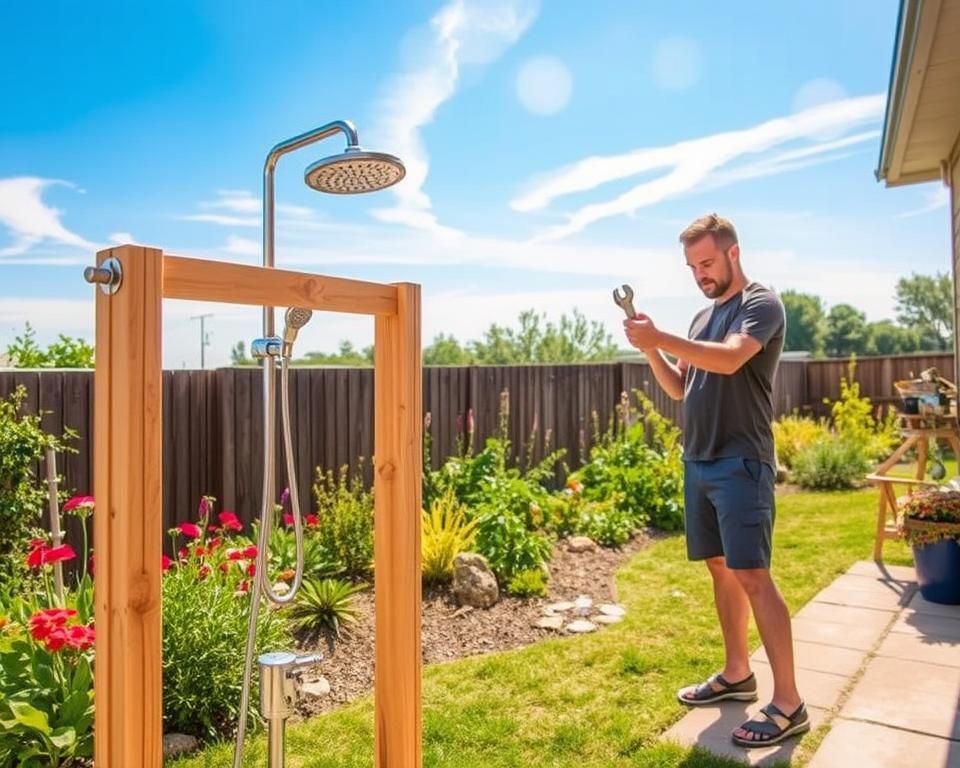
Creating the Frame Structure
Once the foundation is prepared, you can start creating the frame structure for your garden shower. Use durable materials like pressure-treated wood or metal to construct the frame. The size and design of the frame will depend on your specific needs and the space available. Ensure that the frame is sturdy enough to support the weight of the shower fixtures and any additional features like a roof or walls.
Installing the Plumbing System
Installing the plumbing system is a critical step in your DIY garden shower project. You’ll need to connect the shower to a water supply, which could be your home’s water system or a rainwater collection system. Use appropriate outdoor plumbing materials that can withstand the elements. Ensure that all connections are secure and that the system is properly tested for leaks before completing the installation.
By following these steps, you can create a functional and enjoyable garden shower that enhances your outdoor living space. Remember to check local building regulations and consider any necessary permits before starting your project.
Water Supply Options and Installation
The success of your garden shower project hinges on selecting the right water supply option. You have several choices to consider, each with its own set of advantages and installation requirements.

Connecting to Your Home’s Water System
One straightforward approach is to connect your garden shower to your home’s existing water system. This method ensures a consistent water supply, but it may require professional plumbing assistance to ensure proper installation and compliance with local regulations. “Connecting to your home’s water supply can be a convenient option,” as noted by plumbing experts, “but it’s crucial to consider the potential impact on your household water pressure.”
Setting Up a Rainwater Collection System
For a more eco-friendly solution, consider setting up a rainwater collection system. This involves installing a tank to store rainwater, which can then be used to supply your garden shower. Rainwater collection is not only environmentally friendly, but it can also reduce your water bills. As rainwater harvesting becomes increasingly popular, it’s essential to ensure your system is designed to prevent mosquito breeding and other potential issues.
Installing Water Heating Options
If you prefer warm water for your garden shower, you’ll need to consider water heating options. Solar water heaters are a popular choice for outdoor showers, as they are energy-efficient and can be integrated with your existing water supply. When selecting a water heating system, consider factors such as energy efficiency, cost, and compatibility with your chosen water supply method. It’s also worth noting that some systems can be more complex to install, potentially requiring professional assistance.
By carefully evaluating these water supply options and their installation requirements, you can create a functional and enjoyable garden shower that meets your needs and complements your outdoor space.
Creating Proper Drainage Solutions
A well-designed drainage system is essential for maintaining a clean and safe garden shower. Without it, water can accumulate, leading to slippery surfaces and potential waterlogging in your garden.

To address this, you have several options for drainage solutions. One approach is to implement a simple yet effective system.
Simple Soakaway Systems
A soakaway system is a straightforward method for managing water runoff. It involves digging a pit filled with rubble or gravel, where water can collect and gradually soak into the surrounding soil. This method is particularly useful in areas with good drainage characteristics.
Connecting to Existing Drainage
If you have an existing drainage system in your garden, you can connect your shower’s drainage to it. This can be a more complex task, requiring professional assistance to ensure it’s done correctly. However, it’s an effective way to manage water disposal.
Eco-Friendly Grey Water Solutions
For those looking for an eco-friendly option, utilizing grey water systems can be beneficial. Grey water, which is wastewater generated from sinks, showers, etc., can be reused for irrigating plants. By diverting your shower water into a grey water system, you can reduce your water waste and create a more sustainable garden.
As John Seymour, a renowned expert in self-sufficiency, once said, “The best way to get rid of waste is to make it useful.” Implementing an effective drainage solution not only enhances the functionality of your garden shower but also contributes to a more sustainable gardening practice.
Building the Shower Floor and Base
A well-built shower floor and base are essential for a safe outdoor showering experience. When constructing this part of your garden shower, several factors need consideration to ensure durability and functionality.
Materials for Shower Bases
The choice of material for your shower base is critical. Common options include concrete, stone, and composite materials. Each has its advantages: concrete offers durability and customisation, stone provides a natural aesthetic, and composite materials can be more cost-effective and easier to install.
| Material | Durability | Aesthetic Appeal | Cost |
|---|---|---|---|
| Concrete | High | Customisable | Moderate |
| Stone | High | Natural | High |
| Composite | Medium | Varied | Low |
Creating a Non-Slip Surface
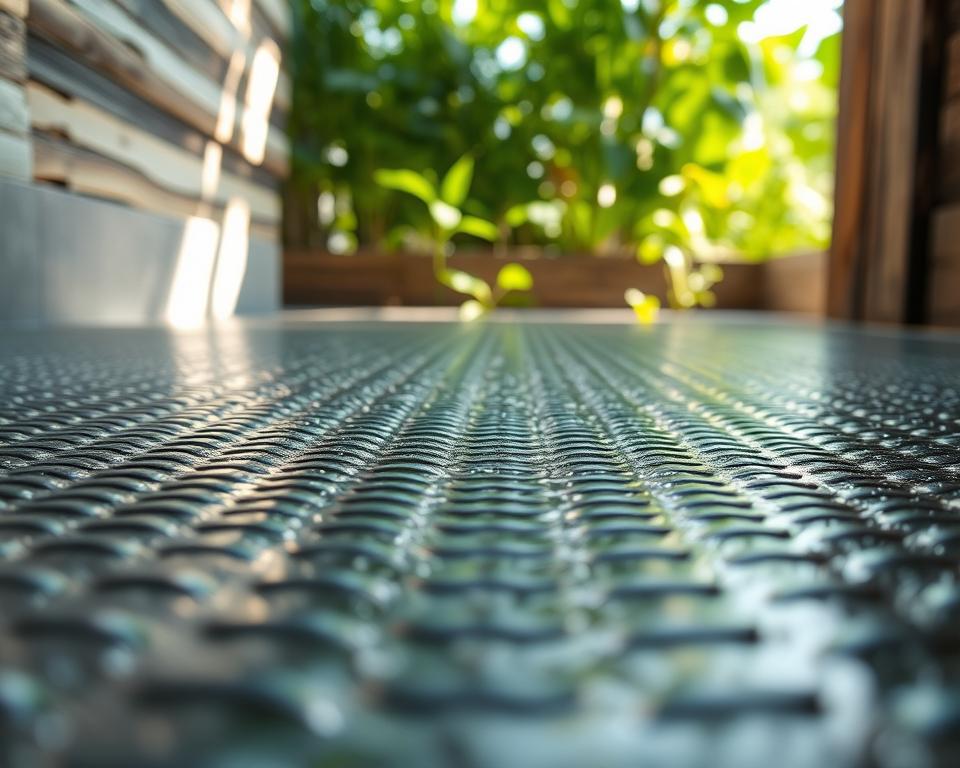
Safety is paramount, and a non-slip surface is crucial to prevent accidents. Textured finishes, such as grooved concrete or stone with a matte finish, can significantly reduce slip risks. Additionally, applying non-slip coatings or tapes can further enhance safety.
Ensuring Proper Water Flow
Water flow is another critical aspect. The shower floor should be sloped to direct water towards a drain, preventing pooling and potential slipping hazards. A well-designed drainage system is essential for maintaining a clean and safe shower area.
By carefully selecting materials, creating a non-slip surface, and ensuring proper water flow, you can build a shower floor and base that are both functional and safe.
Constructing Shower Walls and Privacy Screens
To ensure your garden shower is both functional and private, you’ll need to consider the construction of walls and privacy screens. The right materials and design can transform your outdoor space into a secluded oasis.
Wooden Panel Options
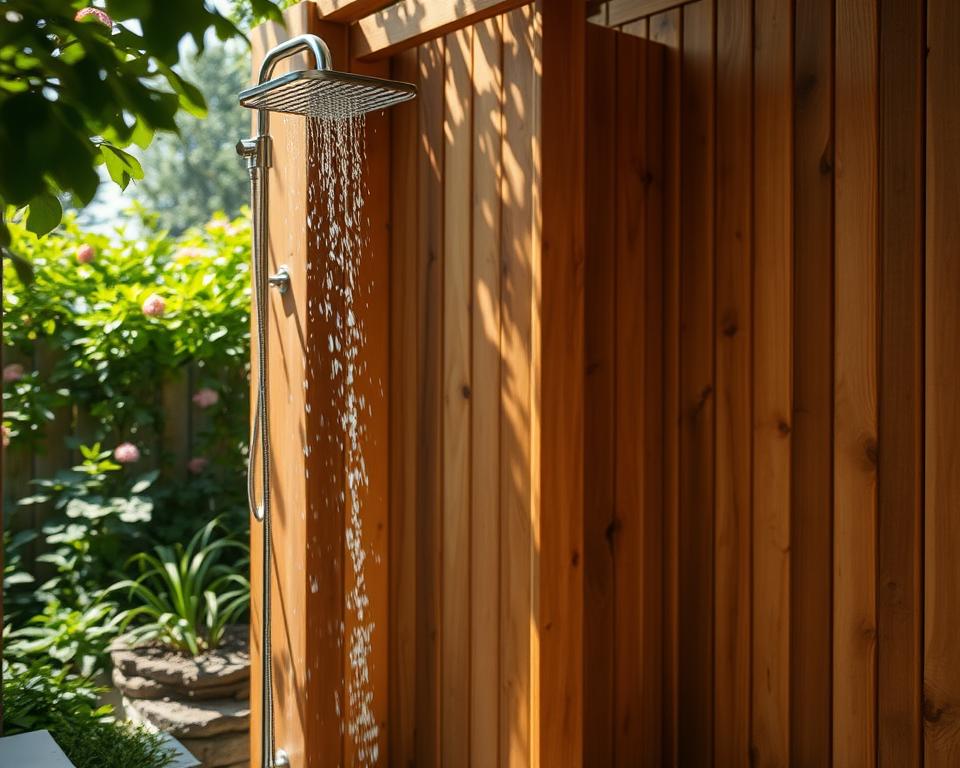
Wooden panels are a popular choice for shower walls and privacy screens due to their natural aesthetic and durability. Western red cedar and thermally modified wood are excellent options as they resist rot and insect damage. You can choose from various styles, including vertical or horizontal arrangements, to create a unique look that complements your garden.
Natural Bamboo Screens
Bamboo screens offer a sustainable and stylish solution for creating privacy around your garden shower. They are relatively easy to install and can be used to create a natural, tropical ambiance. Bamboo is also known for its durability and resistance to weathering, making it an ideal material for outdoor use.
Using Plants for Privacy
Using plants is another effective way to create privacy around your garden shower. Tall shrubs or climbing plants like clematis or honeysuckle can be used to screen the area. This approach not only provides privacy but also enhances the natural beauty of your garden. When selecting plants, consider their growth habits and maintenance requirements to ensure they remain healthy and vibrant.
Installing Shower Fixtures and Controls
Now that you’ve built the structure of your garden shower, it’s time to focus on the fixtures and controls. This step is crucial as it will determine the functionality and user experience of your outdoor shower.
Selecting Appropriate Outdoor Fixtures
When choosing shower fixtures for your garden shower, it’s essential to select ones that are designed for outdoor use. Look for fixtures made from corrosion-resistant materials such as brass or stainless steel. Consider the style and finish that will complement your garden’s aesthetic. Some popular options include:
- Rain shower heads for a luxurious experience
- Thermostatically controlled mixers for precise temperature control
- Hands-free controls for added convenience
Mounting Shower Heads and Controls
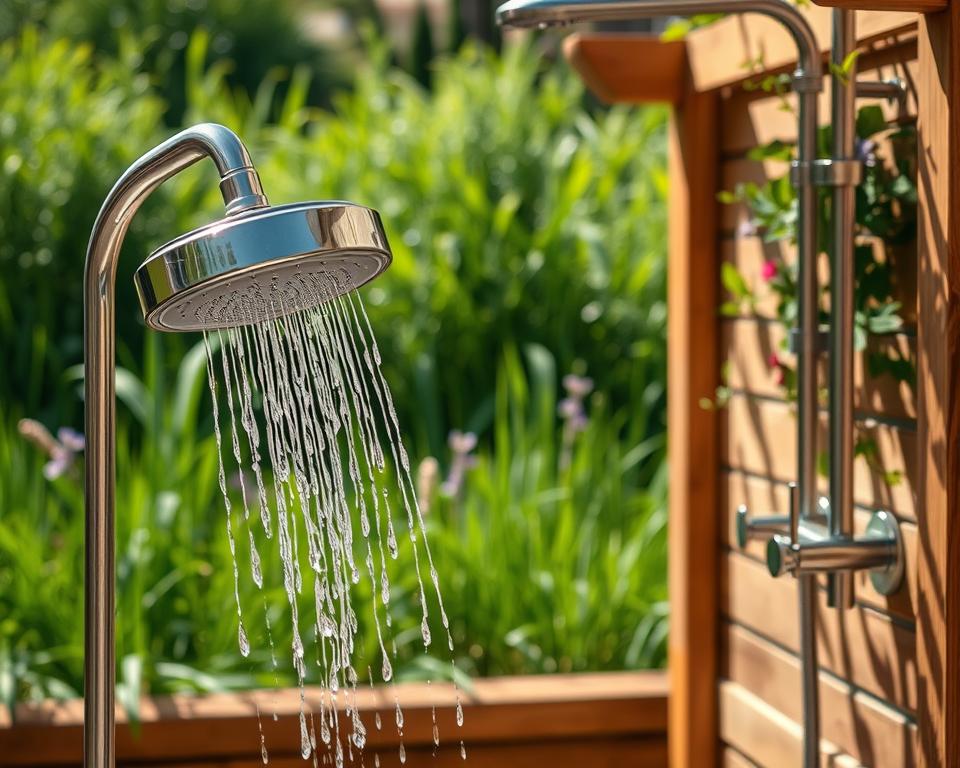
Mounting the shower heads and controls requires careful planning to ensure they are at a comfortable height and easily accessible. Use rust-resistant fittings and consider the water pressure when selecting the mounting location. For most garden showers, a height of about 2.1 to 2.3 meters is recommended for the shower head.
Adding Finishing Touches
Once the fixtures are installed, you can add the finishing touches. This includes any decorative elements such as outdoor-friendly tiles or plantings around the shower area. Ensure that any additional features you add do not compromise the functionality or drainage of the shower.
By carefully selecting and installing your shower fixtures and controls, you can create a functional and enjoyable outdoor shower that will be a great addition to your garden.
Safety Considerations for Outdoor Showers
Safety is paramount when it comes to outdoor showers, and there are several key considerations to keep in mind. Ensuring your outdoor shower is safe will not only prevent accidents but also enhance your overall outdoor experience.
Electrical Safety Precautions
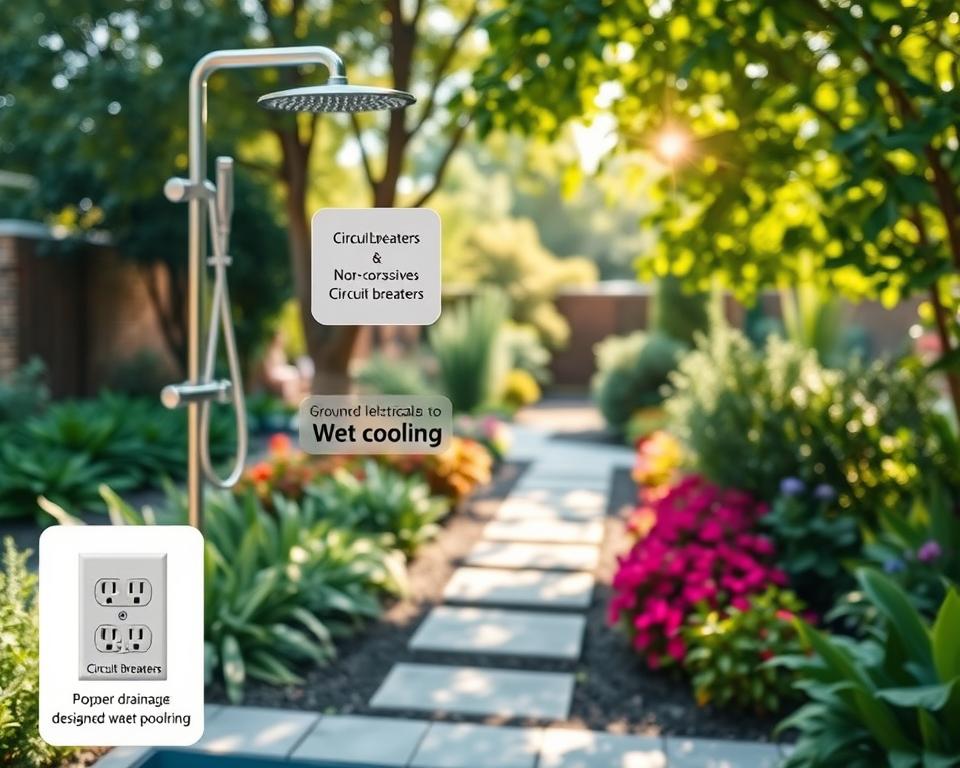
When it comes to electrical safety in outdoor showers, there are several precautions you should take. First, ensure that all electrical components are designed for outdoor use and are properly installed. It’s also crucial to follow the manufacturer’s instructions for any electrical equipment. For instance, using a Residual Current Device (RCD) can significantly reduce the risk of electrical shock.
Key electrical safety measures include:
- Using outdoor-rated electrical components
- Ensuring proper installation by a qualified electrician
- Regularly inspecting electrical equipment for damage
Preventing Slips and Falls
Slips and falls are common hazards in outdoor shower areas, often due to wet surfaces or uneven ground. To mitigate these risks, consider using non-slip materials for the shower floor and surrounding areas. Regular cleaning and maintenance are also essential to prevent the buildup of algae or moss, which can be particularly slippery.
| Safety Measure | Description | Benefit |
|---|---|---|
| Non-Slip Flooring | Using materials that provide good traction when wet | Reduces the risk of slipping |
| Regular Cleaning | Keeping the shower area free from algae and moss | Prevents slippery surfaces |
| Proper Drainage | Ensuring water does not accumulate on the surface | Reduces the risk of slipping and falling |
By focusing on these safety considerations, you can enjoy your outdoor shower while minimizing the risk of accidents.
Weatherproofing Your Garden Shower
Weatherproofing your garden shower is crucial for its longevity and functionality. The outdoor environment can be harsh, with varying temperatures, rainfall, and sunlight exposure, all of which can impact the durability of your shower.
To effectively weatherproof your garden shower, you need to focus on two key areas: selecting weather-resistant materials and applying protective treatments and coatings.
Selecting Weather-Resistant Materials
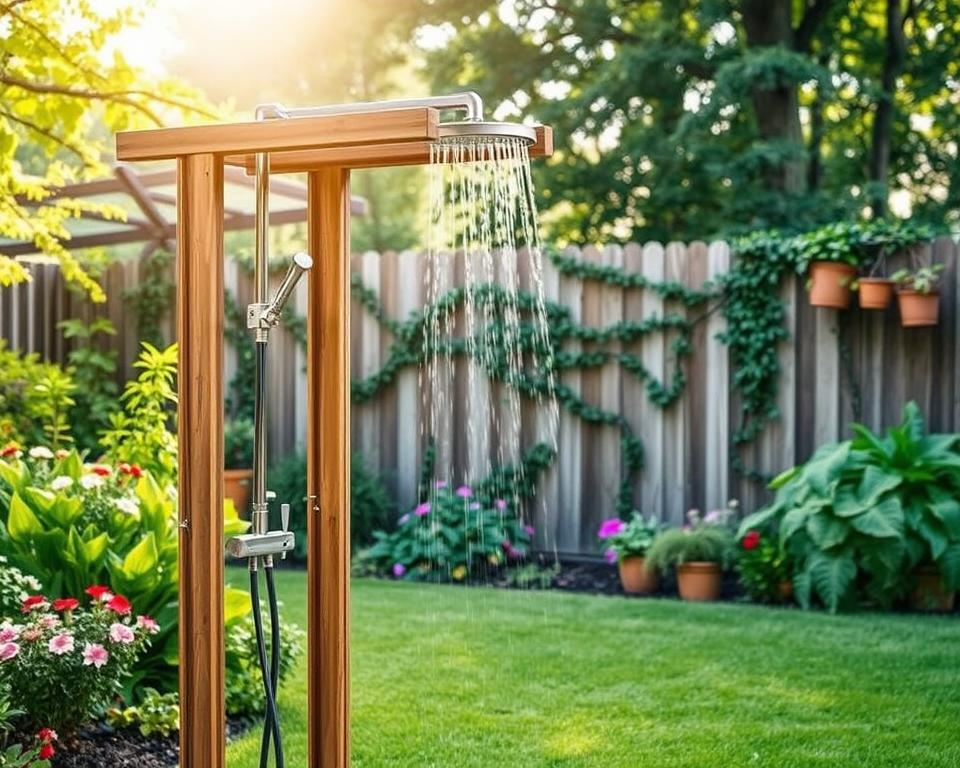
Choosing the right materials for your garden shower is the first step in ensuring it can withstand the elements. Weather-resistant materials such as stainless steel, durable plastics, and treated wood are ideal. These materials are designed to resist rot, rust, and degradation caused by exposure to moisture and sunlight.
| Material | Weather Resistance | Maintenance Needs |
|---|---|---|
| Stainless Steel | High | Low |
| Treated Wood | Medium | Medium |
| Durable Plastics | High | Low |
Protective Treatments and Coatings
In addition to selecting weather-resistant materials, applying protective treatments and coatings can further enhance the durability of your garden shower. Treatments such as waterproof sealants and UV-resistant coatings can protect the structure from moisture and sunlight damage.
Waterproof sealants are particularly important for preventing water ingress, which can lead to structural damage and mold growth. Regularly inspecting and reapplying these treatments as needed will help maintain the integrity of your garden shower.
Maintenance Tips for Longevity
A well-maintained garden shower not only enhances your outdoor experience but also prolongs its lifespan. Regular maintenance ensures that your garden shower remains a refreshing and functional part of your outdoor living space.
Seasonal Maintenance Schedule
Creating a seasonal maintenance schedule is crucial for the upkeep of your garden shower. During spring, inspect the shower’s structure for any damage caused by winter. In summer, check the water supply lines and shower heads for blockages. Autumn is the time to prepare your shower for the colder months by clearing leaves and debris. In winter, ensure that the water supply is properly drained to prevent freezing.
Winterising Your Garden Shower
Winterising your garden shower is a critical task to prevent damage from freezing temperatures. Start by draining the water supply lines and shower heads. Consider installing a frost-proof tap or removing and storing shower heads and hoses indoors. Insulating exposed pipes can also help prevent them from freezing.
Addressing Common Issues
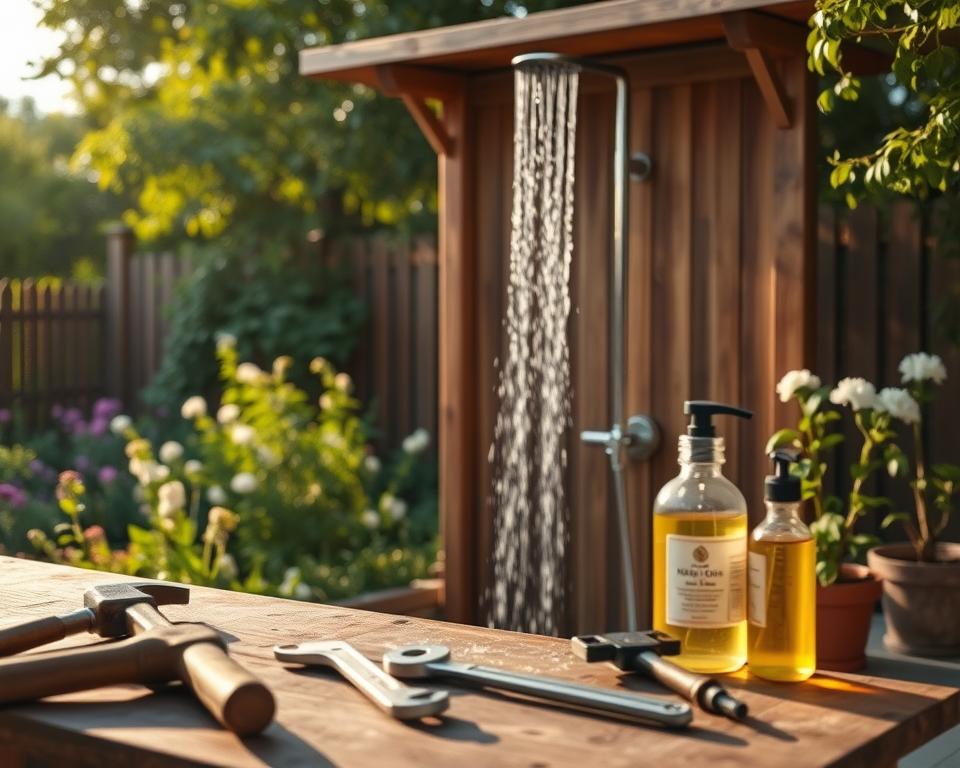
Common issues with garden showers include leaks, clogged shower heads, and drainage problems. Regularly inspect your shower for signs of leaks and address them promptly. Cleaning shower heads with a mixture of vinegar and water can help remove mineral deposits. For drainage issues, check that the shower floor is sloped correctly and that the drainage channel is clear.
Conclusion
As you now know, building a homemade garden shower is a rewarding project that can enhance your outdoor living experience. By following the steps outlined in this guide, you can create a functional and enjoyable space that meets your needs.
Your new garden shower will not only provide a refreshing way to cool off during the warmer months, but it will also serve as a practical solution for rinsing off after gardening or outdoor activities. The key is to carefully plan your project, choosing the right location, design, and materials for your shower.
In this garden shower conclusion, we’ve covered the essential elements to consider when building your outdoor shower. As you reflect on this outdoor shower summary, you’ll be well-equipped to start your project, turning your outdoor space into an oasis.
With your new garden shower, you’ll be able to enjoy the fresh air and beauty of your garden while maintaining a refreshing and clean environment. So, start planning your dream garden shower today and get ready to enjoy the many benefits it has to offer.
FAQ
What are the benefits of having a garden shower?
Having a garden shower enhances your outdoor living experience, providing a refreshing way to cool off and clean up. It also offers practical uses beyond summer swimming, such as rinsing off after gardening or outdoor activities.
How do I choose the perfect location for my garden shower?
When selecting a location, consider factors such as privacy, proximity to your water supply, and drainage requirements to ensure a functional and enjoyable garden shower.
What water supply options are available for my garden shower?
You can connect your garden shower to your home’s water system, set up a rainwater collection system, or install water heating options to provide a comfortable showering experience.
How do I ensure proper drainage for my garden shower?
You can implement simple soakaway systems, connect to existing drainage, or explore eco-friendly grey water solutions to manage water effectively and prevent drainage issues.
What materials are suitable for building a shower base?
You can use materials such as concrete, stone, or composite materials to create a durable and non-slip shower base that withstands outdoor weather conditions.
How can I maintain my garden shower to ensure its longevity?
Regular maintenance involves creating a seasonal maintenance schedule, winterising your garden shower, and addressing common issues promptly to prevent damage and extend its lifespan.
What safety considerations should I be aware of when building a garden shower?
To ensure safety, take electrical safety precautions, prevent slips and falls by using non-slip surfaces, and be mindful of other potential hazards to create a safe and enjoyable outdoor shower.
How can I weatherproof my garden shower?
Selecting weather-resistant materials, applying protective treatments and coatings, and performing regular maintenance will help protect your garden shower from the elements and extend its lifespan.
Can I install a garden shower with a solar water heating system?
Yes, you can install a solar water heating system to provide an eco-friendly and cost-effective way to heat water for your garden shower, reducing your reliance on traditional energy sources.