The Best Colours to Paint Your Summerhouse: Tips and Ideas
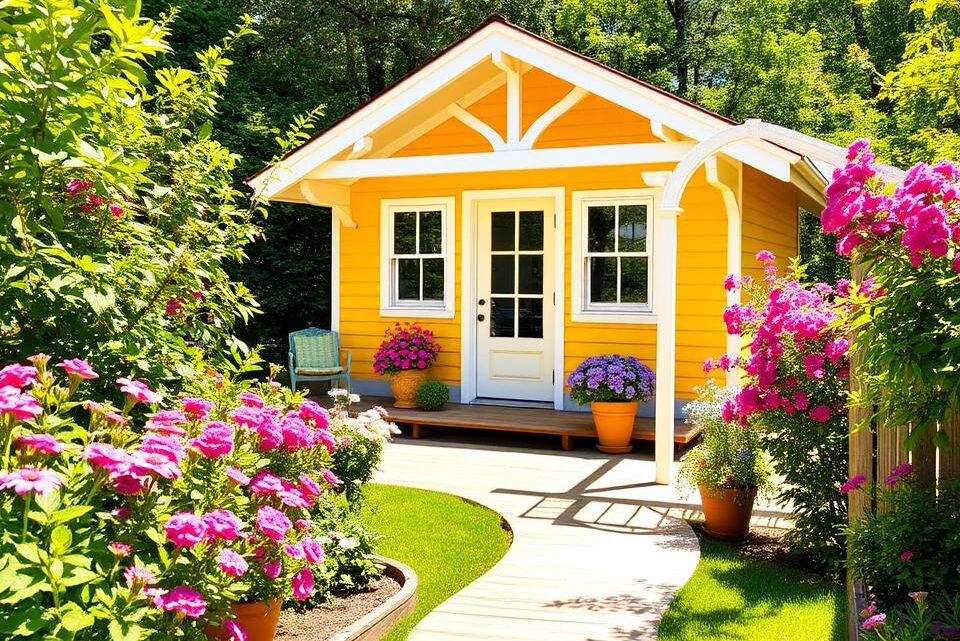
Selecting a shade for a garden building is a significant decision. It goes beyond simple decoration. The right choice can transform a simple structure into a personal sanctuary.
An ideal selection harmonises with the surrounding garden. It creates a seamless flow between nature and the built environment. This harmony enhances the overall appeal of an outdoor space.
Many homeowners worry about making a mistake. They fear a colour that clashes or fades into the background. This guide offers clear advice to build confidence.
Colour influences mood and atmosphere. A bright, cheerful hue creates an inviting retreat. A softer, natural tone promotes relaxation.
This article explores practical ideas and considerations. It covers paint types, popular schemes, and maintenance tips. The goal is to help create a beautiful and functional garden feature.
Inhaltsverzeichnis
Key Takeaways
- Colour selection significantly impacts a summer house’s appearance and integration with the garden.
- The right choice can turn a basic structure into a cherished, personal retreat.
- Homeowners often face challenges, such as avoiding costly mistakes or mismatched shades.
- Colour plays a crucial role in the overall garden design and aesthetic harmony.
- Factors like existing garden features, architectural style, and personal preference guide the decision.
- Practical advice on paint types, colour schemes, and maintenance will be provided.
Why Painting Your Summerhouse is Essential
A fresh coat on a timber building provides essential protection while transforming its visual appeal. This dual approach ensures both longevity and aesthetic harmony in any outdoor space.
Practical Benefits of a Fresh Paint Job
Outdoor paint creates a robust barrier against harsh weather conditions. It shields timber from rain, UV radiation, and temperature fluctuations that cause deterioration.
Proper application prevents insect infestation and fungal growth. These threats can compromise the structural integrity of garden buildings over time.
Even pre-treated timber requires additional protection. A quality finish applied soon after construction ensures maximum durability for years of use.
Enhancing Garden and Architectural Design
Colour selection allows homeowners to express personal style. It can complement existing architectural features of the main residence.
Thoughtful choices create visual harmony throughout the garden space. A building can either blend subtly with nature or become a striking focal point.
The right scheme enhances the overall garden design. It reflects personality while respecting the property’s character and surroundings.
Understanding The Best Colours to Paint Your Summerhouse
Choosing hues for an outdoor structure requires balancing tradition with personal expression. This decision shapes how a garden building interacts with its environment.
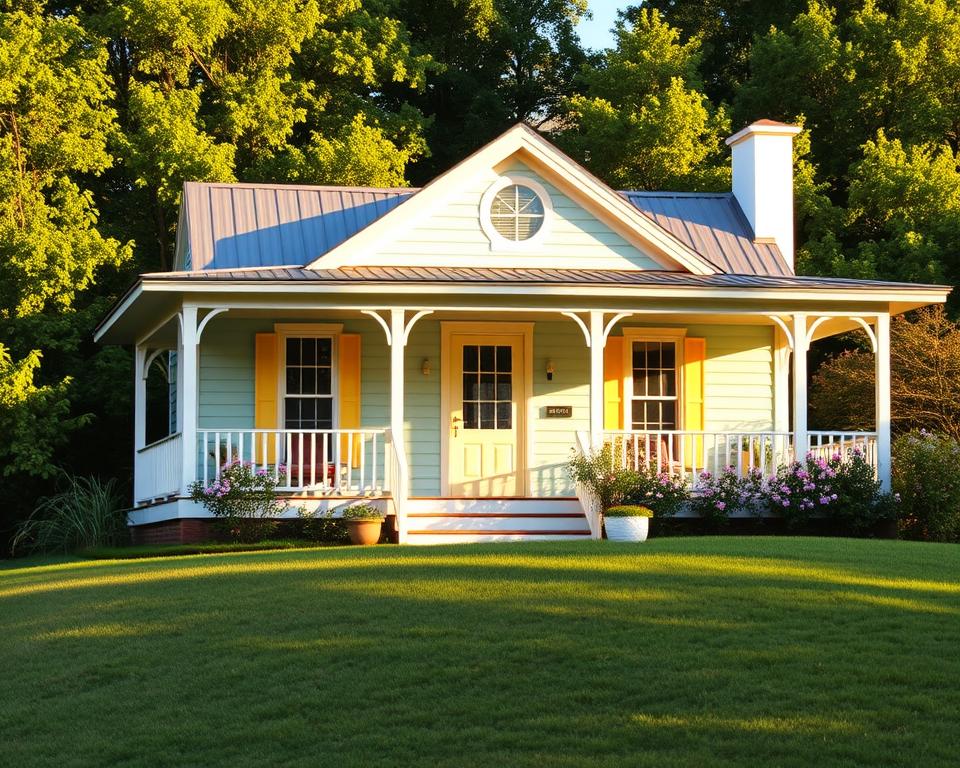
A well-chosen colour scheme can transform a simple timber structure into a garden feature. It creates harmony between architecture and nature.
Traditional Schemes versus Contemporary Choices
Classic approaches often feature darker walls with lighter trim. White, cream, or pale shades on doors and windows create definition.
Greens, beiges, and greys work beautifully within this traditional format. These colours complement natural surroundings while providing visual interest.
Modern alternatives might use a single colour throughout for a streamlined look. This approach helps the structure blend with garden foliage.
Contemporary choices often feature bolder contrasts and unexpected colour combinations. They make architectural elements stand out rather than recede.
How Colour Influences Style and Mood
Specific shades can evoke different atmospheres within an outdoor space. Coastal blues suggest beachside relaxation, while deep reds reference Nordic forests.
The chosen palette directly affects how people experience the summer house. Muted greens create serene environments, while brighter tones energise the space.
Colour selection impacts the perceived style of the entire garden area. It can suggest rustic charm or modern sophistication with equal effectiveness.
Understanding these relationships helps homeowners create their desired outdoor atmosphere. The right combination enhances both aesthetic appeal and functional enjoyment.
Choosing the Right Exterior Paint Type
Proper paint selection forms the foundation for durable and attractive summerhouse exteriors. The choice between different formulations significantly impacts longevity and maintenance requirements.
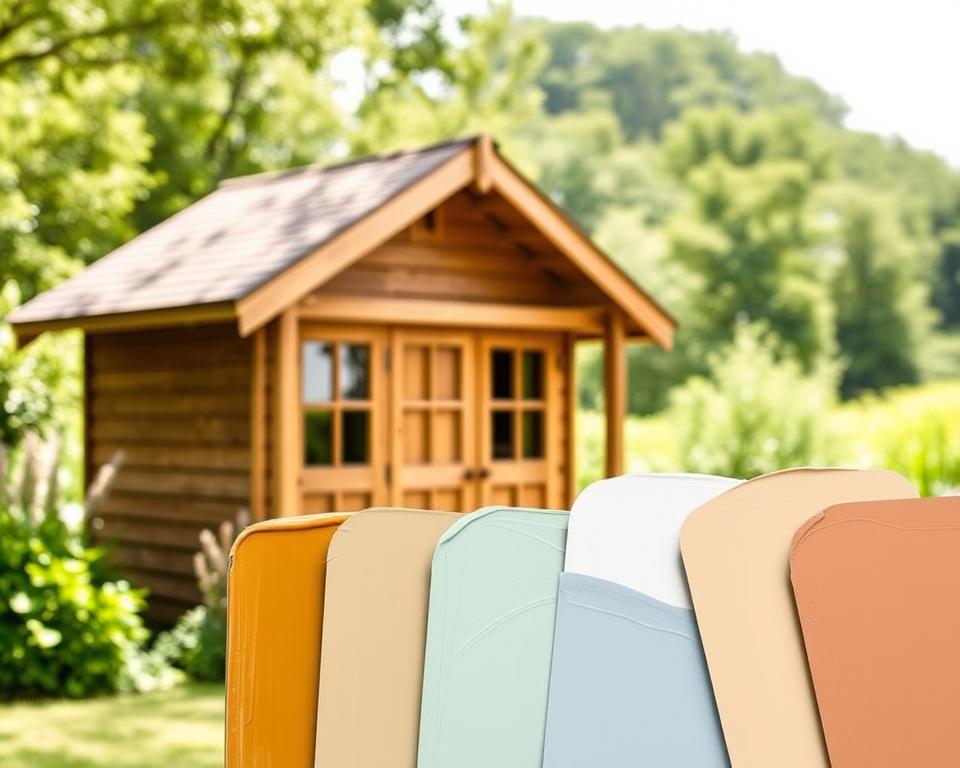
Homeowners should consider climate conditions and project timeline when selecting house paint. Each option offers distinct advantages for painting summer house projects.
Advantages of Water-Based Paints
Water-based formulations provide quick drying times, ideal for UK weather patterns. This feature allows painting between rain showers or during weekend projects.
These paints feature low odour and reduced VOC content, making application more pleasant. Cleanup requires only water, simplifying the process for DIY enthusiasts.
Modern exterior latex paint offers excellent durability against cracking and yellowing. Advanced formulas include protection against mould, mildew, and UV damage.
Benefits of Traditional Oil-Based Paints
Oil-based options deliver superior adhesion on challenging surfaces and existing coatings. They perform well on wood with loose or flaking paint.
These paints create a water-resistant barrier that protects against outdoor elements. This moisture resistance helps prevent wood rot in damp climates.
The rich, lustrous finish enhances colour depth and vibrancy. Despite longer drying times, the resilience makes them worthy for long-term investment.
Integrating Colour with Your Garden and Surroundings
A garden’s beauty lies in its rich tapestry of natural hues. Integrating a summer house into this living canvas requires thoughtful consideration. The goal is to achieve a seamless connection between the structure and its environment.
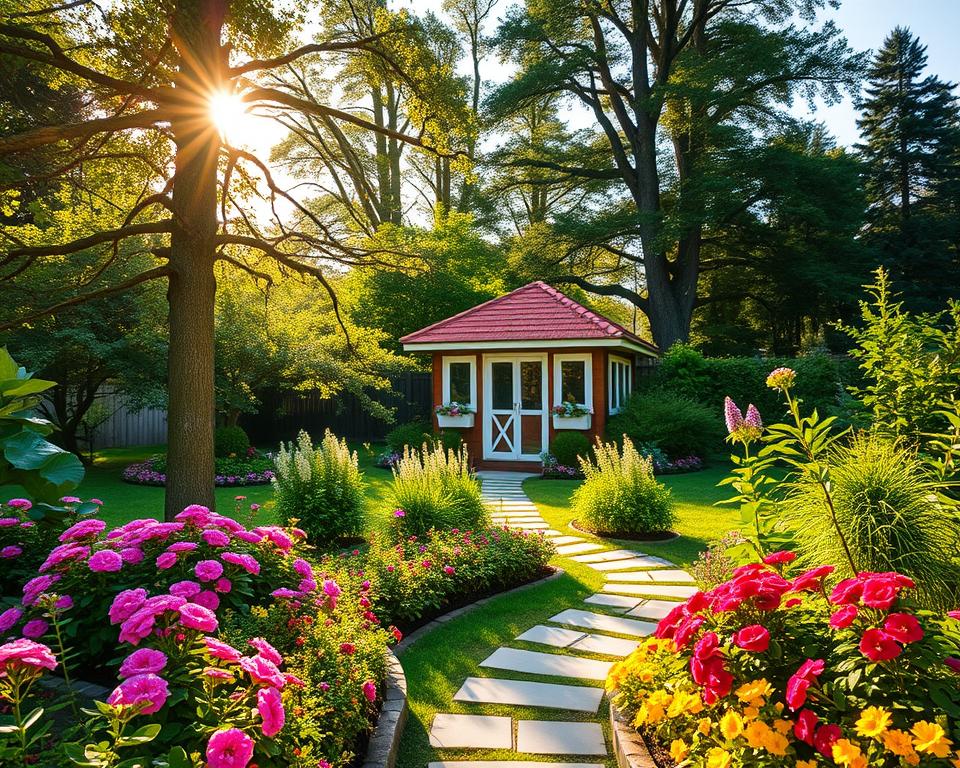
This process transforms a standalone building into a harmonious part of the outdoor space.
Blending with Natural Features
Start by assessing the existing garden colours. Look at foliage, flowering plants, and hardscaping. These elements provide a palette for informed colour choices.
For gardens with blue hydrangeas or purple lavenders, soft blue or muted lavender shades create a cohesive scheme. This approach allows the summer house to blend beautifully with its surroundings.
Avoid selecting a green that matches surrounding plants too closely. The structure might disappear into the background. Instead, choose a shade with enough contrast to maintain its presence.
Bolder colours like red or sunny yellow create striking contrast against green expanses. These hues make the summer house an unmissable, vibrant focal point.
Consider how sunlight affects colour appearance throughout the day. A shade might look different in morning light compared to evening. This variation influences the final decision.
Coordinate the summer house colour with existing garden furniture and fencing. A unified design scheme creates a polished, intentional outdoor space. This coordination ensures every element works together.
Ultimately, the choice depends on the summer house’s intended use and position. A retreat for quiet reflection might benefit from subtle, blending colours. A space for social gatherings could embrace a more prominent, contrasting hue.
Creating the Perfect Interior Ambience
Creating an inviting interior space involves harmonising colour choices with lighting and accessories. This approach transforms a basic garden building into a personalised retreat.
The interior atmosphere significantly impacts how people experience their summer house. Thoughtful design choices create environments suited to different activities and moods.
Curating Interior Colour Schemes
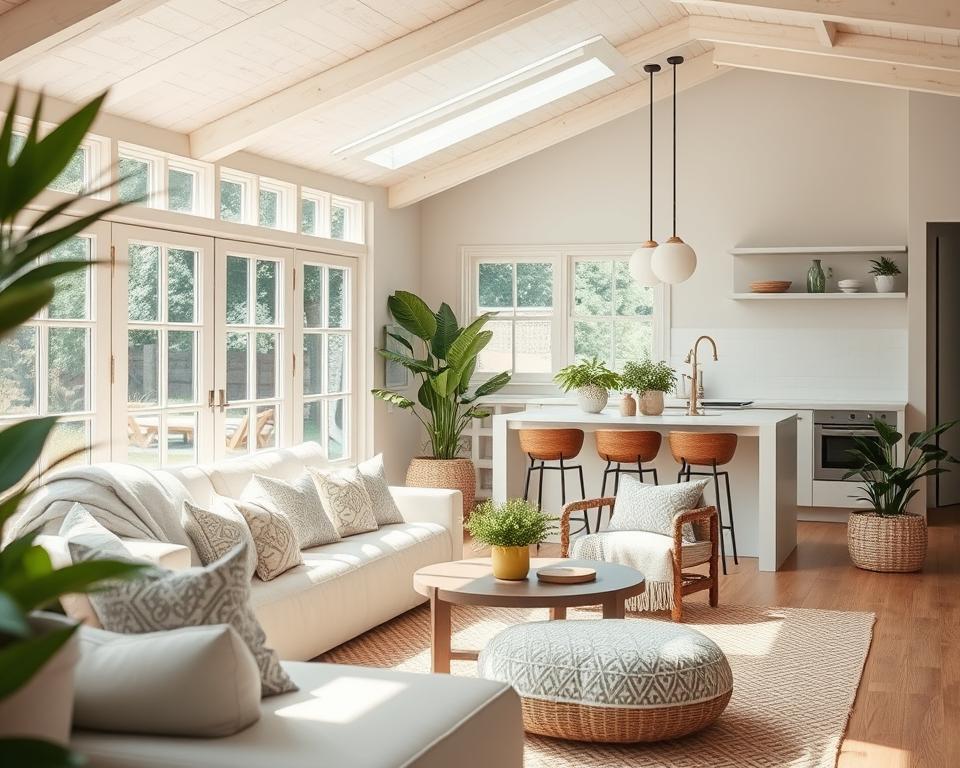
Five distinct schemes offer varied atmospheres for garden buildings. Classic Elegance uses neutrals like Soft Linen and Warm Beige for sophistication.
Coastal Retreat employs Seashell White and Sky Blue for airy calm. Modern Minimalism features Graphite Grey and Pure White for contemporary appeal.
Rustic Charm blends Harvest Brown and Moss Green with natural wood. Vibrant Bohemia uses Turquoise Bliss and Sunny Yellow for eclectic energy.
Each palette influences spatial perception dramatically. Lighter colours expand smaller areas while darker tones create cosy intimacy.
Complementary Lighting and Accessories
Lighting dramatically affects colour appearance and overall ambience. Warm yellow light creates relaxing spaces ideal for unwinding.
Bright white illumination suits work areas or detailed activities. The boutique hotel approach uses neutral bases with colourful accents.
This strategy allows seasonal décor changes without repainting. Cushions, furniture, and plant pots provide flexible colour touches.
Coordinating accessories with the chosen scheme maintains design coherence. This approach ensures a sophisticated yet adaptable interior space.
Drawing Inspiration from the Latest Trends
Today’s colour trends blend innovative palettes with enduring classics, providing fresh inspiration for outdoor living spaces. Current movements emphasise natural shades that connect with environmental awareness.
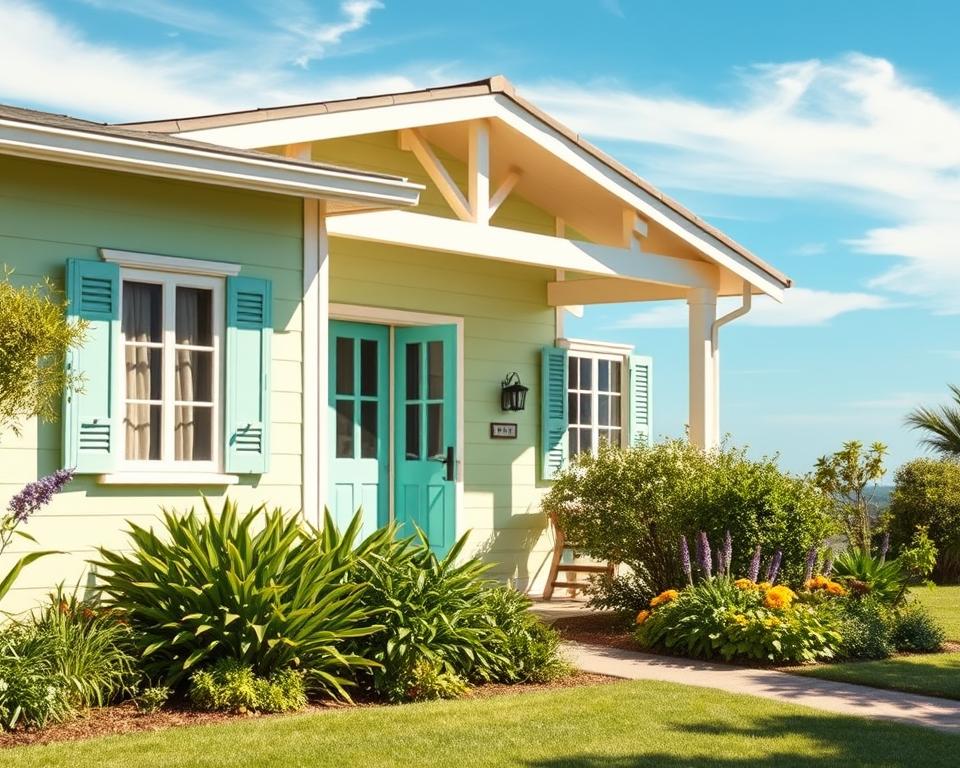
These directions offer exciting options for garden structure finishes. They balance contemporary appeal with lasting style.
Bold and Bright Options for a Statement Look
Vibrant choices make garden buildings stand out as distinctive features. Pantone’s Viva Magenta brings energy to exterior finishes.
Jewel tones and rich blues create nautical or Mediterranean aesthetics. These shades work well with traditional darker walls and lighter trim.
Dark reds and burgundies evoke Nordic style when paired with light trim. This approach creates enchanted forest appeal.
| Bold Colour | Style Association | Best With Trim |
|---|---|---|
| Viva Magenta | Modern statement | White or cream |
| Jewel tones | Mediterranean | Natural wood |
| Navy blue | Coastal nautical | Bright white |
| Burgundy | Nordic forest | Pale grey |
Rustic Neutrals and Timeless Hues
Neutral palettes offer versatility and enduring appeal. Soft beiges, gentle greys, and creamy whites create flexible backdrops.
These shades allow frequent changes to garden furniture without repainting. Natural wood stains highlight timber grain beautifully.
Limewash-effect finishes provide vintage character. Warm neutrals create organic transitions between built and natural elements.
This approach ensures the structure remains connected to its garden environment. It offers a canvas for seasonal accessory updates.
Practical Tips for Painting Your Summerhouse
Proper surface preparation is the foundation for a durable and attractive painted finish. A meticulous approach ensures professional results that withstand outdoor conditions.
Surface Preparation and Paint Application
Begin by thoroughly inspecting the structure for damage or peeling coatings. Address any repairs before proceeding with the painting project.
Clean surfaces using a pressure washer or scrub brush with mild detergent. Remove all dirt, dust, and mildew for optimal adhesion. Allow complete drying before application.
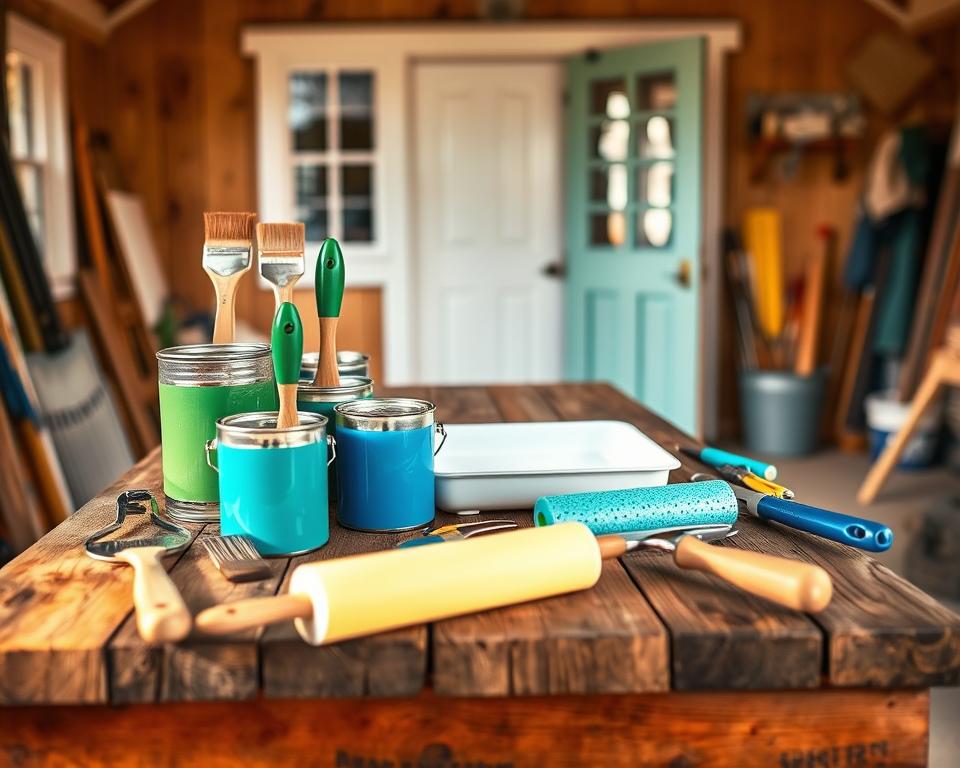
Scrape away loose or flaking paint using appropriate tools. Sand edges smooth to create seamless transitions. Apply primer when changing colour schemes significantly or dealing with deteriorated surfaces.
| Essential Tool | Primary Use | Application Tip |
|---|---|---|
| Paint scraper | Removing loose paint | Work gently to avoid damaging wood |
| Sanding block | Smoothing surfaces | Use medium grit for best results |
| Primer brush | Applying base coat | Choose synthetic bristles for water-based products |
| Paint roller | Covering large areas | Use extension pole for high sections |
Start painting from the top, working downward systematically. Use brushes for detailed areas and rollers for flat surfaces. Apply thin, even coats with proper drying time between applications.
Maintaining a Long-Lasting Finish
Regular inspection helps identify early signs of wear. Address minor issues promptly to prevent major problems.
Clean painted surfaces annually using gentle methods. Consider roof material and colour when planning maintenance. Decide whether window and door frames should contrast or match the main scheme.
This maintenance routine extends the life of your garden building’s finish. It preserves both appearance and protection against the elements.
Conclusion
Ultimately, the journey of selecting a finish for a garden building is a deeply personal one. This guide has explored how a paint colour influences both aesthetic appeal and the atmosphere of a space.
From serene pastels to bold, energetic hues, every scheme tells a story. The right choice transforms a simple structure into a personalised retreat that reflects individual style.
Consider how the selected palette integrates with the garden and main home. A thoughtful approach ensures the summer house becomes a harmonious extension of living space.
By balancing practical advice with creative inspiration, homeowners can approach their project with confidence. The result is a beautiful, durable finish that enhances outdoor living for years.
FAQ
Why is painting a summerhouse considered essential?
Applying paint provides vital protection against weather damage, extending the building’s lifespan. It also enhances the garden’s overall aesthetic, making the structure a deliberate part of the landscape design.
How does colour choice influence the style of a summerhouse?
Colour profoundly impacts the building’s character. Traditional schemes might use heritage shades for a classic feel, while contemporary choices in bold or neutral tones can create a modern, striking look.
What are the advantages of water-based paints for garden buildings?
Water-based paints often have lower VOC levels, making them more environmentally friendly. They typically offer easier cleanup and faster drying times, which is useful for outdoor painting projects.
How can I ensure the summerhouse colour complements my garden?
Consider the surrounding plants, garden furniture, and other structures. Choosing a shade that either blends with natural features or provides a pleasing contrast creates a harmonious outdoor space.
What should I consider when selecting an interior colour scheme?
The interior palette should promote the desired ambience, whether relaxing or energising. It should work harmoniously with lighting and accessories to create a cohesive and inviting interior space.
Are bold colours a good choice for a summerhouse?
Absolutely. Bold and bright paint colours can create a stunning statement look, transforming the garden building into a focal point. This approach works well for those wanting to express individuality.
What is the most important step before painting a summerhouse?
Proper surface preparation is crucial. This includes cleaning, sanding, and applying a suitable primer to ensure the paint adheres correctly and delivers a durable, long-lasting finish.
How can I maintain the paint finish on my summerhouse?
Regular cleaning and occasional inspection for chips or wear help maintain the appearance. Touching up damaged areas promptly prevents moisture from affecting the wood and preserves the building’s look.