How to Remove a Concrete Shed Base: Expert Advice

When it’s time to refresh a garden, homeowners often face the challenge of dealing with an old, solid foundation. This comprehensive guide addresses dismantling one of the most durable garden building supports. Repurposing an outdoor space or replacing a garden structure requires careful planning and execution.
This demanding but entirely achievable project is suited for determined DIY enthusiasts. Success hinges on acquiring the proper knowledge, tools, and safety precautions before starting any demolition work. Our professional, step-by-step guidance covers the entire process.
Whether the goal is to install a new shed on a different foundation, create a patio, or establish a garden bed, understanding the correct way to deal with an existing concrete foundation is essential. This expert advice draws on industry best practices to ensure a safe and efficient outcome.
Inhaltsverzeichnis
Key Takeaways
- This guide offers a complete overview for tackling a substantial garden improvement project.
- Proper preparation, including safety measures and tool selection, is fundamental for success.
- The process involves several stages, from initial assessment to final disposal of materials.
- Understanding the scope of work helps in planning the logistics and physical effort required.
- Following professional advice ensures the task is completed safely and effectively.
- The end result allows for new landscaping opportunities and a refreshed outdoor area.
Understanding the Importance of Removing a Concrete Shed Base
Garden transformations often begin with addressing the solid foundations left by previous structures. This initial evaluation sets the stage for successful landscape improvements.
Project Benefits and Future Use of the Space
Eliminating an old concrete slab creates exciting opportunities for garden redesign. Property owners gain flexibility for new installations or natural landscaping.
The space becomes available for modern garden buildings, decorative patios, or flourishing flower beds. This transformation enhances both functionality and visual appeal.
Assessing the Condition of Your Current Shed Base
Thorough examination of the existing concrete foundation determines the demolition approach. Key factors influence the tools and effort required.
Homeowners should measure dimensions and check for reinforcement materials. Existing cracks or damage can simplify the breaking process.
| Assessment Factor | What to Look For | Impact on Removal | Recommended Action |
|---|---|---|---|
| Thickness | Depth measurement | Determines tool selection | Use appropriate breaking equipment |
| Reinforcement | Metal mesh or rebar | Increases difficulty | May require metal cutting tools |
| Surface Condition | Cracks, weathering | Affects breaking strategy | Target weak points first |
| Utility Lines | Underground services | Safety consideration | Contact utility companies |
Proper assessment ensures safety and efficiency throughout the demolition process. It helps avoid unexpected complications during the project.
Preparation and Safety Measures for Removing Concrete
Meticulous preparation distinguishes professional concrete removal from hazardous DIY attempts. This phase establishes the framework for a secure and efficient operation.
Site Preparation and Ground Checks
Thorough clearance of the work area prevents accidents and facilitates access. Homeowners should remove all garden furniture, plants, and debris from the vicinity.
Investigating underground utilities is absolutely essential. Carefully checking for pipes or cables beneath the slab prevents costly damage and dangerous situations.

Essential Personal Protective Equipment
Proper protective gear is non-negotiable for this demanding task. Concrete demolition generates flying fragments and harmful dust particles.
A comprehensive safety kit includes safety goggles, dust masks, and sturdy gloves. Steel-toe-capped boots and long-sleeved clothing provide additional protection.
Lightly dampening the surface before work reduces dust dispersion. Having all necessary tools and equipment ready beforehand streamlines the process.
How to Remove a Concrete Shed Base – Step-by-Step Guide
Taking apart a hardened garden building support demands careful execution following established protocols. This systematic approach ensures both safety and efficiency throughout the demolition process.
Initial Steps: Clearing and Examining the Area
Before any demolition begins, thorough site preparation is essential. Property owners must clear all items from the surface and surrounding area.
A detailed inspection identifies the slab’s thickness and condition. Checking for underground hazards prevents costly complications during the project.
Breaking the Slab and Creating Manageable Chunks
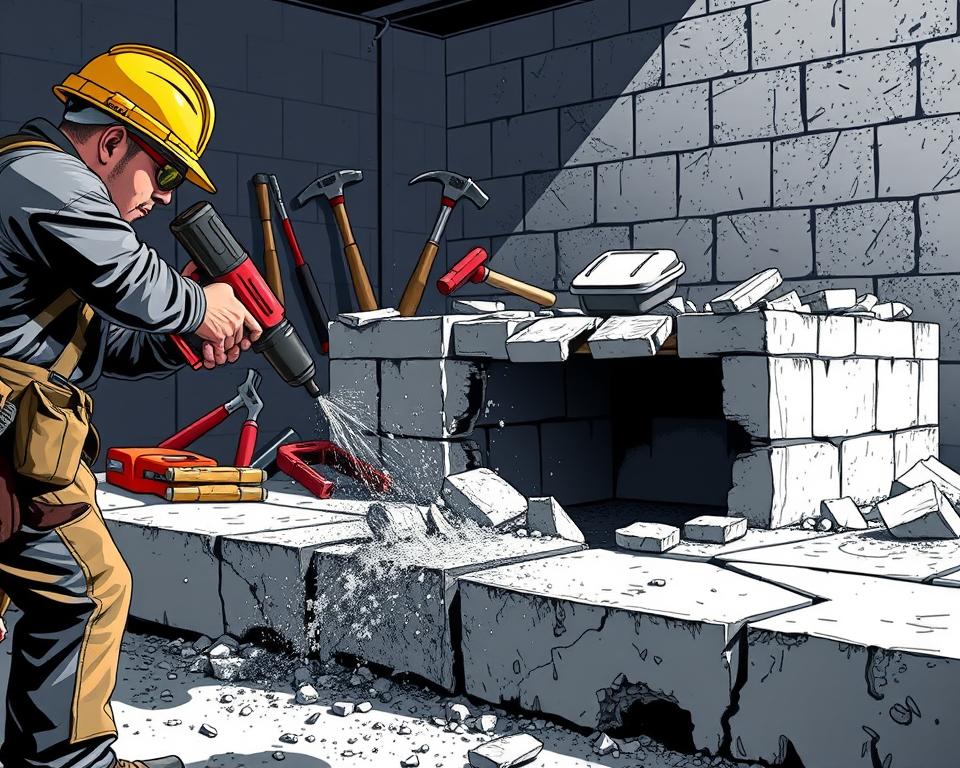
Effective demolition starts at the slab’s edges rather than the centre. Using a sledgehammer in a targeted pattern weakens specific spots across the surface.
As cracks develop between impact points, inserting tools like a crowbar helps separate sections. This methodical approach creates manageable pieces for removal.
Efficiently Removing and Disposing of Rubble
Systematic collection begins with smaller chunks before tackling heavier pieces. Heavy-duty sacks and wheelbarrows facilitate organised transport to collection areas.
Responsible disposal options include skip hire or recycling centres. Many companies accept old materials for environmentally friendly processing.
| Method | Best For Thickness | Primary Tools | Key Technique |
|---|---|---|---|
| Manual Breaking | Up to 3 inches | Sledgehammer, crowbar | Edge-first pattern strikes |
| Power Tool Approach | 4+ inches | Jackhammer | Grid pattern from corners |
| Combined Method | Variable thickness | Mixed tools | Strategic weak point targeting |
Essential Tools and Equipment for the Task
Selecting the right equipment is fundamental for a successful project. The choice between manual and power tools depends on the slab’s thickness and reinforcement.

Proper preparation with the correct tools ensures the work is completed safely and efficiently.
Manual Tools: Sledgehammer, Crowbar and Chisels
For thinner slabs, manual tools are often sufficient. The sledgehammer is the primary tool for initial impact.
Heavy-duty models, like the RS Pro medium carbon steel sledgehammer, deliver the force needed to fracture material. A bolster chisel allows for precision work, targeting cracks and guiding breaks.
The crowbar provides essential leverage. It pries up loosened sections and helps break apart connected pieces.
Power Tools and Their Applicability
Power tools dramatically speed up the process for thicker slabs. An electric jackhammer can break about six tons of material per hour.
This makes it ideal for medium-sized foundations that would be exhausting by hand. For the most challenging jobs, petrol-fuelled hydraulic breakers are the heavy-duty option.
They deliver thousands of strikes per minute but require proper training to use safely.
| Tool Type | Best For Slab Thickness | Key Tool Example | Primary Function |
|---|---|---|---|
| Manual | Up to 3 inches | Sledgehammer | Initial impact fracturing |
| Manual | Any | Bolster Chisel | Precision cracking |
| Manual | Any | Crowbar | Leverage and prying |
| Power | 4 inches + | Electric Jackhammer | Rapid demolition |
| Power | Reinforced/Thick | Hydraulic Breaker | Heavy-duty breaking |
Supporting equipment is equally important. Heavy-duty gloves, safety glasses, a wheelbarrow, and rubble sacks are critical for safety and cleanup.
Conclusion
Achieving a cleared garden area requires systematic demolition and responsible material handling. This demanding task involves a lot of physical effort, but following proper procedures makes it entirely achievable for determined homeowners.
The cleared space becomes a blank canvas for garden transformation. Property owners can create new foundations, patios, or open planting areas. This way of reclaiming land enhances outdoor functionality and aesthetic appeal.
Responsible disposal of concrete rubble completes the project successfully. By dividing the work into manageable stages and celebrating progress, homeowners transform their outdoor spaces with confidence and lasting results.
FAQ
What are the main benefits of removing an old concrete shed base?
Removing an old slab frees up garden space for new landscaping projects, such as a lawn or patio. It also prevents potential trip hazards and allows for a fresh start with a new, properly installed foundation.
What safety equipment is essential for breaking up concrete?
Essential personal protective equipment includes safety goggles, sturdy gloves, steel-toe-capped boots, and long trousers. A dust mask is also highly recommended to avoid inhaling fine particles during the work.
What is the most effective way to break up a concrete slab?
The most effective method involves using a sledgehammer to create cracks, starting from the edges. A crowbar can then be used to lever the broken sections apart. For larger slabs, scoring lines with a concrete saw first can make the job easier.
How should the resulting rubble be disposed of?
Smaller amounts of rubble can often be taken to a local recycling centre. For larger projects, hiring a skip is the most efficient solution. Some companies also offer grab lorry services for collection.
Are power tools necessary for this type of project?
While a sledgehammer and crowbar can suffice for smaller slabs, power tools like an electric demolition hammer or a concrete breaker can significantly speed up the process and reduce physical strain on larger jobs.
What should be checked on the site before starting work?
It is crucial to check for underground utilities, such as water pipes or electrical cables, before any digging or breaking begins. The ground condition around the slab should also be assessed to ensure it is stable and safe to work on.