Add a Roof to Your Pergola: Shade & Shelter Solutions
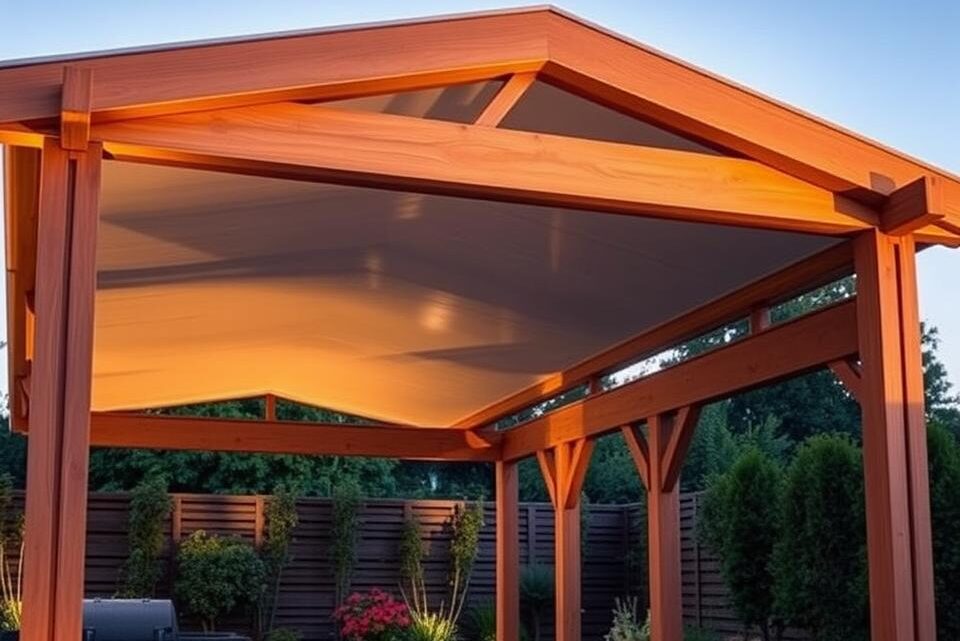
Transforming an open pergola into a covered outdoor retreat represents a significant enhancement to any garden. This modification creates a dedicated area that combines aesthetic appeal with practical functionality. Homeowners can enjoy their outdoor spaces throughout the year, regardless of weather conditions.
The primary purpose of adding overhead coverage is to strike a perfect balance. It maintains the open-air atmosphere while providing essential protection from environmental elements. This creates a comfortable sanctuary for relaxation and entertainment.
This article explores the comprehensive process of enhancing your structure. It covers material choices, installation techniques, and design considerations. A properly covered pergola can become the central feature of your outdoor living area.
Many property owners have concerns about modifying their existing structures. This guide addresses those questions directly. It provides professional, actionable advice to help make informed decisions about your project.
Inhaltsverzeichnis
Key Takeaways
- Adding overhead coverage extends the usability of your garden throughout the seasons
- Various materials are available to suit different aesthetic preferences and budgets
- Proper installation enhances both the functionality and visual appeal of your outdoor area
- A covered structure can significantly increase your property’s value and appeal
- The modification creates a versatile space for entertainment and relaxation
- Professional guidance ensures the project meets safety standards and local regulations
- Careful planning balances open-air enjoyment with essential weather protection
Understanding the Need for a Pergola Roof
The decision to cover a pergola addresses fundamental needs for comfort and usability in outdoor areas. Many homeowners discover that basic structures lack sufficient overhead protection when conditions change.
Benefits of Adding a Roof
Weather protection stands as the primary advantage of installing overhead coverage. This modification shields occupants from intense sun, unexpected rain, and even light snow. The benefits of a covered pergola extend beyond basic shelter.
Proper overhead protection creates comfortable outdoor living spaces during peak summer months. It blocks harmful UV rays while maintaining ventilation. This combination ensures enjoyable experiences regardless of weather patterns.
Enhancing Outdoor Usability
A roofed pergola transforms garden spaces into true extensions of the home. It enables year-round use for dining, entertaining, and relaxation. The structure becomes more than just a seasonal feature.
This enhancement significantly increases property value by creating desirable outdoor living areas. Thoughtful design elevates aesthetic appeal while providing practical solutions. Homeowners gain versatile spaces that adapt to changing seasons and needs.
Shade & Shelter – How to Add a Roof to Your Pergola: Essential Steps
The process of enhancing an outdoor space with proper protection involves strategic decision-making. Homeowners must consider various factors before beginning their project. Careful planning ensures successful results.
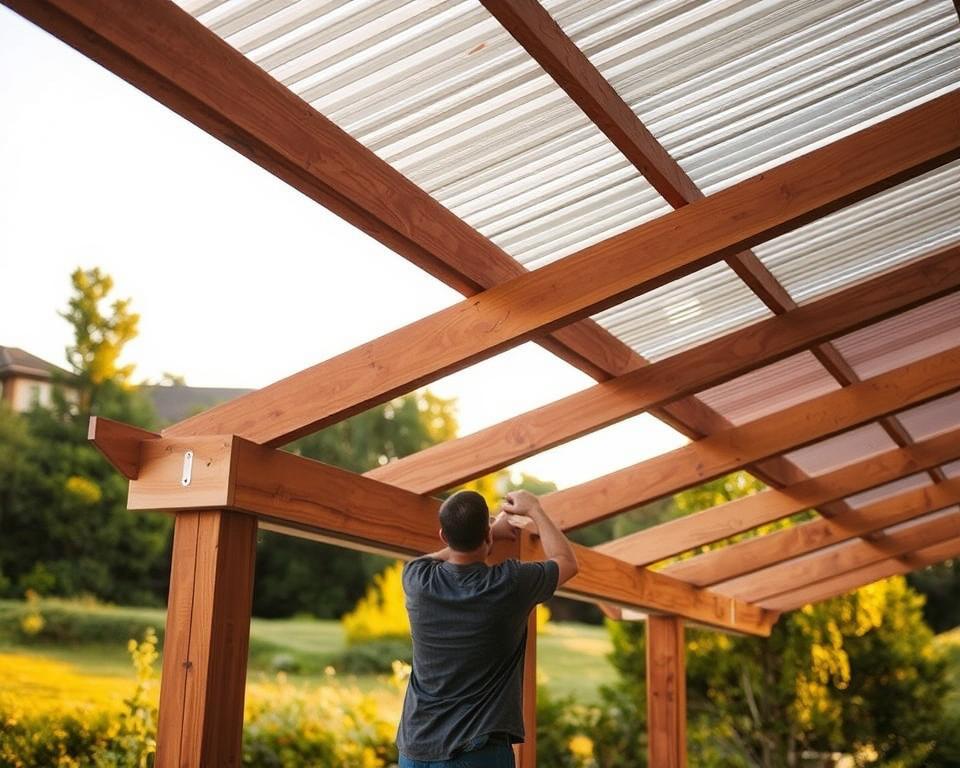
Choosing the Best Roofing Method
Selecting appropriate overhead coverage depends on climate conditions and structural requirements. Permanent solutions offer durable protection against weather elements. Retractable options provide flexibility for changing seasons.
Consider these factors when deciding on roofing methods:
- Local weather patterns and exposure requirements
- Structural capacity of existing framework
- Maintenance expectations and long-term durability
- Aesthetic compatibility with garden design
The choice between DIY and professional installation affects both budget and timeline. Complex systems often require specialist expertise.
Planning Your Installation
Proper preparation prevents potential issues during the installation process. Assess the existing pergola’s condition and load-bearing capacity. Structural reinforcements may be necessary for heavier roofing materials.
Evaluate sun patterns and orientation to maximise protection during peak hours. South-facing gardens require particular attention to afternoon coverage. Proper planning ensures the final result meets practical needs.
Budget considerations should include material costs and potential professional assistance. A well-executed plan leads to successful integration of overhead protection.
Exploring Roof Materials and Options
The choice of roofing materials for pergola structures presents homeowners with diverse options, each offering distinct advantages and considerations. These materials determine the level of protection, maintenance requirements, and overall aesthetic impact.
Understanding material properties helps property owners select solutions that align with their climate conditions and design preferences.
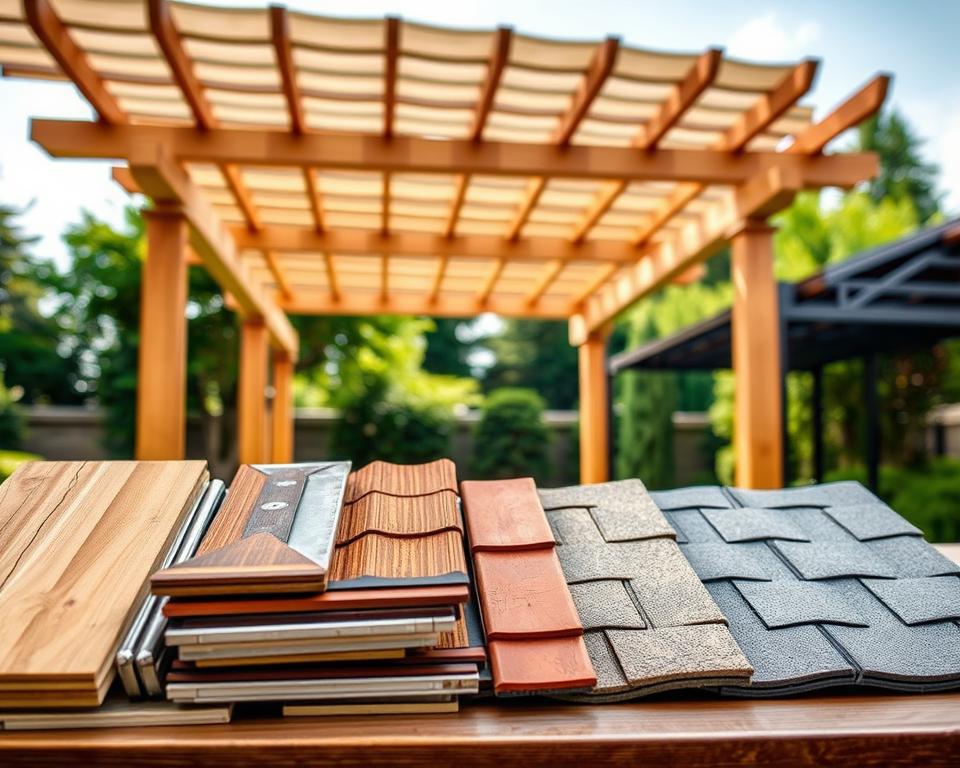
Polycarbonate Sheets
Polycarbonate panels provide excellent weather protection while maintaining light transmission. These lightweight materials offer durability against sun and rain exposure.
Available in clear or tinted variations, polycarbonate options block UV rays while allowing filtered light. Regular cleaning prevents scratching and maintains transparency over time.
Fabric Canopies
Fabric solutions deliver soft, stylish coverage with extensive colour choices. This versatile material allows for easy installation and seasonal removal.
Proper maintenance prevents mould formation in damp conditions. Fabric materials require more frequent attention than permanent alternatives.
Wooden Slats
Wood creates natural, rustic aesthetics with partial shading benefits. This traditional material maintains ventilation while providing character.
Annual treatment preserves wood against weather damage. Property owners should consider the maintenance commitment when selecting this option.
Metal Panels
Metal roofing offers durable, low-maintenance protection for long-term performance. These panels withstand harsh weather conditions effectively.
Insulation considerations address noise and heat retention issues. Metal materials provide reliable coverage with minimal upkeep requirements.
Step-by-Step Roof Installation Process
Proper installation techniques form the foundation of a durable and functional pergola roof system. This systematic approach ensures the final result meets both aesthetic and practical requirements.
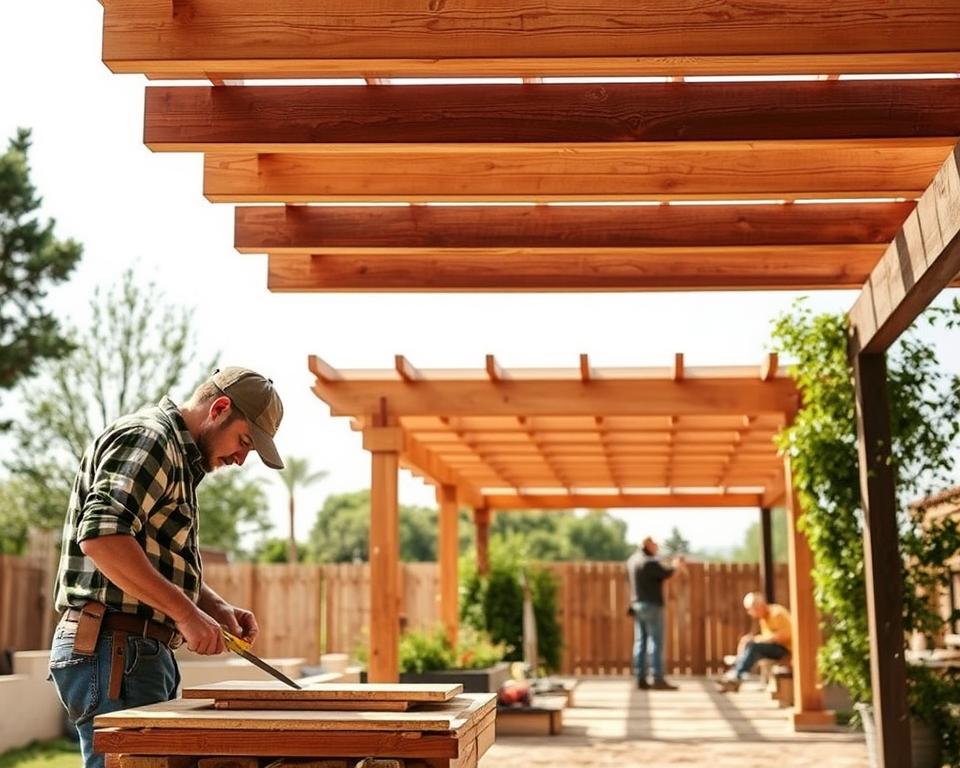
Preparing Your Pergola Structure
Before beginning any installation, thoroughly inspect the existing framework. Check for loose joints, damaged beams, or signs of structural weakness. Reinforcement may be necessary to support the additional weight.
Adding supplementary support beams strengthens the overall structure. This preparation phase prevents future issues with the pergola roof installation.
Securing the Roof Installation
Choose appropriate fasteners based on your selected roofing material. Proper securing prevents movement and sagging over time. Each material requires specific installation methods.
Fabric canopies need tight stretching to avoid drooping. Solid materials require even distribution across the framework. Correct installation ensures long-term stability.
Ensuring Proper Drainage and Ventilation
Water management is crucial for any pergola roof design. Incorporate slight slopes or guttering systems to direct rainwater away. This prevents accumulation and potential damage.
Ventilation gaps maintain comfortable temperatures underneath. Strategic placement allows airflow while maintaining protection. This balance enhances the pergola’s usability throughout different seasons.
Innovative Pergola Roof Designs and Ideas
Homeowners seeking cutting-edge solutions will find pergola roof technology offers unprecedented flexibility. Modern designs transform standard structures into sophisticated outdoor living spaces. These innovative ideas blend aesthetic appeal with practical functionality.

Retractable Roof Solutions
Retractable roofs provide ultimate control over outdoor conditions. Homeowners can enjoy open skies or instant protection as needed. These systems operate manually or with motorised convenience.
Fabric options are lightweight and easily replaceable. They allow natural light while offering adjustable coverage. This versatility makes retractable solutions popular for modern pergolas.
Louvered Systems for Customisable Shade
Louvered roof systems represent advanced pergola technology. They feature rust-resistant aluminium frames with integrated drainage. Simple winding mechanisms adjust slats for precise light control.
These systems are ideal for properties with bi-folding doors. Central legs can be removed to accommodate architectural features. Louvered designs offer year-round performance with minimal maintenance.
Creative Canopy Options
UV-protective screens and fabric walls provide innovative coverage solutions. Contract fabrics ensure durability against weather elements. Side cassettes add privacy and contemporary style.
These creative options allow pergolas to become enclosed spaces when desired. They maintain openness while offering protection. Such designs demonstrate the evolution of pergola functionality.
Maintenance and Care for Your Pergola Roof
Establishing a maintenance schedule protects your investment in pergola roof enhancements. Proper care ensures long-term performance and preserves aesthetic appeal. Different materials require specific attention to maintain their protective qualities.
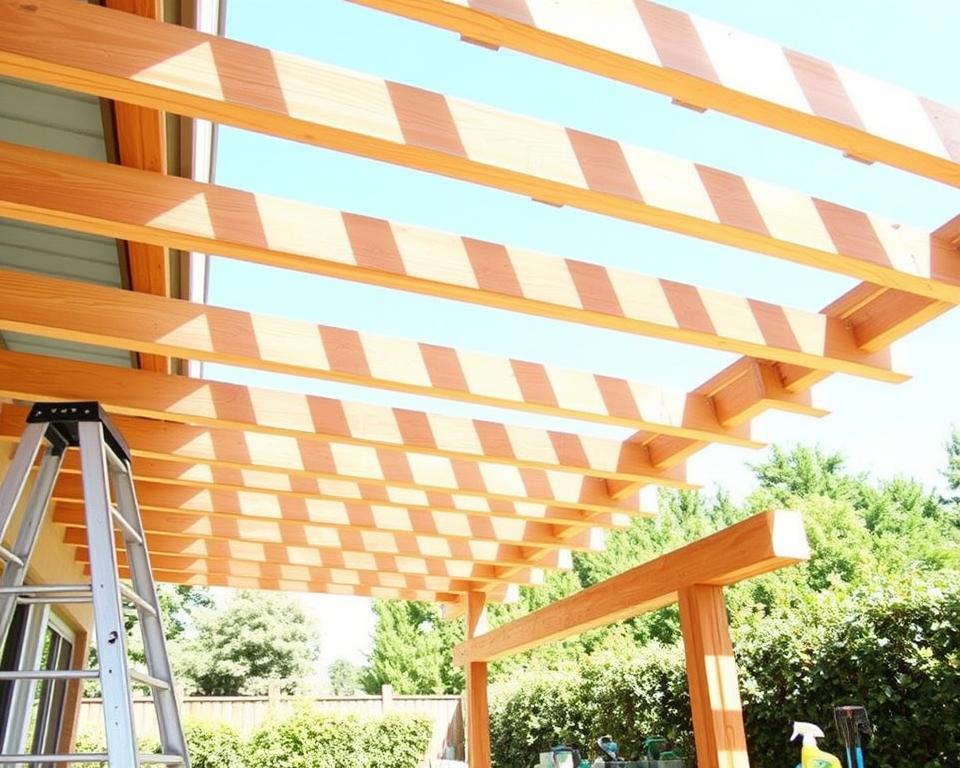
Cleaning and Upkeep Essentials
Each roofing material demands particular cleaning methods. Polycarbonate sheets need regular washing with mild soap solutions. This prevents scratching and maintains clarity over time.
Fabric canopies require gentle cleaning and proper storage during harsh weather. Wooden slats benefit from annual sealing to resist moisture. Metal panels need corrosion prevention through regular cleaning.
Seasonal Inspections and Repairs
Regular checks identify issues before they become major problems. Inspect for cracks in polycarbonate or rust on metal surfaces. Look for tears in fabric and rot in wooden components.
Prompt repairs maintain weather resistance and structural integrity. Seasonal maintenance prevents costly replacements. This proactive approach extends your roof’s lifespan significantly.
Additional Design Considerations and Customisation
Personalising your pergola roof involves thoughtful decisions that balance aesthetics with practical considerations. The right choices can transform a functional structure into a stunning focal point that enhances your entire outdoor space.
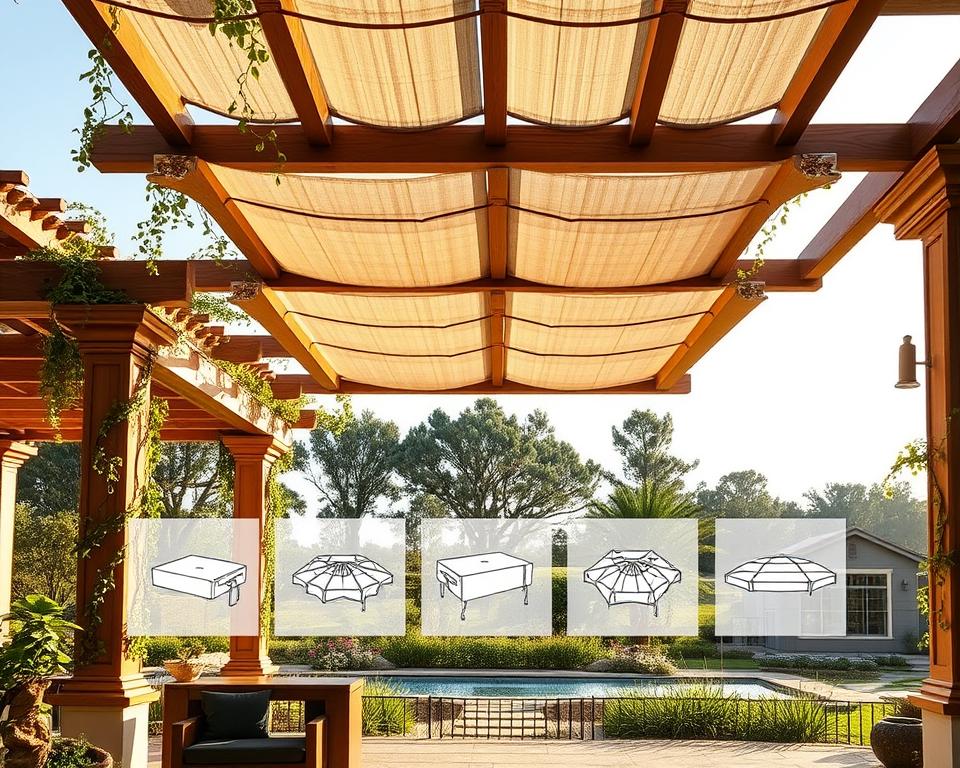
Homeowners should consider how their pergola roof complements their home’s architectural style. Modern properties often suit sleek metal finishes, while traditional gardens benefit from wooden aesthetics.
Aesthetic Finishes and Material Trends
Current trends favour materials that offer both durability and visual appeal. Wooden finishes remain popular for their natural look and customisation potential through stains and treatments.
Metal options provide contemporary finishes with minimal maintenance requirements. These materials create clean lines that suit modern garden designs.
Consider these popular finishes:
- Wood stains that enhance natural grain while providing weather protection
- Powder-coated metal in colours matching existing outdoor furniture
- Textured polycarbonate panels that diffuse light beautifully
Budget Tips and DIY Approaches
Pergola roof kits offer cost-effective solutions for homeowners comfortable with DIY projects. These kits typically include all necessary materials and instructions for straightforward installation.
Strategic material selection helps manage costs without compromising style. Combining premium finishes in visible areas with economical options elsewhere creates impressive results within budget.
Key budget considerations include:
- Comparing material costs against long-term maintenance requirements
- Assessing DIY capabilities versus professional installation costs
- Planning for future enhancements or modifications
Thoughtful design choices ensure your pergola roof becomes an integral part of your garden’s character. The right combination of materials and finishes creates a space that reflects personal style while meeting practical needs.
Conclusion
A well-designed pergola roof creates a seamless transition between indoor comfort and outdoor enjoyment. This enhancement transforms garden spaces into versatile areas for relaxation and entertainment throughout the year.
Homeowners can select from various materials including polycarbonate, fabric, wood, or metal panels. Each option offers distinct advantages for different climates and aesthetic preferences. Proper installation ensures durable protection from sun and rain.
Regular maintenance keeps these structures in excellent condition over time. Simple cleaning and seasonal inspections prevent major issues. This care extends the lifespan of your outdoor investment.
The right roofing solution elevates any pergola into a valuable extension of living space. It provides comfortable shelter while maintaining the open-air atmosphere that makes these structures so appealing.
FAQ
What are the primary benefits of adding a roof to a pergola?
Installing a roof significantly enhances a pergola’s functionality. It provides superior protection from rain and harsh sunlight, allowing homeowners to enjoy their outdoor space in various weather conditions. This addition also increases the structure’s durability and can raise the property’s overall value.
Which roofing material offers the best balance of light transmission and weather resistance?
Polycarbonate panels are a popular choice for this purpose. They are exceptionally durable, offer excellent resistance to impact and UV rays, and are available in various opacities. This allows for diffused natural light to filter through while providing solid shelter from the elements.
How difficult is it to install a pergola roof as a DIY project?
The complexity depends heavily on the chosen roofing material and the pergola’s design. Simple fabric canopies or basic polycarbonate sheet installations can be manageable for competent DIYers. However, more intricate systems like retractable roofs or louvered designs typically require professional installation to ensure safety and proper function.
What maintenance is required for a typical pergola roof?
Maintenance needs vary by material. Metal panels and polycarbonate generally require occasional cleaning with soapy water. Fabric canopies may need more frequent cleaning and should be checked for mould or tears. An annual inspection of all fixings, beams, and drainage is recommended for all roof types to identify any potential issues early.
Can a roof be added to an existing pergola structure?
In most cases, yes. It is crucial to first assess the existing structure’s strength and stability. The pergola’s beams and posts must be robust enough to support the additional weight of the roofing material, especially during winter or in windy areas. Consulting a builder or structural engineer is often advisable before proceeding.
Are there roofing options that allow for adjustable shade?
Absolutely. Retractable roofs, often made from waterproof fabric, offer flexible control. Louvered roof systems, with their adjustable blades, provide the most customisable solution. They can be tilted to block direct sunlight, allow light in, or closed completely for full protection from rain.