The Ultimate Guide on How to Grow Cacti in a Greenhouse

Cacti and succulents represent some of nature’s most resilient specimens. Despite their desert origins, these remarkable plants adapt wonderfully to various climates. Their ability to store moisture in fleshy stems and leaves makes them exceptionally low-maintenance choices for enthusiasts.
A well-managed greenhouse offers the perfect environment for these species to flourish. It provides consistent warmth throughout the year, protecting specimens from damaging frost below 10°C. This controlled setting prevents dormancy, enabling continuous development.
The true advantage lies in creating an optimised ecosystem. Different greenhouse configurations accommodate various species with specific temperature needs. Proper management of water, heat, and light transforms mere survival into vigorous growth and successful propagation.
Inhaltsverzeichnis
Key Takeaways
- Greenhouses provide year-round temperature control ideal for cacti cultivation
- These structures protect plants from frost damage below 10°C
- Controlled environments prevent dormancy and encourage continuous growth
- Different greenhouse setups suit various cactus species with unique requirements
- Successful cultivation depends on managing water, heat, and light effectively
- Greenhouses offer excellent conditions for propagating new plants
- Proper greenhouse management can lead to flowering and vigorous growth
Preparing Your Greenhouse Environment for Cacti
Proper greenhouse preparation requires thoughtful consideration of both construction and location factors. Creating the right foundation ensures optimal growing conditions for these resilient desert specimens.
Choosing the Ideal Greenhouse Structure and Location
Selecting the appropriate greenhouse involves evaluating permanent versus temporary options. While pop-up models offer convenience, custom-built structures provide superior control over insulation and durability.
Construction costs typically range from £400 to £25,000, with an average investment around £8,000. Geographic location significantly influences sizing, orientation, and heating requirements. South-facing positions maximise natural light exposure throughout the year.
Ventilation, Temperature, and Humidity Management
Maintaining precise environmental conditions is crucial for healthy specimens. Summer daytime temperatures should remain between 18-29°C, while night-time levels must not drop below 10°C.
Effective ventilation prevents heat buildup and humidity issues. Strategic placement of vents, doors, and fans ensures consistent air movement. Multiple thermometers monitor conditions across different areas of the space.
Heating solutions include whole-building systems or portable heaters with thermostats. Proper airflow management protects plants from fungal problems and root rot, creating ideal growing conditions.
How to Grow Cacti in a Greenhouse
The art of successful cultivation lies in balancing two critical elements: hydration management and light exposure. These factors determine whether specimens merely survive or truly flourish under protected conditions.
Optimising Watering Practices and Soil Drainage
The golden rule for these desert specimens is simple: allow soil to dry completely between waterings. This prevents root rot, the most common cause of failure. During active growth periods, watering every couple of weeks suffices, reducing to monthly in winter.
When hydrating, provide a deep soak until water flows through drainage holes. Never leave containers standing in excess moisture. Clay pots prove superior to plastic alternatives because their porous nature allows evaporation through the sides.

Soil composition matters greatly. Purpose-formulated cactus mix provides ideal drainage. Alternatively, create a custom blend using equal parts compost, coarse sand, and horticultural grit. This ensures roots access both hydration and essential air circulation.
Managing Sunlight and Supplementary Lighting
While these plants adore bright conditions, greenhouse glass can intensify sunlight to damaging levels. South-facing positions offer steady illumination without harsh exposure during peak months.
During summer, shading fabric protects against bleaching and yellow patches. In winter, insufficient natural light causes stretching and weakness. Supplementary UV lamps maintain compact, healthy structure throughout darker seasons.
Cactus Selection and Ongoing Plant Care
Proper cactus selection and maintenance routines ensure long-term health in greenhouse settings. The right choices prevent common problems before they start.
Selecting Suitable Cactus Varieties for Different Setups
Greenhouse conditions vary significantly between heated and unheated structures. Hardy varieties like Opuntia and Echinocereus tolerate temperature fluctuations in basic setups.
Heated environments support warmth-loving species such as Ariocarpus. Smaller cacti like Mammillaria offer practical advantages for beginners.
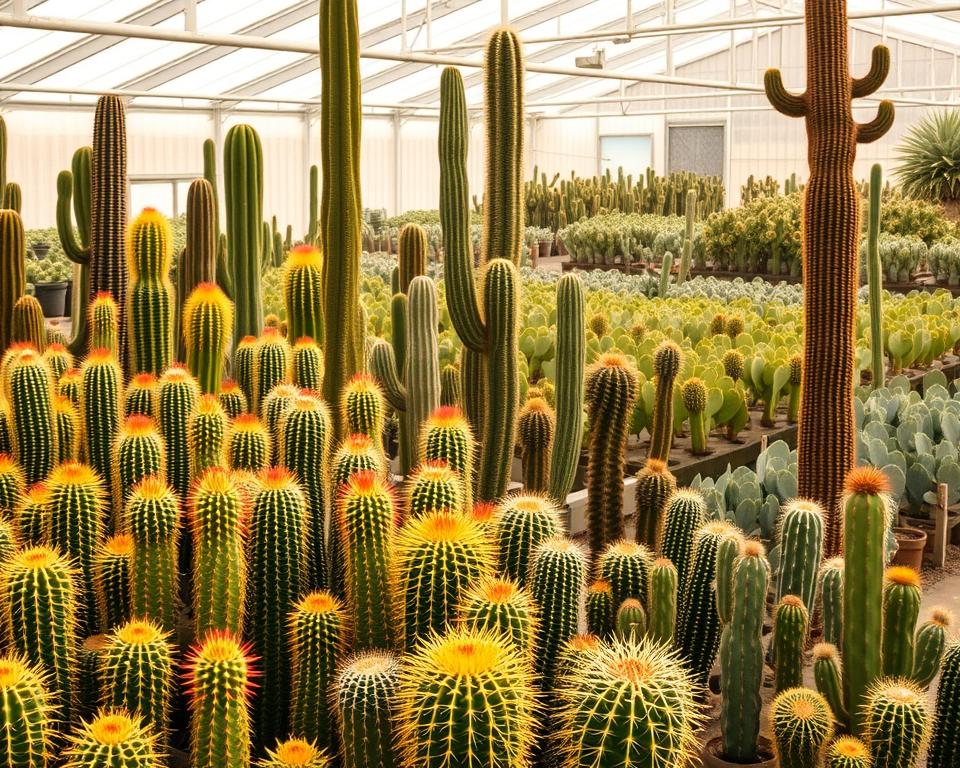
These compact specimens require less space and water. They adapt readily to changing light conditions throughout the year.
Dealing with Pests, Seasonal Challenges and Maintenance
Red spider mites and mealy bugs represent the most common pest threats. Regular inspection helps catch infestations early.
Organic solutions from garden centres provide effective treatment. Preventive measures include proper air circulation and quarantining new plants.
Seasonal adjustments maintain plant health during different months. Spring and summer demand more frequent watering.
Winter care reduces hydration to perhaps once per month. Overfeeding causes weak growth that cannot support the plant’s weight.
Conclusion
Mastering the cultivation of these resilient desert plants within a protected structure hinges on a delicate balance. It is the synergy of correct soil drainage, precise watering, and managed light exposure that creates the ideal conditions for success.
The fundamental rule remains: water less than you think. Allowing the soil to dry out completely between waterings is paramount for healthy roots. This simple practice, adjusted across the seasons, is the single most important factor.
Equally, managing sunlight and ensuring good air flow through effective ventilation prevents issues. These elements work together to replicate the arid conditions these plants naturally prefer.
While initial setup requires attention, the reward is a stunning, low-maintenance garden that thrives year-round. By applying this guide‘s principles, growers can confidently nurture a vibrant collection of cacti and succulents.
FAQ
What is the best type of greenhouse for cultivating cacti?
A well-ventilated greenhouse that offers ample sunlight is ideal. Structures with roof vents and side openings are excellent for managing heat and ensuring good air circulation, which is crucial for healthy cacti.
How often should cacti be watered inside a greenhouse?
Watering frequency depends on the season. During active growth in spring and summer, water when the soil is dry. In winter, water less, just enough to prevent the plant from shrivelling.
What soil mixture is recommended for potted cacti?
A fast-draining mix is essential. A combination of specialist cactus compost with added grit or perlite improves drainage and prevents roots from sitting in moisture.
Do cacti require additional lighting in a greenhouse?
While greenhouses provide excellent light, supplementary lighting can be beneficial during darker winter months to support the plant’s growth cycle and prevent etiolation.
How is temperature controlled for cacti during cold spells?
A> A greenhouse heater is often necessary to protect plants from frost. Maintaining a minimum temperature is vital to prevent damage during the colder months.
What are common pests to look out for?
Mealybugs and scale insects can be problematic. Regular inspection of leaves and stems helps with early detection. Isolate affected plants and treat them promptly.
When is the best time to repot a cactus?
The beginning of the growing season, typically early spring, is the ideal time. This allows the plant to establish itself in its new pot before peak growth.
Can different cactus species be grown together?
Yes, provided they have similar requirements for light, water, and soil conditions. Grouping plants with comparable needs simplifies care.
How important is pot selection?
A> Extremely important. Pots must have adequate drainage holes. Terracotta pots are a good choice as they allow the soil to dry out more quickly than plastic containers.
What are the signs of overwatering?
Signs include yellowing or softening of the plant, particularly at the base. Overwatering is a common issue that can lead to root rot.