Build Your Own Natural Swimming Pond: Instructions and Tips for Your Garden
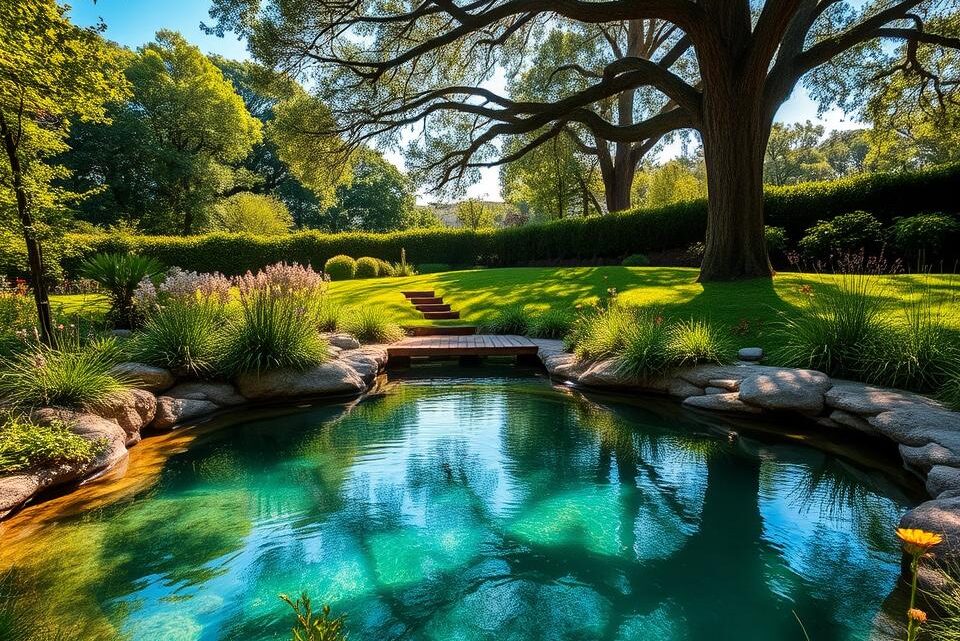
Imagine having a swimming pool that not only provides a refreshing place to swim but also blends seamlessly into your garden landscape.
A natural swimming pond offers a chemical-free alternative to traditional swimming pools, using biological filtration systems to maintain water clarity and purity.
This comprehensive guide will walk you through the process of planning and designing a pool that incorporates plants and water features, creating a self-sustaining ecosystem in your garden.
Inhaltsverzeichnis
Key Takeaways
- Learn how to create a chemical-free swimming environment
- Understand the benefits of using biological filtration systems
- Discover how to incorporate plants into your pool design
- Find out how to maintain water clarity and purity
- Create a self-sustaining ecosystem in your garden
Understanding Natural Swimming Ponds
A natural swimming pond is a contained ecosystem that allows you to swim in a chemical-free environment. These ponds are designed to mimic the natural processes found in lakes and rivers, creating a self-sustaining balance that keeps the water clean and clear.
Natural swimming ponds fundamentally differ from conventional swimming pools in their approach to water purification. Instead of relying on chemicals like chlorine, they utilize biological and mechanical processes to maintain water quality.
What Makes Natural Swimming Ponds Different
The key to a natural swimming pond’s success lies in its design, which typically features two distinct zones: the swimming zone and the regeneration zone. The swimming zone is the deeper area where you can swim, while the regeneration zone is a shallower area filled with aquatic plants, gravel, and beneficial microorganisms that act as a natural filter.
- Utilize biological processes rather than chemicals to maintain water clarity.
- Feature two distinct zones: a swimming zone and a regeneration zone.
- Create self-sustaining ecosystems that support local biodiversity.
The Ecological Benefits of Natural Swimming Ponds
Natural swimming ponds offer numerous ecological benefits. By avoiding the use of harsh chemicals, they create a healthier environment for swimmers and local wildlife alike. The presence of aquatic plants and microorganisms helps to maintain water quality, while also supporting a diverse range of species.
As highlighted by ecological experts, “Natural swimming ponds not only provide a unique swimming experience but also contribute to the local ecosystem by supporting biodiversity and improving water quality.”
The ecological benefits of natural swimming ponds extend beyond the pond itself, contributing to improved air quality and creating habitats for beneficial insects and amphibians. By choosing a natural swimming pond, you’re not only creating a beautiful garden feature but also supporting a sustainable ecosystem.
Planning Your Natural Swimming Pond
Planning is a crucial step in creating a natural swimming pond that blends seamlessly into your garden. A well-planned pond not only enhances the aesthetic appeal of your outdoor space but also ensures a healthy and sustainable swimming environment.
Assessing Your Garden Space
Begin by thoroughly assessing your garden space to determine the most suitable location for your natural swimming pond. Consider factors such as sunlight exposure, existing vegetation, soil type, and natural drainage patterns. Ideally, the area should receive at least 6 hours of direct sunlight daily to support plant growth in the regeneration zone.
Considering Local Regulations and Permits
It’s crucial to research local regulations and permit requirements before breaking ground. In the UK, natural swimming ponds often fall under ‘permitted development’ rights, provided they meet specific criteria, such as being for private use only and not exceeding 50% of your garden space. Ensure you comply with these regulations to avoid potential issues.
Determining the Ideal Size and Shape
The size and shape of your natural swimming pond will depend on your available space, intended usage, and aesthetic preferences. A general rule of thumb is that the regeneration zone should comprise approximately 50% of the total pond area to ensure effective natural filtration. Consider how the pond will integrate with your existing garden design and plan for easy access and privacy.
When planning your natural swimming pond, consider the following key factors:
- Choose a location with adequate sunlight and minimal shade from trees.
- Research local regulations and permit requirements thoroughly.
- Determine the ideal size and shape based on your space and needs.
- Plan for easy access and maintenance.
- Consider privacy and how to integrate the pond with your garden design.
As noted by experts, “A natural swimming pond is not just a swimming area; it’s an ecosystem that requires balance and harmony with nature.”
“The beauty of a natural swimming pond lies in its ability to blend into the surrounding landscape, creating a serene and natural swimming experience.”

Designing Your Natural Swimming Pond
When designing your natural swimming pond, it’s essential to balance the needs of both the swimming and regeneration zones. A well-designed pond not only enhances the aesthetic appeal of your garden but also ensures a healthy and enjoyable swimming experience.
The Two Essential Zones: Swimming and Regeneration
A natural swimming pond is divided into two clearly defined zones: the swimming zone and the regeneration zone. The swimming zone is where you’ll be swimming, and its design should consider factors such as depth, shape, and access points. The depth should be at least 1.5-1.8 metres to provide comfortable swimming conditions while maintaining a cooler water temperature that discourages algae growth. Consider incorporating a gentle slope or beach-like entry for easier access, particularly if children or elderly individuals will be using the pond.
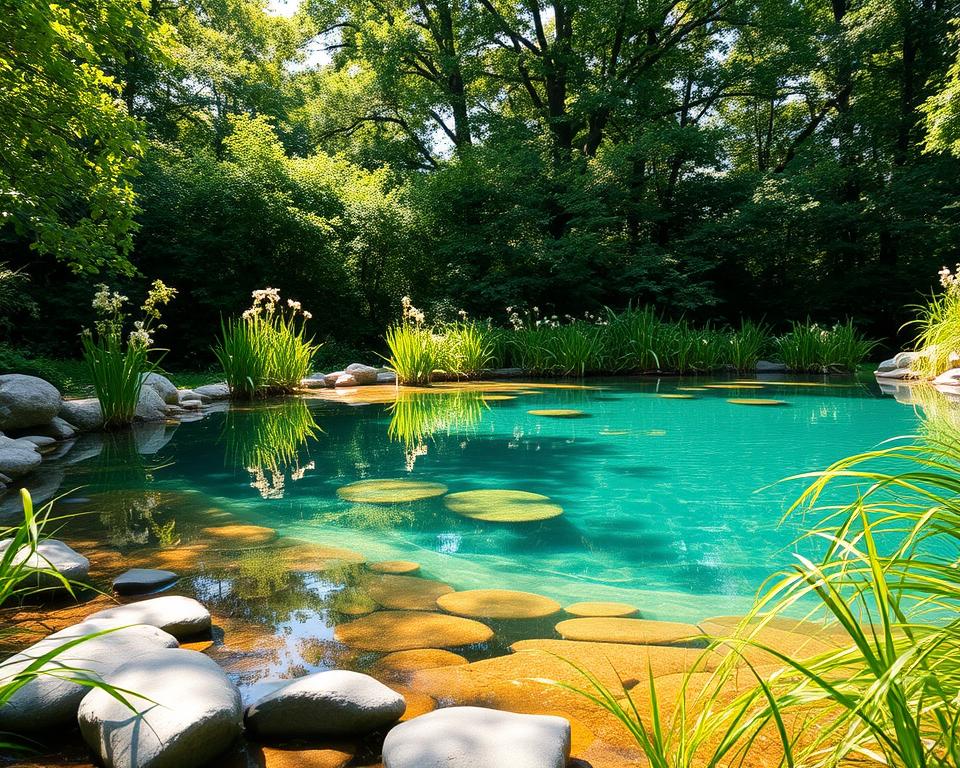
The regeneration zone is where plants grow, and it can represent from one-sixth to half of the total surface area of your pond. This zone requires careful planning to ensure optimal water purification, with varying depths to accommodate different types of aquatic plants. A submerged wall or barrier, typically 30cm below the water surface, should separate the swimming and regeneration zones while allowing water to circulate freely between them.
Creating a Natural Aesthetic
To create a natural aesthetic, incorporate curved, organic shapes rather than rigid geometric forms to help your pond blend seamlessly with the surrounding landscape. Consider the visual impact of your pond from different vantage points in your garden and from inside your home to create pleasing views year-round.
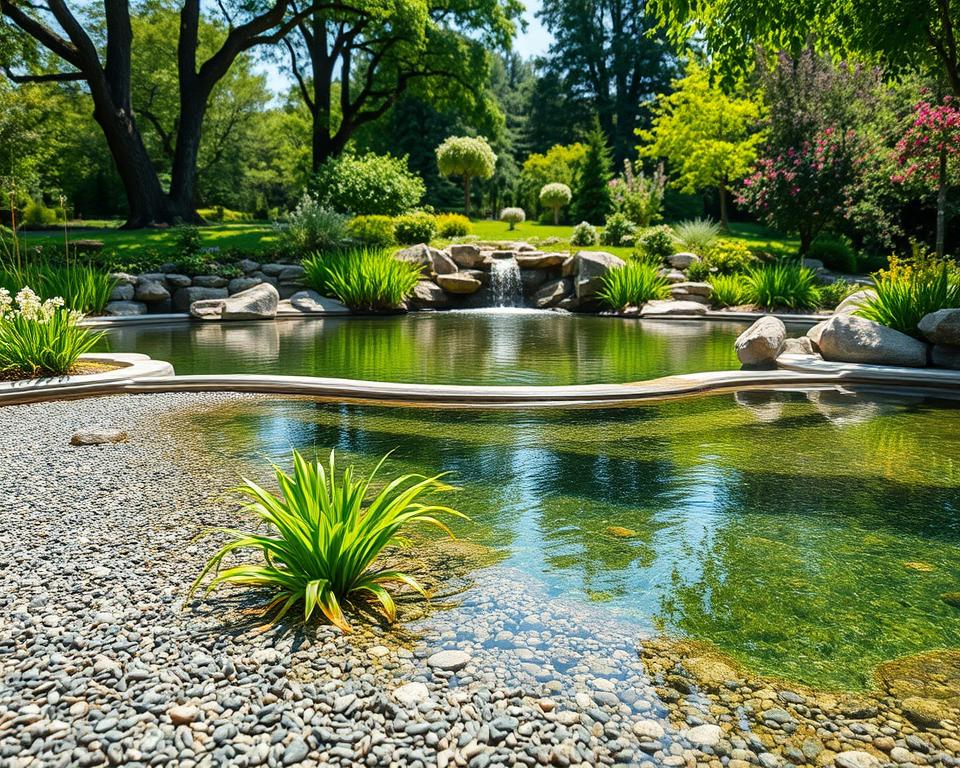
Plan for the integration of natural materials such as stone, gravel, and native plantings around the pond’s perimeter to enhance the natural appearance and provide habitat for beneficial wildlife. As “A natural swimming pond should be a harmonious extension of your garden, not just a functional space.” By balancing functionality and aesthetics, you can create a beautiful and sustainable natural swimming pond that enhances your outdoor space.
Essential Materials and Equipment
The success of your natural swimming pond depends on the quality of materials and equipment used. Selecting the right components ensures the longevity and sustainability of your pond.
Liners and Underlay Options
For a natural swimming pond, a durable liner is crucial. EPDM rubber liners are considered premium due to their flexibility and resistance to UV degradation. Alternatively, reinforced PVC liners offer a budget-friendly option. A protective underlay, such as a geotextile material, is essential to prevent punctures from sharp stones or roots.
| Liner Material | Durability | UV Resistance |
|---|---|---|
| EPDM Rubber | 20+ years | High |
| Reinforced PVC | 10-15 years | Medium |
Pumps and Circulation Systems
An energy-efficient pump is vital for circulating water in your natural pool. The pump should be sized according to your pond’s volume, aiming to circulate the entire volume every 2-4 hours. This ensures water remains fresh and clear.
Pump Selection Criteria:
- Energy efficiency
- Continuous duty capability
- Appropriate sizing for pond volume
Filtration Components
Effective filtration is key to maintaining water quality. This includes mechanical components like pre-filters and biological elements such as gravel beds and planted zones. Skimmers are also vital for removing floating debris.
By choosing the right materials and equipment, you can create a thriving natural swimming pond that is both safe and enjoyable.
Build Your Own Natural Swimming Pond: Instructions for Construction
Creating a natural swimming pond involves several key stages, from initial excavation to setting up the circulation system. This comprehensive guide will walk you through the process of building your own natural swimming pond, ensuring a safe and enjoyable swimming experience.
Excavation and Ground Preparation
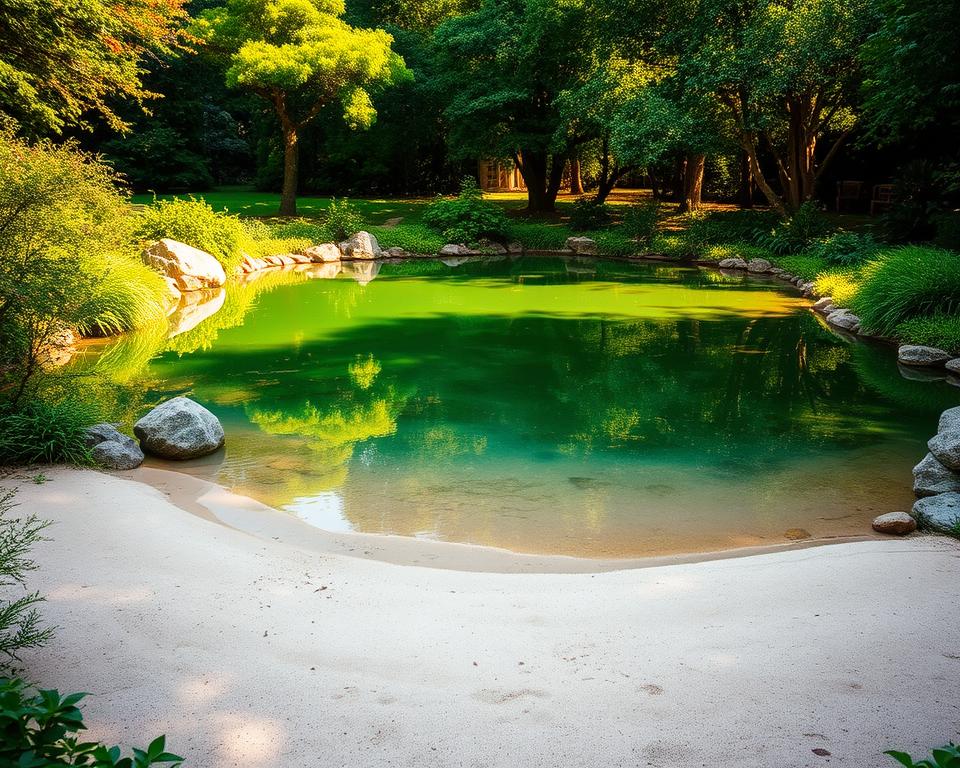
The first step in constructing your natural swimming pond is excavation. You need to clearly mark out the shape and dimensions of both the swimming and regeneration zones on the ground. The swimming zone should be excavated to a depth of 1.5-1.8 metres, while the regeneration zone should be around 30-50cm deep. Ensuring proper slopes and contours according to your design plan is crucial.
Ground preparation is critical and involves removing all sharp objects, roots, and stones that could damage the liner. The soil should then be compacted to create a stable base, followed by adding a layer of sand for additional protection.
Installing the Liner and Underlay
When installing the underlay and liner, work methodically from the centre outward, smoothing wrinkles as you go. It’s essential to allow sufficient excess material around the edges to accommodate settling and finishing details. This step is vital in ensuring the longevity and integrity of your pond.
Building the Dividing Wall Between Zones
The dividing wall between the swimming and regeneration zones can be constructed using various methods, including stacked stone, concrete blocks, or compacted soil contained within geotextile wrapping. The wall should sit approximately 30cm below the intended water surface to prevent water from mixing directly between the two zones.
Setting Up the Circulation System
Setting up the circulation system requires strategic placement of the pump, typically in the deepest part of the swimming zone. Careful planning of pipe routes is necessary to minimise bends and maximise flow efficiency. The pump should be reliable and energy-efficient, capable of circulating the entire pool volume within a reasonable timeframe.
| Component | Description | Importance |
|---|---|---|
| Pump | Reliable, energy-efficient pond pump | High |
| Liner | Durable liner to prevent leaks | High |
| Dividing Wall | Separates swimming and regeneration zones | High |
| Piping | Connects swimming zone to regeneration zone | Medium |
After completing the major construction elements, thoroughly check all components, connections, and the integrity of the liner before beginning to fill the pond with water. Fill the pond gradually, smoothing the liner as you go and checking for potential issues.
By following these steps and maintaining meticulous attention to detail, you can successfully build your own natural swimming pond, enjoying a refreshing and sustainable swimming experience.
Creating the Biological Filtration System
A well-designed biological filtration system is essential for a natural swimming pond, providing a chemical-free swimming experience. This system is the heart of your pond, relying on beneficial bacteria and aquatic plants to remove nutrients and contaminants from the water through natural processes.
How Natural Filtration Works
Natural filtration works through a combination of mechanical filtration, biological filtration, and phytofiltration, creating a complete ecosystem that maintains water clarity. Mechanical filtration physically traps particles, while biological filtration involves the bacterial breakdown of waste. Phytofiltration, on the other hand, utilizes plants to uptake nutrients, further purifying the water.
The effectiveness of your biological filtration system depends on the balance of these processes. Regular monitoring is necessary to ensure that the system operates efficiently.
Setting Up Gravel Filters
Setting up effective gravel filters involves creating graduated layers of different-sized gravels and substrates. Larger stones are placed at the bottom for drainage, while finer materials are positioned at the top to trap smaller particles. The substrate should be inert and free from nutrients that could leach into the water and promote algae growth.
- Use a variety of gravel sizes to create an effective filtration layer.
- Ensure the substrate is clean and inert to prevent contamination.
Installing Skimmers and Pumps
Installing skimmers at the water surface helps remove floating debris before it sinks and decomposes, reducing the nutrient load on the biological filtration system. Pumps should be sized appropriately for your pond volume and should run continuously to ensure proper circulation through the filtration zones.
Strategic placement of these components is crucial for system efficiency, considering water flow patterns, maintenance accessibility, and overall pond design.
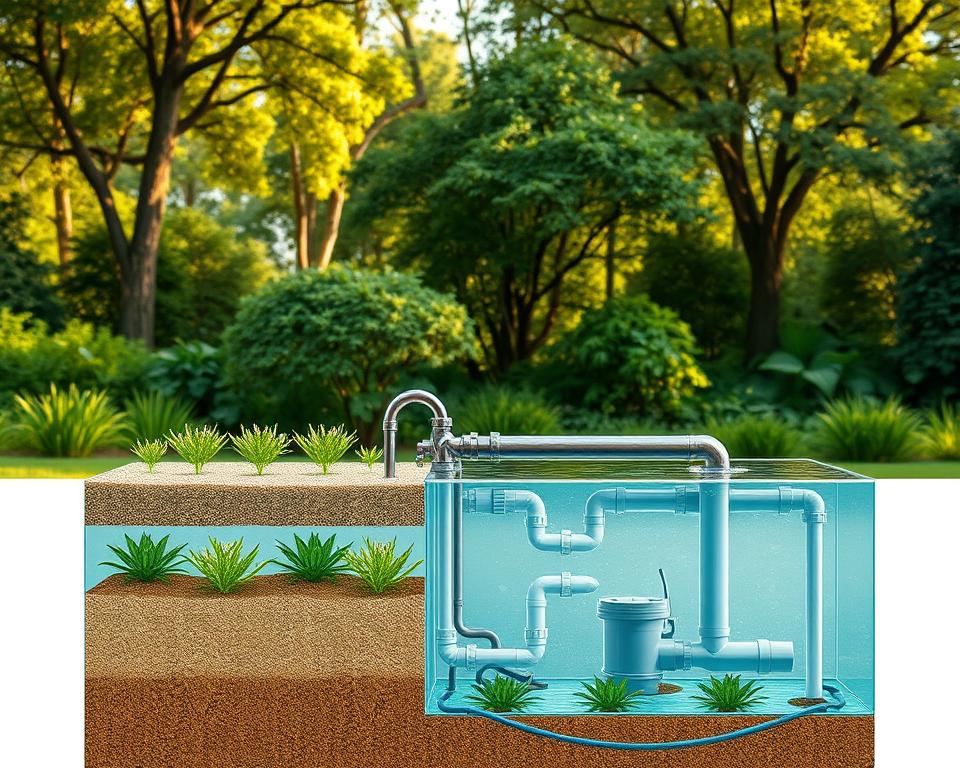
The biological filtration system requires time to establish, with beneficial bacteria colonies taking several weeks to develop fully. Regular monitoring allows you to make adjustments as needed, particularly during the establishment phase or seasonal transitions.
Selecting and Planting Aquatic Plants
Aquatic plants are not just a beautiful addition to your natural swimming pond; they are essential for its ecological balance and functionality. The right selection and planting of these plants can significantly enhance water quality and the overall aesthetic appeal of your pond.
Best Plants for Water Purification
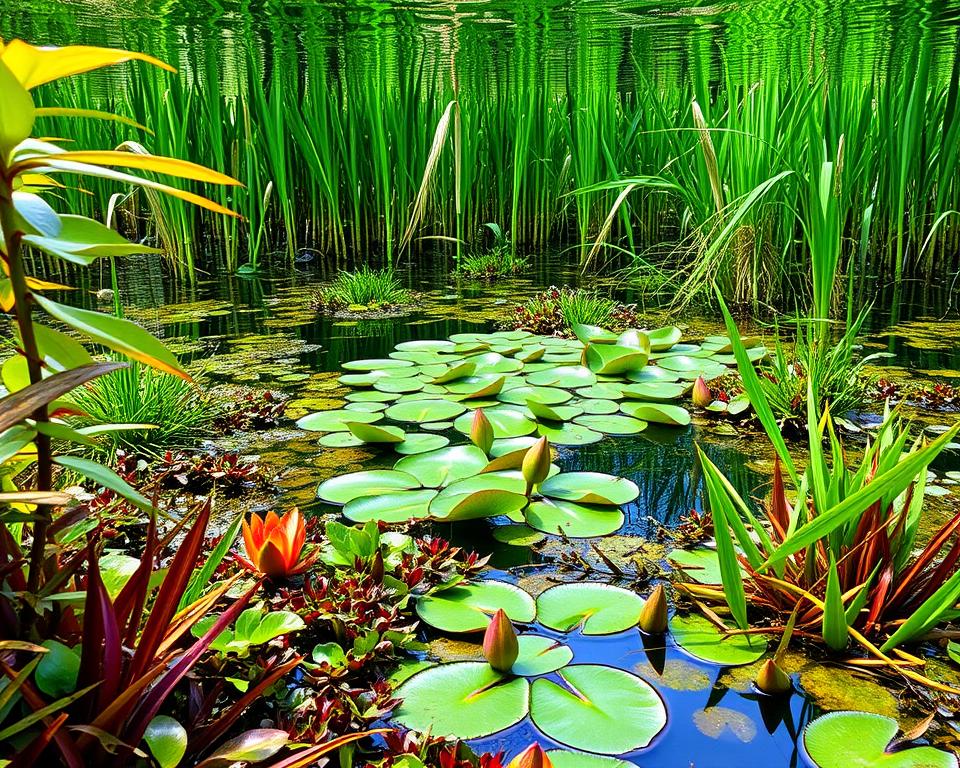
Certain aquatic plants are particularly effective at purifying the water in your natural swimming pond. Submerged oxygenators like hornwort and water milfoil absorb nutrients directly from the water column, providing oxygen and helping to prevent algae growth. Emergent plants such as iris, rushes, and reeds are excellent for removing nitrogen and phosphorus from the water through their extensive root systems.
Some of the best plants for water purification include:
- Water Lilies: Provide shade to keep the water cool and inhibit algae growth.
- Water Iris (e.g., Iris pseudacorus): Known for their nutrient-stripping capabilities.
- Bulrushes and Reeds (e.g., Phragmites, Typha): Highly effective filters, though they can be invasive and need managing.
Plants for Different Pond Areas
Different areas of your pond require different types of plants. Deep water zones benefit from potted water lilies, while marginal shelves need emergent plants. Shallow filtration zones work best with dense plantings of nutrient-hungry species.
| Pond Area | Suitable Plants |
|---|---|
| Deep Water Zones | Water Lilies |
| Marginal Shelves | Emergent Plants (Iris, Rushes, Reeds) |
| Shallow Filtration Zones | Nutrient-Hungry Species (Water Mint, Forget-Me-Nots) |
Planting Techniques and Tips
When planting, use aquatic baskets filled with clay-based aquatic compost for larger specimens. Smaller filtration plants can be planted directly into the gravel substrate of the regeneration zone. It’s crucial to research the needs of each plant in terms of light, temperature, and pH to place them in the most suitable location.
Tip: Plant densely in the filtration zones (approximately 6-10 plants per square metre) to maximise nutrient uptake and prevent algae establishment.
By carefully selecting and planting aquatic plants, you can create a balanced ecosystem in your natural swimming pond that is both beautiful and functional.
Maintaining Water Quality Naturally
The key to a successful natural swimming pond lies in its ability to maintain water quality naturally. This involves creating a balanced ecosystem that supports both the swimming area and the regeneration zone.
Balancing the Ecosystem
To maintain water quality, it’s essential to balance the ecosystem within your pond. This includes ensuring the right proportions between the swimming and regeneration zones, maintaining adequate plant coverage, and supporting beneficial microorganisms that compete with problematic algae. A well-balanced ecosystem is crucial for the overall health of your pond.

Preventing and Managing Algae Growth
Algae growth is a common issue in natural swimming ponds. To prevent it, you can introduce aquatic plants that compete with algae for nutrients. Shade from water lilies and other floating plants can also reduce algae growth. Ensuring good water circulation is vital, as stagnant water can lead to algae proliferation. Natural products like barley or spirulina can help prevent algae growth.
| Method | Description | Benefits |
|---|---|---|
| Aquatic Plants | Introduce plants that compete with algae for nutrients | Reduces algae growth, enhances ecosystem balance |
| Water Circulation | Ensure good circulation to prevent stagnant water | Prevents algae growth, maintains water quality |
| Natural Products | Use products like barley or spirulina | Helps prevent algae growth, eco-friendly |
Testing and Adjusting Water Parameters
Regularly testing the water parameters in your pond is crucial for maintaining water quality. Key measurements include pH levels (ideally between 7.0-8.5), phosphate levels (should be minimal), and dissolved oxygen content. Adjusting these parameters should be done gradually and naturally, using biological methods rather than chemical additives that can disrupt the pond’s ecological balance.
By following these guidelines, you can maintain a healthy and balanced ecosystem in your natural swimming pond, ensuring a safe and enjoyable swimming experience.
Troubleshooting Common Issues
Understanding how to address common problems is crucial for the upkeep of your natural swimming pool. Even well-designed natural swimming pools can encounter occasional issues, but most problems can be resolved by understanding and working with the pond’s natural ecological processes rather than against them.
Dealing with Cloudy Water
Cloudy water is often a temporary issue during the establishment phase or after heavy use. To address this, ensure proper circulation, check filtration efficiency, and potentially add beneficial bacteria to accelerate the clearing process. Maintaining proper pH levels and checking phosphorus levels in the water can also help achieve crystal clear water.
Managing Excessive Plant Growth
Managing excessive plant growth requires regular maintenance, including trimming, dividing, and removing plant material completely from the pond system to prevent the release of stored nutrients back into the water. This helps control algae growth and maintains a balanced ecosystem, preventing the accumulation of organic matter.
Addressing Water Level Problems
Addressing water level problems involves identifying the cause, such as evaporation, leaks, or overflow, and taking appropriate action. This may include topping up with filtered water, checking the liner for damage, or adjusting overflow systems to maintain a stable water level.
| Issue | Cause | Solution |
|---|---|---|
| Cloudy Water | Poor circulation, excess nutrients | Improve circulation, add beneficial bacteria |
| Excessive Plant Growth | Excess nutrients, insufficient maintenance | Regular trimming, dividing, and removal of plant material |
| Water Level Problems | Evaporation, leaks, overflow | Top up with filtered water, check liner, adjust overflow |
Safety Considerations for Natural Swimming Ponds
Safety considerations are vital when designing your natural swimming pond. Ensuring a safe environment is crucial for enjoying the benefits of a natural swimming experience.
Creating Safe Entry and Exit Points
To ensure safety, it’s essential to create secure entry and exit points for your natural swimming pond. This can be achieved by installing sturdy steps or a ramp with non-slip surfaces. Consider adding handrails to assist less mobile swimmers and ensure they are securely anchored.

Child Safety Measures
Child safety is a top priority around a natural swimming pool. Consider fencing or other barriers according to local regulations, especially if your pond is deep or accessible to young children. Always supervise children around the water and establish clear safety rules for all pond users.
By taking these precautions, you can enjoy a safe and refreshing swimming experience in your natural pool.
Finishing Touches and Aesthetics
With your natural swimming pond nearly complete, consider how you can enhance its natural beauty with thoughtful design choices. The area around your pond is just as important as the pond itself, creating an inviting space that complements your garden’s overall design.
Surrounding Landscaping
The landscaping around your natural swimming pond should complement its natural character while providing practical features. Consider incorporating native plants and natural materials to create a seamless transition between the pond and the wider garden, enhancing the ecological value of the entire area. Strategic placement of rocks and boulders can create natural-looking transitions while hiding technical elements.
Lighting and Decorative Elements
Lighting design should enhance the pond’s beauty after dark while ensuring safety. Options range from subtle underwater lights to solar path lighting. Decorative elements like stones, logs, or flower pots can complement the natural look of your natural pool. Choose energy-efficient lights with a warm tone to create a relaxing ambiance in the area around your swimming pools.

Conclusion: Enjoying Your Natural Swimming Pond
As you complete your natural swimming pond, you’ll discover the immense rewards of creating an ecologically balanced water feature. Your new natural swimming area is not just a place to swim, but a living ecosystem that evolves over time. Swimming in pure, chemical-free water surrounded by natural beauty provides numerous health benefits. Observe the changing seasons and wildlife it attracts, indicating a healthy ecosystem. Your natural pool requires ongoing care, but this becomes a rewarding part of garden stewardship. Enjoy your swimming experience in your new sustainable pool.
FAQ
What is a natural swimming pool?
A natural swimming pool is a swimming area that uses natural processes and plants to maintain clean and clear water, rather than relying on chemicals or mechanical filtration systems.
How does a biological filtration system work?
A biological filtration system uses beneficial bacteria, plants, and other organisms to break down organic matter and recycle nutrients, keeping the water clean and healthy.
What types of plants are best for a natural swimming pool?
Plants such as water lilies, cattails, and irises are well-suited for natural swimming pools, as they help to purify the water and create a balanced ecosystem.
How often should I test the water quality in my natural swimming pool?
You should test the water quality in your natural swimming pool regularly, ideally every week or two, to ensure that the water parameters are within a safe and healthy range.
Can I use a natural swimming pool in the winter?
While natural swimming pools can be used year-round in mild climates, in colder climates, it’s generally recommended to close the pool during the winter months to prevent damage from freezing temperatures.
How do I prevent algae growth in my natural swimming pool?
To prevent algae growth, ensure that your natural swimming pool has a balanced ecosystem, with a mix of plants and beneficial bacteria, and maintain good water circulation and aeration.
What is the ideal size and shape for a natural swimming pool?
The ideal size and shape for a natural swimming pool will depend on your available space and personal preferences, but a larger pool with a irregular shape can help to create a more natural and diverse ecosystem.
Do I need a pump and circulation system for my natural swimming pool?
Yes, a pump and circulation system are necessary to maintain good water circulation and prevent stagnation, which can lead to water quality problems.
How do I maintain the water level in my natural swimming pool?
To maintain the water level, you should regularly check the pool’s water level and top it up as needed, taking into account factors such as evaporation, rainfall, and water usage.