Beautiful Log Cabin Colour Ideas for Your Home

Choosing the right colours for a wooden retreat is a significant decision. It transforms the building’s appearance and sets the tone for the entire property. This guide explores a diverse range of options to help homeowners create a visually stunning space.
The article covers both exterior and interior schemes. It provides practical advice for enhancing aesthetic appeal while preserving authentic charm. Strategic colour choices can modernise a traditional structure or emphasise its rustic characteristics.
Readers will discover how to select complementary combinations for walls and trim. The guide also explains the differences between paint and stain finishes. This knowledge helps property owners make informed decisions that suit their specific needs.
By exploring various palettes, homeowners can create a cohesive look. This look integrates seamlessly with garden landscapes and outdoor living areas. The goal is to build an inviting atmosphere that reflects personal style.
This resource offers inspiration from real-world examples and expert recommendations. It delivers actionable concepts for a subtle update or a complete transformation. The right selection enhances architectural features and maximises natural light.
Inhaltsverzeichnis
Key Takeaways
- Colour selection significantly impacts the overall look and feel of a wooden structure.
- Both exterior and interior schemes are important for a cohesive design.
- Strategic choices can either modernise or enhance the rustic appeal of a building.
- Understanding the difference between paint and stain is crucial for the final finish.
- A well-chosen palette helps the property blend with its natural surroundings.
- Expert recommendations provide a solid foundation for planning a colour scheme.
Log Cabin Colour Ideas and Exterior Combinations
The exterior colour scheme dramatically influences how a wooden structure integrates with its environment. Homeowners can achieve various aesthetics through strategic combinations of wall tones and trim details. These choices affect both visual appeal and practical maintenance considerations.
Proper colour selection helps the building blend with garden surroundings while expressing personal style. The right combination can make a small space feel larger or help a large structure appear more grounded.
Light Walls with Dark Trim for a Modern Look
This approach creates a contemporary aesthetic using light wall shades like white, cream, or pale grey. Darker trim around windows, doors, and rooflines provides essential contrast. The combination prevents the structure from appearing flat.
Scandinavian-inspired schemes use soft off-whites with charcoal or black trim. This works particularly well in UK gardens with abundant greenery. The darker details break up light surfaces effectively.
Dark Walls and Natural Wood Trim for a Rustic Feel
Dark wall colours such as brown, forest green, or charcoal create a grounded appearance. When paired with clear-stained natural wood trim, the timber texture remains visible. This approach suits traditional settings beautifully.
The combination helps the building blend into garden landscapes. It ages gracefully over time, maintaining its rustic charm. This is an excellent choice for those preferring earthy, natural aesthetics.
Choosing the Perfect Paint and Stain Finishes
The selection of a protective coating is a pivotal decision that affects both the immediate look and long-term upkeep of a wooden building. Homeowners must understand the core differences between these two popular options to make an informed choice that aligns with their vision.
Paint Versus Stain: Benefits and Considerations
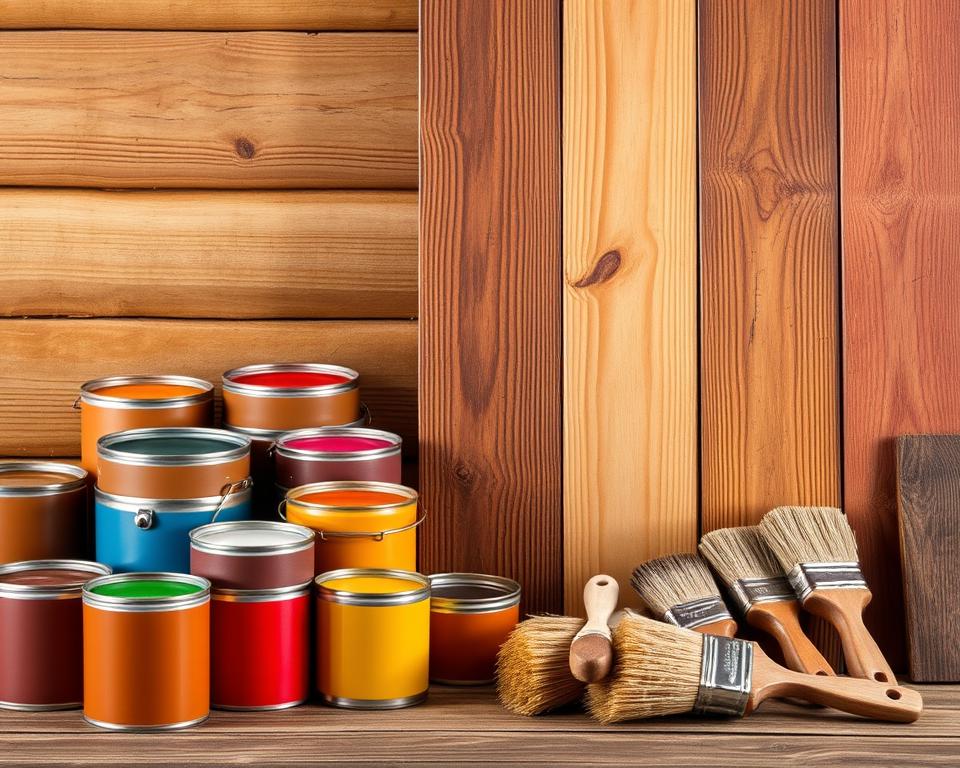
Paint provides a solid, opaque layer that completely conceals the natural grain of the timber. This makes it ideal for achieving bold, uniform colours and a contemporary aesthetic. However, this type of finish typically demands more maintenance over time, as it can chip, peel, and may require repainting more frequently.
In contrast, stain penetrates the wood, allowing its unique texture and grain to remain visible. This results in a more natural, authentic appearance that suits rustic or traditional styles beautifully. A key advantage of stain is its generally lower maintenance needs, often requiring less frequent reapplication.
Durability is another crucial factor. Different finishes respond uniquely to the UK’s weather, including UV exposure and seasonal changes. The preparation process also varies; paint often needs thorough priming, while stain can be applied more directly to properly prepared surfaces.
Ultimately, the decision hinges on personal preference for aesthetics versus practical commitment to upkeep. Those seeking a modern look with solid colours may prefer paint, while individuals valuing the wood’s natural character and longer intervals between treatments might find stain the superior option.
Enhancing the Log Cabin Interior with Colourful Accents
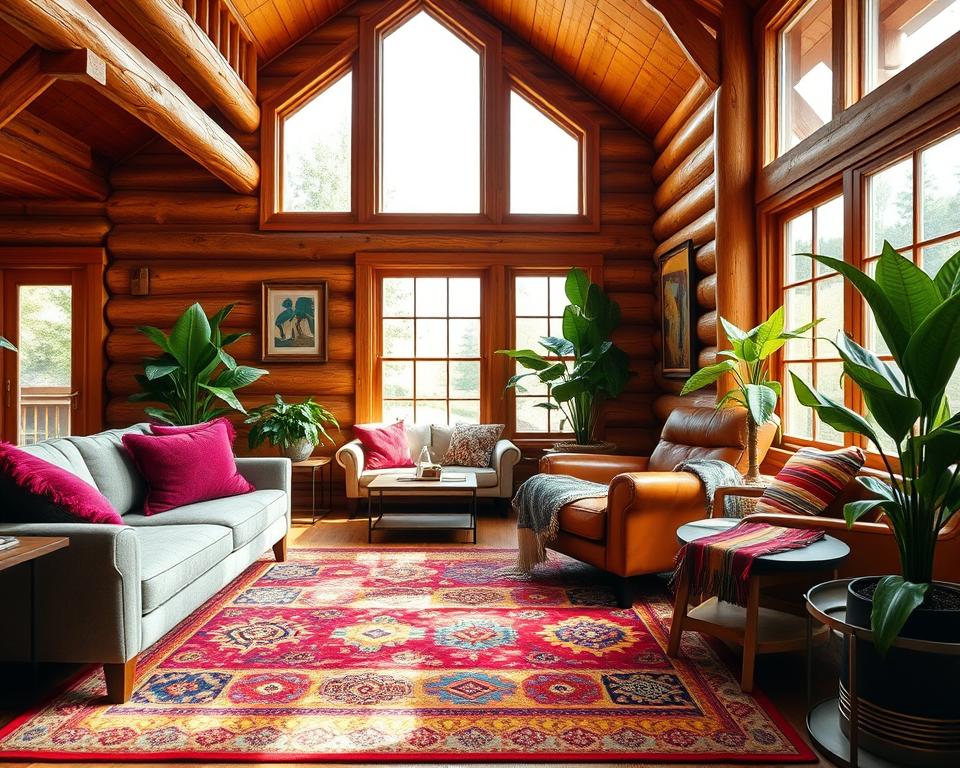
Creating a welcoming atmosphere inside a wooden home relies on clever colour strategies that counteract potential darkness. The extensive use of timber on walls, floors, and furnishings can create a heavy feel if not balanced correctly.
This approach prioritises bright whites and deeply saturated tones over neutral shades like beige or grey. These vibrant choices prevent spaces from feeling dreary and inject energy.
Balancing Neutrals with Bold Features
A key principle is to let the wood itself act as the primary neutral element. Introducing additional tans or greys is often unnecessary and can dull the aesthetic.
Instead, off-white painted trim, doors, and fireplace mantels provide a fresh, crisp contrast. This immediately brightens the room and highlights architectural details.
For example, a white mantel becomes a striking focal point, drawing the eye and offering visual relief from the surrounding timber.
| Element | Recommended Shade | Visual Effect |
|---|---|---|
| Trim & Mantels | Off-White | Creates bright contrast and freshness |
| Upholstery & Fabrics | Saturated Yellow, Blue, Red | Adds warmth and personality |
| Kitchen Cabinetry | Butter Yellow | Coordinates with soft furnishings for flow |
| Decorative Accessories | Blue and White Patterns | Echoes log wall chinking for cohesion |
Incorporating Bright, Saturated Tones in Key Areas
Bold colours in furniture and fabrics make spaces feel warm and inviting. A butter yellow sofa can coordinate with matching kitchen cabinetry for a cohesive design flow.
Blue and white striped chairs not only brighten a room but can also subtly reference the linear patterns found in log wall chinking. Different rooms benefit from varying intensities.
Relaxation spaces suit warm tones, while areas like home offices may use more stimulating shades. Chalk paint offers a durable, rustic finish for transforming furniture with minimal preparation.
Integrating Your Cabin with Garden and Natural Surroundings
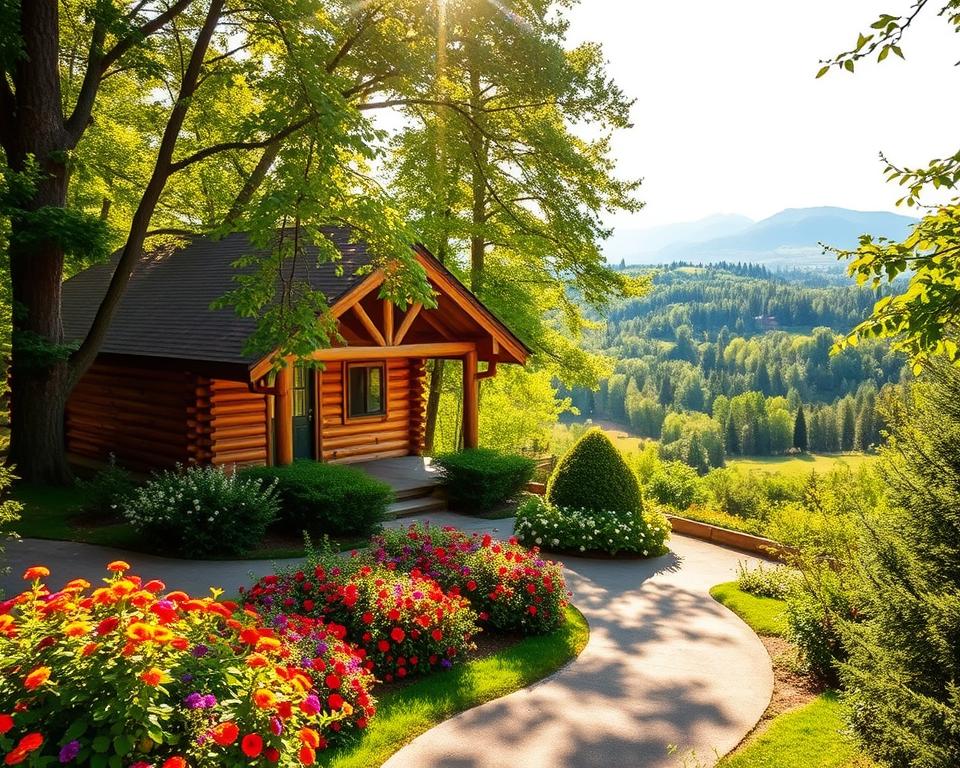
A well-integrated garden design seamlessly connects outdoor spaces with the architectural elements of a wooden structure. This approach transforms the building from a standalone feature into an organic part of the landscape. Thoughtful coordination creates a unified aesthetic that flows naturally.
Coordinating Outdoor Decor with Building Colours
Outdoor accessories provide excellent opportunities to extend colour schemes beyond the building itself. Plant pots, lighting fixtures, and wall fittings in tones matching the trim or roof create visual continuity. These elements help blend the structure with its environment.
Garden furniture offers another integration point. Chairs, benches, and tables in complementary shades reinforce the overall palette. Bold door colours can be echoed through cushions, planters, or decorative items.
Hard landscaping materials also contribute to cohesive design. Gravel, decking, and pathways in similar tones help the building feel intentionally placed. This integration makes garden rooms appear as natural extensions of the main structure.
Different planting styles interact uniquely with various colour schemes. Lush greenery complements earthy tones, while structured gardens suit more contemporary palettes. The goal is creating spaces where built and natural elements work in harmony.
This thoughtful approach increases both aesthetic appeal and property value. It ensures outdoor areas function as inviting, purposefully designed spaces that complement their surroundings beautifully.
Conclusion
A thoughtfully planned colour scheme transforms a simple wooden structure into a personalised sanctuary. This guide has demonstrated how successful approaches balance aesthetic preferences with practical maintenance requirements.
Both exterior and interior choices significantly impact how these buildings function as homes. The right selections protect the timber while expressing individual style. Effective schemes also consider the property’s relationship with its natural surroundings.
Homeowners now understand when to choose paint versus stain finishes. They can select combinations that enhance architectural features like windows and doors. Different shades work beautifully for various styles, from modern to rustic.
Interiors benefit from whites and saturated tones that brighten wood-dominated spaces. Exterior approaches range from light walls with dark trim to unified colour treatments. Readers can draw inspiration from these concepts and adapt them to their specific properties.
Thoughtful colour selection elevates wooden buildings into comfortable, personalised homes that reflect individual character. This approach enhances property value over time. Homeowners can approach their projects with confidence, armed with knowledge for successful outcomes.
FAQ
What are the most popular exterior colour combinations for a log cabin?
Two highly favoured schemes include light walls paired with dark trim for a contemporary aesthetic, and dark walls complemented by natural wood trim to enhance a rustic feel. These combinations help define the structure’s architectural lines.
Should I use paint or stain on my cabin’s exterior?
The choice between paint and stain involves key considerations. Paint offers a vast colour palette and a solid, opaque finish, while stain penetrates the wood, showcasing its grain and offering superior protection against moisture. Stain typically requires more frequent maintenance.
How can I add colour to my cabin’s interior without overwhelming the space?
A successful approach involves balancing neutral tones on walls with bold, colourful accents. Introducing bright, saturated tones through soft furnishings, artwork, or a single feature wall in key areas like the living room can create a vibrant yet harmonious look.
How do I coordinate my cabin’s colours with its garden setting?
To achieve a seamless integration, consider the surrounding landscape. Choosing hues that complement the garden’s palette, such as earthy greens or soft browns, helps the structure blend naturally. Coordinating outdoor furniture and decor with the cabin’s trim colour can unify the entire space.
What type of finish is best for interior wood surfaces?
For interior walls and furniture, a clear or lightly tinted sealant or oil is often recommended. This finish protects the wood while allowing its natural beauty and character to remain the focal point, contributing to a warm and authentic atmosphere.