Log Cabin Expansion and Contraction: How to Handle
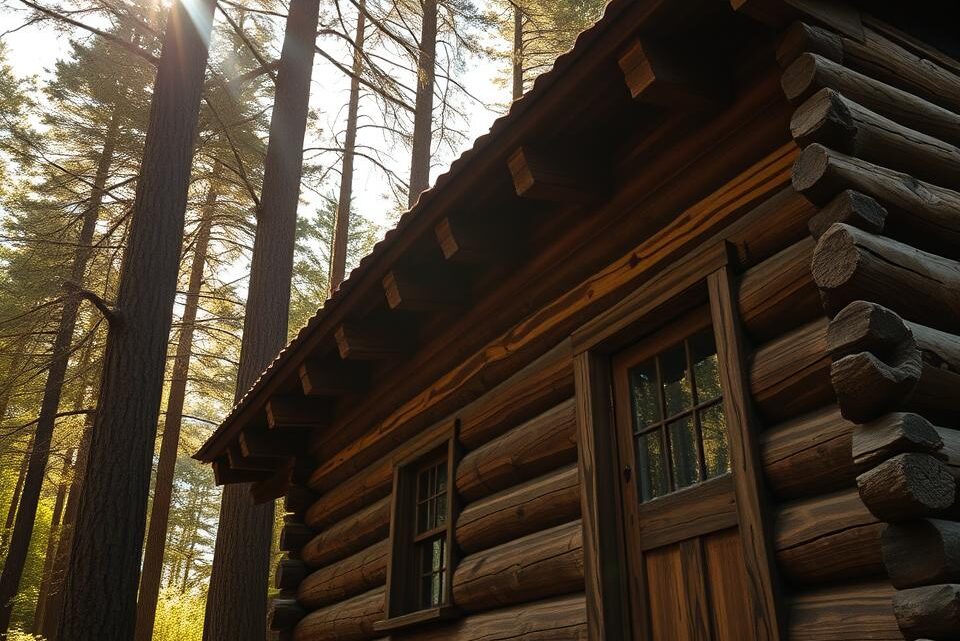
Wooden buildings experience natural dimensional changes throughout the year. This behaviour results from fluctuations in temperature and moisture levels within the environment. It is a fundamental characteristic of the material.
When timber absorbs moisture, it expands. Conversely, it contracts as moisture evaporates. This continuous process affects structures constructed from wood.
Kiln-dried softwood, commonly used in construction, typically contains 16-19% moisture content. Despite this initial drying, the material continues to adjust after construction. Proper planning prevents potential issues.
Without appropriate accommodation, these natural movements can lead to structural concerns. Gaps may appear between wooden components. Doors and windows might become misaligned over time.
This guide explores practical approaches for managing dimensional changes in timber buildings. It offers valuable insights for maintaining structural integrity.
Inhaltsverzeichnis
Key Takeaways
- Timber naturally adjusts its dimensions with changing humidity and temperature
- Movement is an inherent property of wood, not a construction defect
- Proper installation techniques can minimise potential damage
- Planning for movement is essential during construction and renovation
- Regular maintenance helps preserve the structure’s appearance and function
- Understanding these principles applies to all timber buildings
Understanding the Natural Movement of Timber
The dimensional stability of timber structures is fundamentally influenced by environmental conditions. This natural behaviour stems from wood’s cellular composition and its interaction with surrounding elements.
Causes of Expansion and Contraction
Timber is a hygroscopic material, meaning it constantly exchanges moisture with the air. When humidity rises, wood fibres absorb moisture and swell. During drier periods, moisture evaporates causing shrinkage.
This process occurs because wood contains hollow cellular structures that remain active, particularly during the first year after construction. The dimensional changes are more pronounced across the width of the material than along its length.
Moisture and Temperature Factors
Both moisture and temperature fluctuations contribute to timber movement. Moisture changes typically have a greater impact than temperature variations alone. Seasonal cycles see increased moisture absorption in winter and drying in summer.
Different wood species exhibit varying movement characteristics. Softwoods used in construction generally show predictable patterns that skilled builders can accommodate through proper design and installation techniques.
| Season | Moisture Effect | Typical Movement | Structural Consideration |
|---|---|---|---|
| Winter | High humidity absorption | Expansion | Allow for swelling |
| Summer | Moisture evaporation | Contraction | Prevent gap formation |
| Autumn | Transition period | Stabilisation | Inspection opportunity |
Understanding these natural processes helps in anticipating timber behaviour and implementing appropriate construction methods for long-term structural integrity.
The Science Behind Timber Movement in Log Cabins
The cellular structure of timber holds the key to understanding its dynamic behaviour over time. Even wood prepared for construction undergoes significant changes after assembly. This process is not a flaw but a fundamental property of the material.
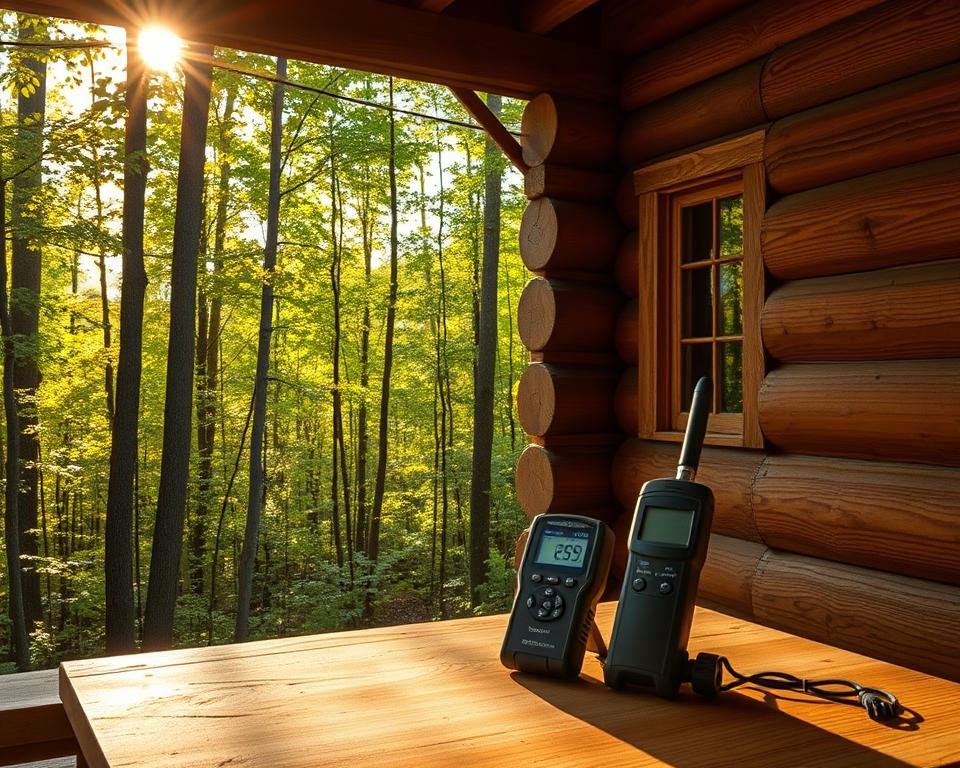
Kiln-dried timber arrives on site with a moisture content of roughly 16-19%. This level is suitable for building. However, the material is not yet fully stabilised. It will continue to adjust to match the humidity of its surroundings.
“Wood seeks equilibrium with the air around it. This quest for balance is what drives dimensional change in a structure.”
This adjustment is a scientific process known as reaching equilibrium moisture content. It causes the logs to expand and contract.
Timber Drying and Moisture Content
The initial drying phase is critical. During the first year, the structure experiences the most movement. The wood continues to dry and its cellular structure stabilises.
Open cellular tubes within the wood are highly active at this stage. They absorb and release moisture readily.
Seasonal Variations in Expansion and Contraction
Seasonal shifts cause a predictable pattern of movement. Logs reach their maximum size during damp winter months. They shrink to their minimum in the drier summer period.
Understanding this cycle helps owners plan installations effectively. It minimises potential issues with fittings.
| Time Period | Typical Movement | Primary Cause |
|---|---|---|
| Year 1 | Most dramatic | Initial drying and stabilisation |
| Year 2 | Noticeably less | Wood approaches equilibrium |
| Year 3+ | Minimal | Stable moisture content achieved |
Scientific measurement shows each wall log can move 2-4 mm vertically. This accumulates over the wall height. A one-metre high wall may shrink by 10-15 mm in total.
This is a significant amount that design must accommodate. The specific amount depends on the timber type, its initial moisture content, and local climate conditions.
Design Considerations for Log Cabins
Thoughtful architectural planning is essential for creating durable timber structures. The design phase must incorporate specific allowances that accommodate natural material behaviour without compromising integrity.
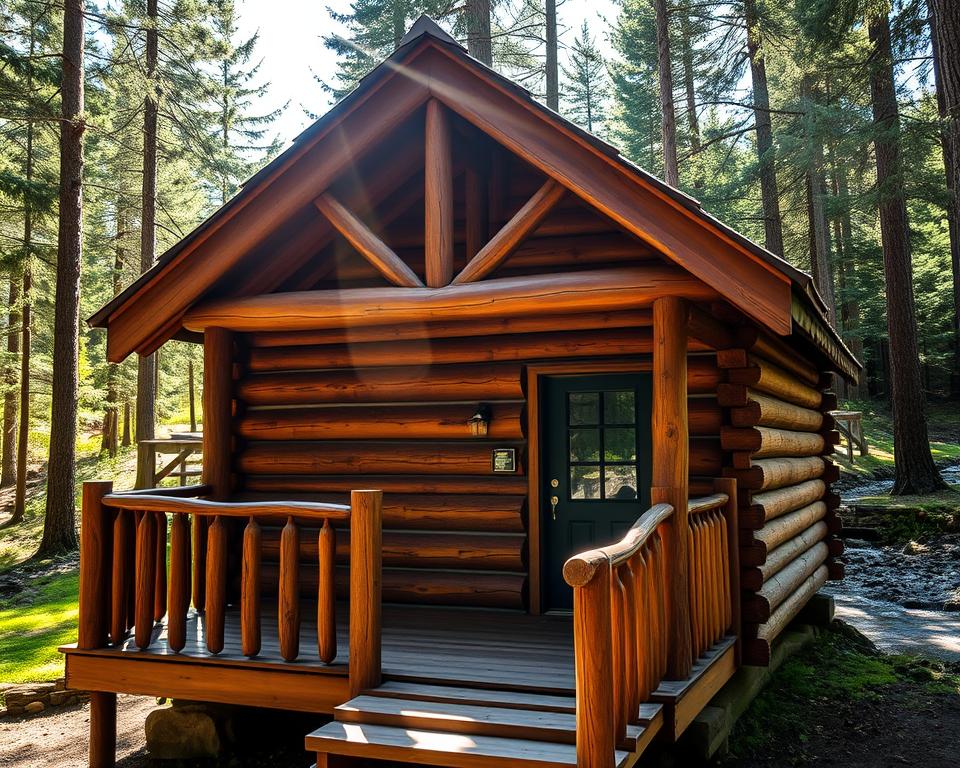
Proper construction of these wooden buildings requires strategic gap placement above door and window frames. These spaces, typically 10mm or more per metre of wall height, prevent settling logs from bearing down on rigid frames.
Structural Allowances for Movement
Wall construction demands careful attention to connection methods. Rigid fixes between multiple logs can prevent natural adjustment and cause splits. Instead, flexible connections allow independent movement.
Internal partition walls need special framing techniques. Slotted connections rather than fixed joints permit outer log walls to move freely. This prevents stress on the overall building structure.
“The junction between walls and roof presents a critical design challenge that requires foresight.”
Roof connections must account for vertical settlement. Insufficient clearance can cause descending walls to push against ceiling frames. This creates gaps and compromises weatherproofing.
Different cabin styles, from garden sheds to residential structures, all benefit from these fundamental considerations. Professional manufacturers build these allowances into their designs, but self-builders must understand and maintain them.
Proper planning during the design stage prevents costly remedial work. It ensures the timber building remains functional and attractive throughout its service life.
Log Cabin Expansion and Contraction – How to Handle This
There are established techniques that allow fixtures to be securely mounted on moving walls. These methods respect the natural behaviour of wood while providing stable mounting surfaces.
Practical Methods and Best Practices
Expansion slats offer a smart solution for attaching shelves and fittings. These vertical battens create a stable surface independent of individual wall components.
The system uses a simple principle with one fixed point and slotted connections. This design permits vertical movement while maintaining security.
Installation of Expansion Slats and Storm Braces
Proper installation begins with selecting dry timber around 20-30mm thick. The top fastener uses a standard screw for rigid attachment.
Lower connections employ elongated slots with washers. These allow necessary movement without compromising stability.
| Slat Type | Thickness | Slot Length | Best Use |
|---|---|---|---|
| Standard Slat | 20-25mm | 6mm per log | Shelving, light fittings |
| Heavy Duty | 25-30mm | 8mm per log | Cupboards, tool racks |
| Storm Brace | 25-30mm | 6mm per log | Exposed locations |
“This proven method has stood the test of time in timber construction, providing reliable performance across generations.”
Seasonal checks ensure slots remain free-moving. Loose connections prevent damage from seasonal shifts.
Fixing Gaps and Cracks: Tackling Common Problems
Visible gaps in timber structures often signal improper fixture installation rather than material failure. These separations between wall components typically indicate that something prevents natural movement. Understanding this distinction is crucial for effective troubleshooting.

Understanding the Impact of Fixed Fittings
When fittings connect across multiple logs, they create rigid points that restrict movement. The timber cannot slide naturally as dimensions change with humidity. This restraint forces stress to manifest elsewhere as visible separations.
Common problem areas include veranda attachments screwed across several courses. Electrical installations and plumbing fixtures can also become inadvertent restraints. Regular inspection identifies these issues before they cause significant damage.
Correcting Misaligned Windows, Doors and Fascia
Openings for windows and doors require special attention during installation. Their frames span multiple wall components and must allow independent movement. Incorrect attachment creates persistent issues with alignment.
A documented case involved a structure where interior door fascia rested on the floor. This support prevented natural settlement, creating gaps above the opening. Removing the fascia allowed immediate correction as the frame dropped into proper position.
| Problem Area | Common Cause | Solution Approach |
|---|---|---|
| Gap near door frame | Fascia supporting structure | Trim bottom board, create top notch |
| Window misalignment | Rigid frame attachment | Install sliding connections |
| Splits in timber | Severe movement restriction | Identify and remove restraint |
Corrective measures typically involve removing frames to create adequate clearance. A notch approximately 10mm deep in the top log above openings provides necessary expansion space. Bottom fascia boards must be trimmed to avoid floor contact.
Expert Tips for Maintaining a Healthy Log Cabin
Proactive maintenance is the cornerstone of preserving a timber building’s integrity and appearance. A consistent schedule of checks and appropriate treatment significantly reduces the natural movement of the material.

High-quality wood preservatives and finishes are vital. They protect against moisture and help stabilise the timber’s moisture content. Applying multiple coats creates a robust barrier.
Routine Checks and Seasonal Maintenance
The initial period after construction demands special attention. The structure experiences its most significant dimensional changes within the first twelve months.
It is wise to postpone permanent internal fittings until after this settling phase. This allows the wood to stabilise naturally.
Seasonal inspections are crucial. They should focus on key areas to prevent minor issues from becoming major problems.
- Inspect expansion slats: Make sure fixings remain loose enough to permit movement.
- Check clearances: Verify adequate gaps exist above doors and windows.
- Monitor the exterior: Refresh protective treatment every few years.
- Electrical safety: Ensure installations use flexible connections to accommodate movement.
If owners would like to add services or partitions, waiting until after the first year is best. This avoids disruption from ongoing settlement.
| Time Period | Primary Focus | Key Maintenance Action |
|---|---|---|
| Within First Year | Major Settlement | Monitor, avoid fixed installations |
| Years 2-3 | Stabilisation | Begin internal work, refresh treatment |
| Ongoing | Preventative Care | Seasonal checks, gutter cleaning |
Following these expert tips ensures these beautiful buildings remain sound and functional for generations.
Conclusion
Ultimately, the successful management of a timber structure’s natural behaviour is the cornerstone of its longevity. These buildings offer exceptional versatility, serving equally well as a simple garden shed or a substantial family home. The fundamental principles of dimensional adjustment apply universally, regardless of the building’s size or purpose.
The most important thing to remember is that this movement is an inherent characteristic of the material, not a defect. Problems only occur when this natural process is restricted. By planning for adequate clearance at the roof, around windows and doors, and using techniques like expansion slats, any interior design becomes achievable.
With proper treatment to stabilise moisture content and a design that works with the material’s properties, these structures provide reliable, long-term service. Respecting the wood’s nature is the single most critical factor for a trouble-free experience.
FAQ
Why do timber buildings move after construction?
The wood continues to adjust to its environment. It naturally absorbs and releases moisture from the air, which causes it to expand and contract. This process is most active during the first year but continues throughout the structure’s life.
What are the most common signs of movement in a garden building?
Owners might notice small gaps appearing between the wall logs, particularly near the top or bottom. Doors and windows may become slightly harder to open or close during certain seasons. Minor splits, known as checks, are also a normal part of the timber settling.
How can I prevent problems with doors and windows?
Proper installation is crucial. Frames for windows and doors should never be fixed rigidly to the wall logs. Instead, they should be fitted with expansion gaps or slats that allow the surrounding timber to move freely without putting pressure on the fittings.
What is the purpose of storm braces on a roof?
Storm braces are adjustable fittings that help manage the building’s movement. They allow the roof structure to expand and contract with the walls, maintaining stability and preventing damage. They should be checked and adjusted periodically.
Are cracks in the wood a cause for concern?
Small cracks, or checks, are typically not a structural problem. They are a natural result of the timber drying. However, large, widening splits that run along the length of a log should be assessed by a professional to ensure the building’s integrity.
When is the best time to apply a protective treatment?
A building should be treated after it has had sufficient time to dry out, which is often after its first full season. Applying a quality stain or preservative helps regulate moisture content and protects the wood from the elements.
How does the floor frame accommodate movement?
The floor is typically constructed to allow for some independent movement from the walls. This design prevents stresses from being transferred, ensuring the floor remains level and stable as the wall logs expand and contract.