How to Grow Tomatoes in a Greenhouse: Tips and Techniques
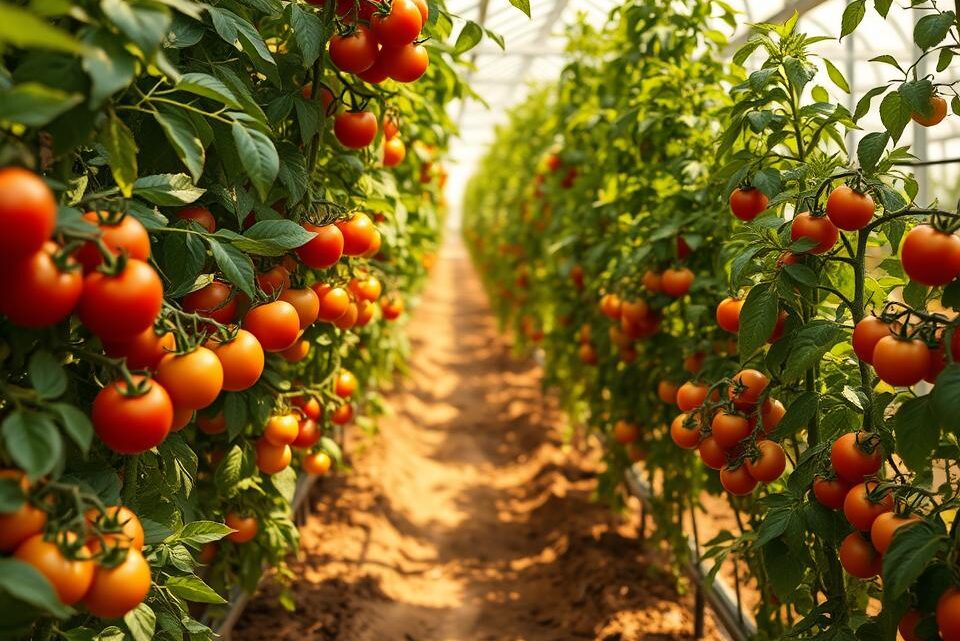
Cultivating tomatoes within a protected structure offers numerous advantages for growers seeking superior results. This method provides an extended growing season and protection from Britain’s unpredictable weather patterns.
The controlled environment allows for earlier planting and later harvesting compared to traditional outdoor methods. Growers can achieve more consistent yields throughout the year.
Greenhouse cultivation significantly reduces exposure to common diseases that typically affect outdoor plants. This protection results in healthier specimens and more abundant harvests.
This comprehensive guide explores essential techniques for successful tomato production under glass. Both novice and experienced growers will find practical advice that can be immediately implemented.
The content covers every stage from seed selection through to harvest. Emphasis is placed on variety choice, environmental management, and routine plant care.
Different growing methods suitable for various greenhouse types are discussed. The information applies to small hobby structures and larger commercial operations alike.
Inhaltsverzeichnis
Key Takeaways
- Greenhouse cultivation extends the growing season significantly
- Protected environments reduce disease exposure for plants
- Controlled conditions enable earlier and more abundant harvests
- Various greenhouse types accommodate different scales of operation
- Proper environmental management is crucial for optimal tomato production
- Selection of appropriate varieties enhances success rates
- Consistent plant care routines yield professional-quality results
Introduction to Greenhouse Tomato Cultivation
Glasshouse cultivation transforms the potential for consistent, high-quality tomato yields throughout extended periods. This method provides growers with unprecedented control over environmental factors that directly impact plant development and fruit production.
The enclosed environment allows precise management of temperature, humidity, and light exposure. These controlled conditions enable cultivation from early spring through late autumn, significantly extending the productive window.
One significant advantage involves protection against late blight disease, which commonly affects outdoor crops during Britain’s warm, wet summers. The sheltered setting substantially reduces this risk, ensuring more reliable harvests.
Growers can expect ripening to commence from mid-summer, with harvesting continuing well into autumn. This extended cropping period contrasts sharply with the shorter outdoor season that typically concludes when temperatures decline.
The remarkable diversity of available varieties makes this cultivation method particularly rewarding. Options range from tiny cherry types to substantial beefsteak specimens, featuring colours spanning red, yellow, orange, purple, and even striped patterns.
When grown under optimal conditions, these plants develop superior flavour profiles. The controlled environment allows fruits to ripen gradually, achieving full sweetness and complexity that surpasses commercially produced alternatives.
Understanding fundamental principles establishes the foundation for success. Tender plants require frost protection, consistent moisture levels, and attentive care to reach their full productive potential.
Understanding the Ideal Greenhouse Environment
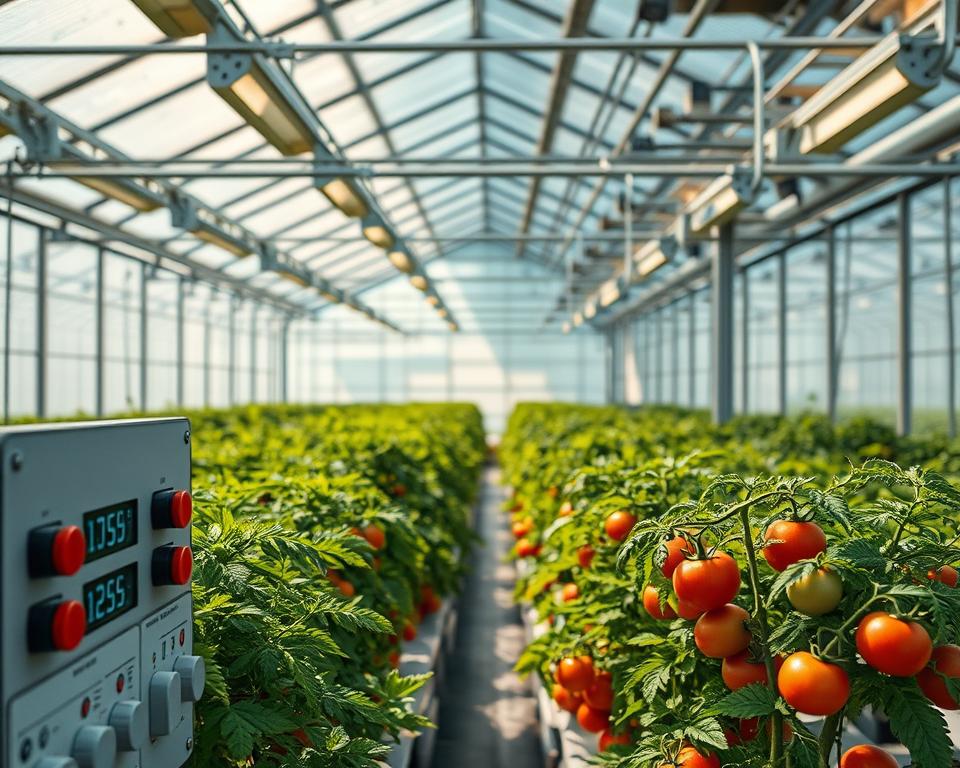
Maintaining precise environmental control forms the foundation of successful protected cultivation. The enclosed space creates unique conditions that require careful management throughout the growing season. Proper regulation ensures optimal development and productivity.
Temperature Management and Ventilation
Temperature represents the most critical factor in the greenhouse environment. Ideal daytime temperatures range from 21-29°C, while night-time readings should stay between 15-20°C. These conditions support vigorous growth without causing stress.
Ventilation plays a dual role in maintaining proper conditions. Regular air exchange prevents excessive heat buildup and ensures adequate carbon dioxide levels. Opening vents also allows pollinating insects to access flowers.
Excessive heat above 35°C can damage plants, leading to tough skins and uneven ripening. Shade provision becomes essential during peak summer months to protect against temperature extremes.
Lighting and Space Considerations
Light intensity and duration significantly impact plant development. Specimens require 12-16 hours of daylight for optimal growth. However, excessive direct sunlight may require gradual shading to prevent shock.
Adequate spacing between plants ensures proper light penetration and air circulation. Recommended distances of 45-60cm between specimens help prevent disease development. This arrangement supports healthy growth patterns.
Understanding these environmental parameters enables growers to create stable conditions. Consistent management prevents common problems and maximises productive potential throughout the season.
Preparing for a Successful Planting
Proper groundwork before introducing plants into the protected environment is essential. This preparation directly influences root development, nutrient uptake, and overall plant vitality.
Soil Amendments and Compost
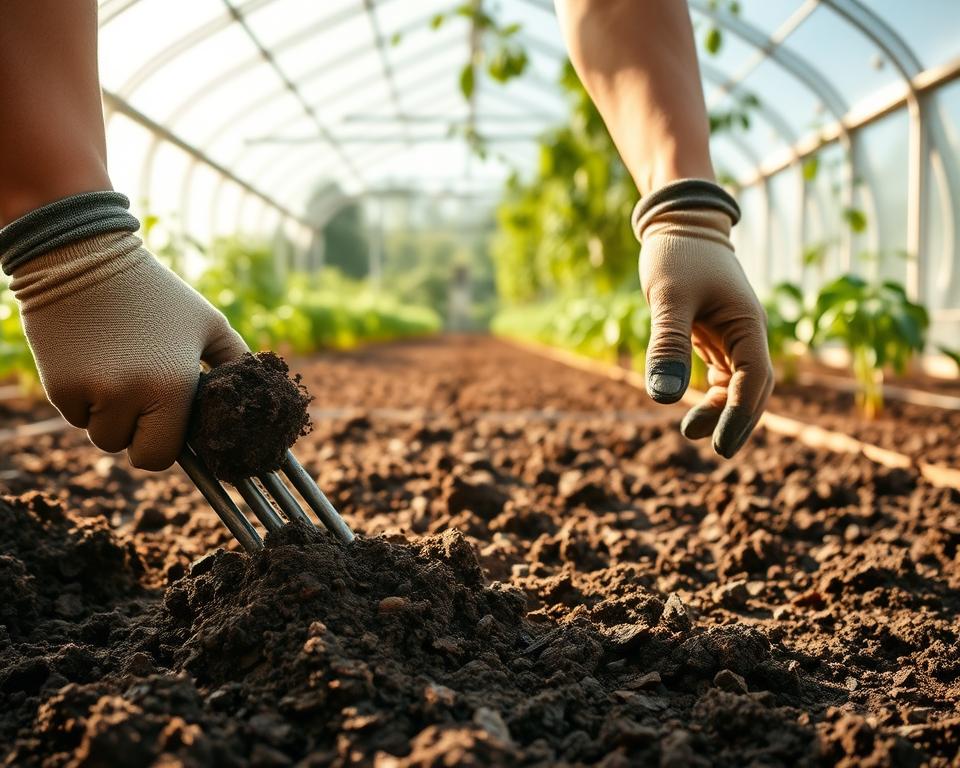
Creating the ideal growing medium is a critical first step. The soil must be rich yet free-draining, capable of retaining moisture without becoming waterlogged.
Incorporating generous amounts of well-rotted garden compost significantly improves soil structure. This addition provides essential nutrients and enhances moisture retention. For container cultivation, a peat-free loam-based compost is recommended.
This careful preparation supports vigorous root systems and healthy fruit development.
Choosing the Right Tomato Varieties
Selecting appropriate varieties is equally important. Understanding the two main growth habits helps match plants to available space.
Cordon tomato varieties grow tall and require vertical support. They are ideal where ground space is limited. Bush varieties remain compact and suit smaller structures.
Small-fruited varieties often prove easiest for beginners. Consulting the RHS Award of Garden Merit list helps identify reliable performers.
This careful selection ensures the planting phase establishes a strong foundation for the entire growing season.
How to Grow Tomatoes in a Greenhouse
Successful greenhouse production begins with understanding the two primary growth patterns exhibited by tomato varieties. This fundamental distinction determines the entire cultivation approach and space management strategy.
Identifying Cordon and Bush Tomatoes
Cordon tomato plants display vigorous, indeterminate growth characterised by continuous vertical extension. These tall-growing varieties require regular side-shoot removal and sturdy support systems to channel energy into fruit production.
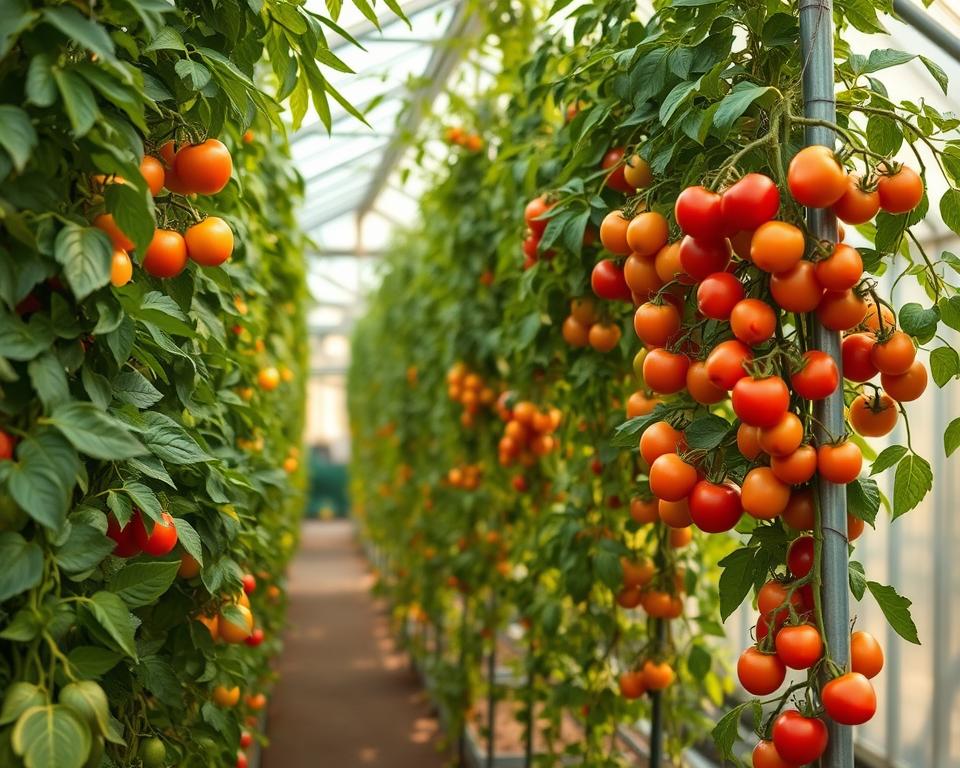
Bush varieties exhibit determinate growth with naturally self-limiting stems. These compact plants spread horizontally rather than vertically, requiring minimal maintenance beyond occasional support for heavy fruit loads.
The ease of cultivation makes bush types particularly suitable for novice growers. Cordon varieties excel where vertical space exceeds horizontal area, maximising production per square metre.
Trailing bush varieties extend cultivation possibilities to hanging baskets and elevated containers. Their cascading stems create attractive displays while producing abundant small fruits.
Verifying growth type before purchasing ensures proper matching with available greenhouse space. This prevents mismatches between variety characteristics and structural limitations.
Starting Tomato Seeds Indoors
Initiating the cultivation process indoors establishes robust plants ready for the protected environment. This method allows for precise control during the delicate early stages of development.
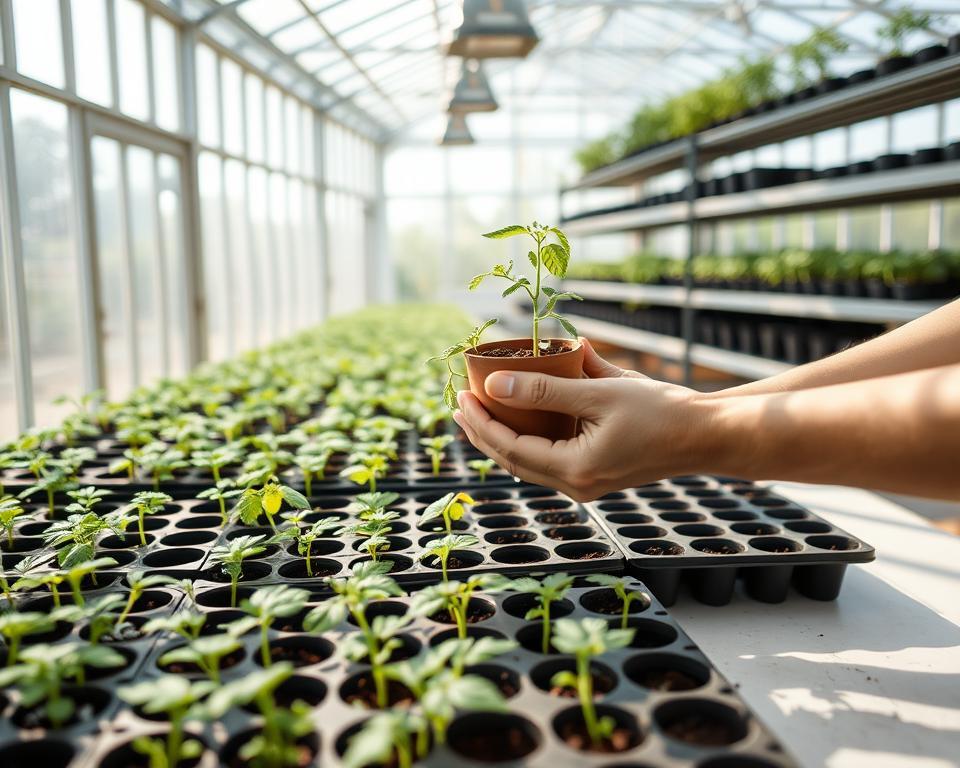
The optimal window for sowing tomato seeds for a protected crop is from late February to mid-March. This timing ensures seedlings reach sufficient maturity for an early summer harvest.
A consistent temperature is critical for successful germination. Seeds require a minimum of 18°C, with the ideal range being 21-27°C.
Sowing Techniques and Germination Requirements
Begin by filling a seed tray or small pot with a quality, peat-free seed compost. Water the compost thoroughly and allow it to drain completely before sowing.
Space the seeds well apart on the surface to prevent overcrowding. Cover them with a thin layer of compost or vermiculite, approximately 5mm deep.
To maintain essential humidity, cover the container with a clear plastic bag or use a heated propagator. This creates a mini-greenhouse effect, preventing the surface from drying out.
Germination typically occurs within 10 to 14 days. As soon as seedlings emerge, remove the plastic covering immediately. Place them in a location with maximum light to prevent weak, leggy growth.
| Stage | Key Requirement | Action |
|---|---|---|
| Sowing | Warmth (21-27°C) | Use a propagator or warm windowsill |
| Germination | Humidity | Cover pot to retain moisture |
| Seedling Growth | Maximum Light | Uncover and provide bright light |
| Post-Germination | Cooler temperature (~16°C) | Prevents excessive stem elongation |
After germination, slightly cooler temperatures around 16°C promote sturdy growth. Vigilance during these early stages ensures the development of strong, healthy plants.
Transplanting and Planting Techniques
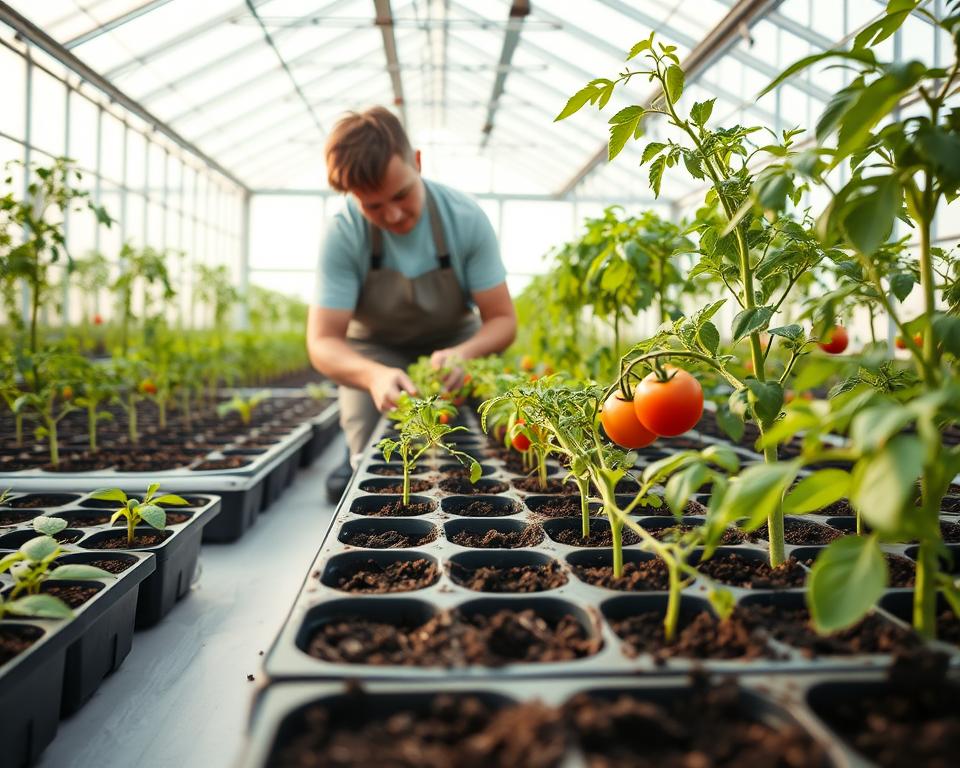
Moving young tomato plants to their permanent positions requires careful timing and technique. This critical phase occurs approximately two to three weeks after germination, when seedlings develop their first set of true leaves beyond the initial seed leaves.
Gentle handling proves essential during this transition. Growers should support the delicate rootball using a dibber or pencil while holding seedlings exclusively by their leaves. This approach prevents damage to fragile stems that could compromise future growth.
Container Versus Ground Planting
Container cultivation offers significant flexibility within the protected environment. Individual pots of 30-45cm diameter provide adequate space for single specimens, while standard growing bags accommodate two plants. This method allows easy movement for maintenance and environmental adjustments.
Ground planting directly into greenhouse borders supports larger root systems and reduces watering frequency. This approach requires substantial compost incorporation into the soil and careful spacing of 45-60cm between plants based on variety vigour.
The deep planting technique benefits both methods significantly. Burying stem sections encourages additional roots to develop along buried portions. Position the lowest true leaves just above the soil surface to maximise root establishment.
Timing remains crucial for successful transplantation. Wait until consistent temperatures exceed 16°C both day and night, typically occurring in late May or early June in unheated structures. Premature planting into cold conditions can stunt development and increase disease susceptibility.
Caring for Tomato Plants in the Greenhouse
Ongoing plant management directly impacts fruit quality and overall harvest success. Consistent attention to watering, feeding, and environmental factors ensures healthy development.
Watering and Moisture Control
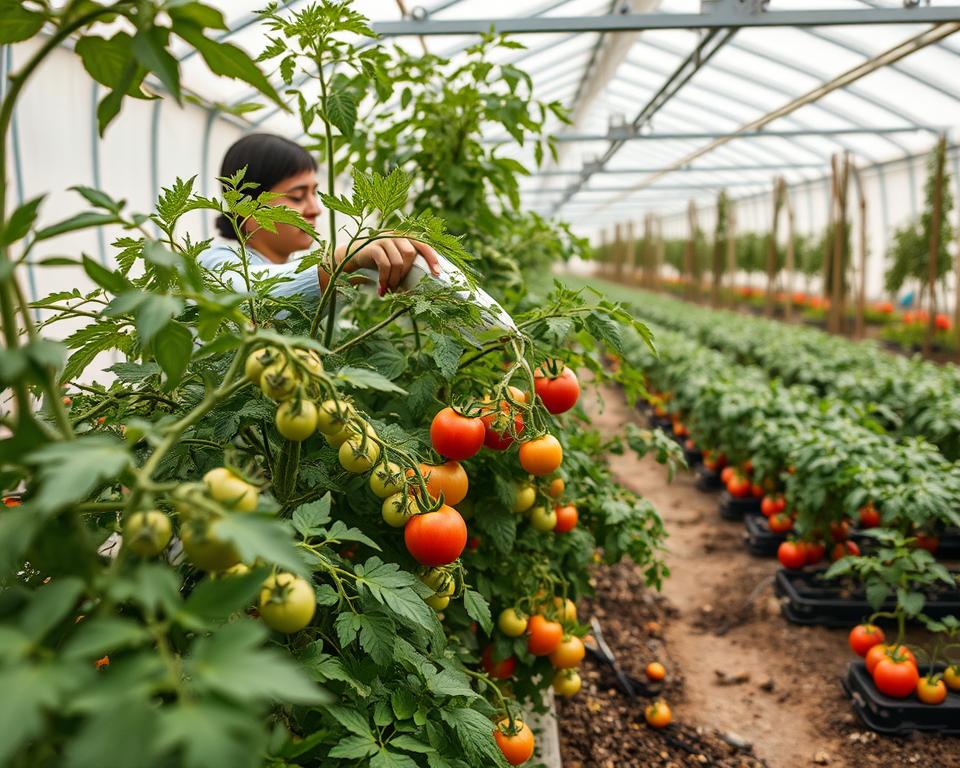
Regular irrigation maintains even soil moisture, which is crucial for these plants. Fluctuations in water availability cause issues like fruit splitting.
Container-grown specimens often need daily watering during warm weather. Ground-planted varieties typically require attention every 2-3 days. Curling leaves signal immediate water shortage.
Feeding, Mulching and Pest Prevention
Begin feeding when the first fruits start swelling. Use high-potassium liquid fertiliser every 10-14 days. This supports fruit development and colour formation.
Apply a thick layer of garden compost around plants in borders. Leave space around stems to prevent rotting. This mulch conserves moisture and suppresses weeds.
Prevent diseases through good ventilation and spacing. Regularly inspect leaves for early signs of trouble. Remove affected foliage promptly to avoid spread.
Support pollination by gently tapping open flowers. This ensures complete fruit set. Simple techniques like misting flowers with water also aid the process.
Training and Pruning for Bountiful Production
Proper plant management through strategic training and pruning techniques yields superior harvest results. These methods channel energy directly into fruit development rather than excessive vegetative growth. The approach differs significantly between cordon and bush varieties.
Supporting Cordon Types with Sturdy Stakes
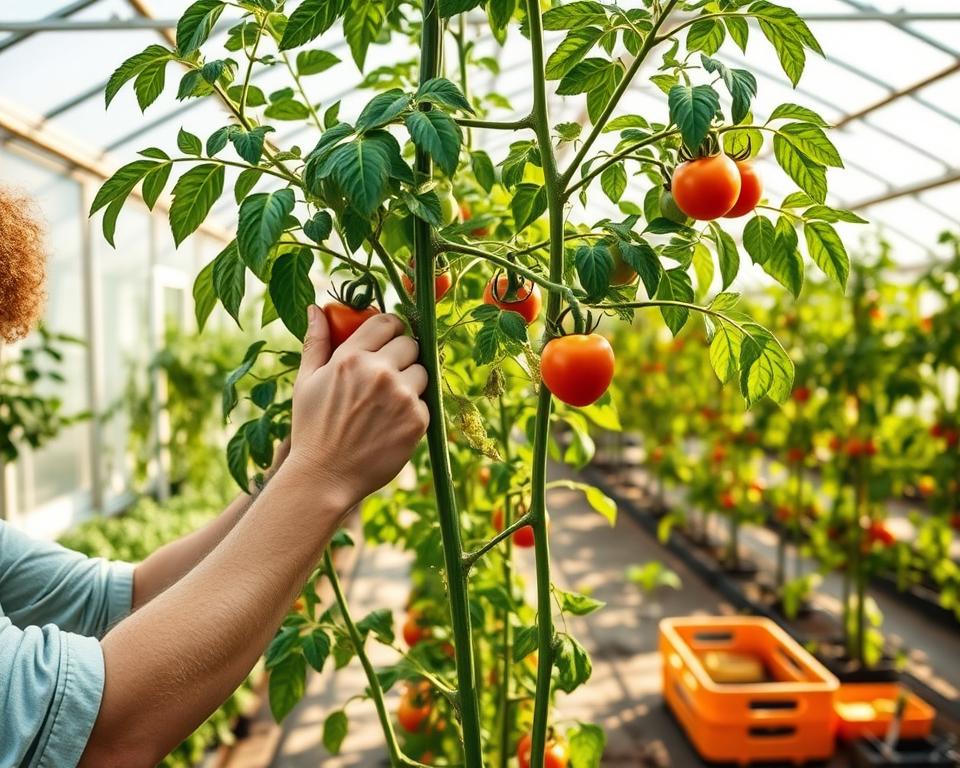
Cordon varieties require robust support systems installed at planting. Options include sturdy bamboo canes or vertical strings anchored beneath the rootball. As these plants lack natural climbing ability, regular tying-in becomes essential.
Weekly attachment of the main stem to supports prevents damage and promotes vertical growth. Use soft twine or purpose-made clips that secure without constriction. Side-shoot removal represents the defining maintenance task for cordon cultivation.
Vigilant inspection during watering sessions identifies lateral shoots emerging from leaf axils. Pinch them out when 2-3cm long to prevent resource diversion. When plants reach support height or set seven fruit trusses, remove the growing tip two leaves above the top truss.
Pruning Bush Varieties for Optimal Growth
Bush variety management contrasts sharply with cordon protocols. Their determinate growth patterns require minimal intervention beyond occasional support. Side-shoots remain intact to form the natural branching structure.
These self-managing plant types may need short vertical canes when carrying heavy crops. Tie in shoots loosely to prevent branch snapping. This approach allows the plants to develop their characteristic bushy form while maximising production.
Harvesting Fresh, Flavourful Tomatoes
Seasonal rewards manifest through careful observation of ripening indicators on developing fruits. The protected environment extends the productive window significantly beyond outdoor limitations.
Recognising Ripeness and Timely Picking
Complete colour development signals the first stage of readiness. Gently squeezing reveals slight softness when specimens reach optimal maturity. Characteristic fragrance indicates full flavour development.
Small cherry varieties ripen rapidly from mid-summer onwards. Larger beefsteak types require extended time for proper development. Regular inspection every few days prevents over-ripening issues.
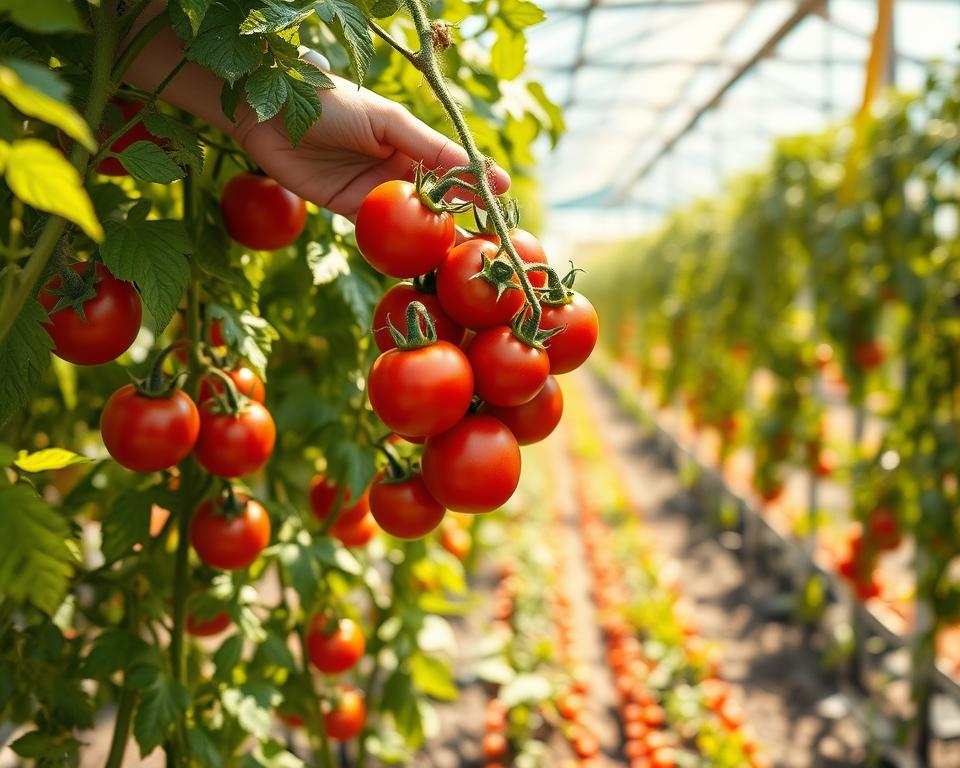
Proper technique involves twisting fruits gently with stalks attached. This approach prevents damage to remaining trusses. Prompt removal encourages continued production throughout the season.
End-of-season strategies maximise yield from remaining green specimens. Placing unripe fruits in warm, dark locations with bananas accelerates colour development through natural ethylene release.
The extended harvest period provides fresh produce well into autumn. Controlled ripening under glass produces superior flavour complexity compared to commercial alternatives.
Troubleshooting Common Tomato Issues
Even experienced growers encounter challenges when cultivating under protection. Vigilant monitoring helps identify problems early before they escalate. Understanding common issues enables timely intervention.
Pest, Disease and Watering Challenges
Various diseases can affect protected cultivation. Late blight occasionally occurs when ventilation proves inadequate during wet weather. Grey mould develops in cool, humid conditions with poor air circulation.
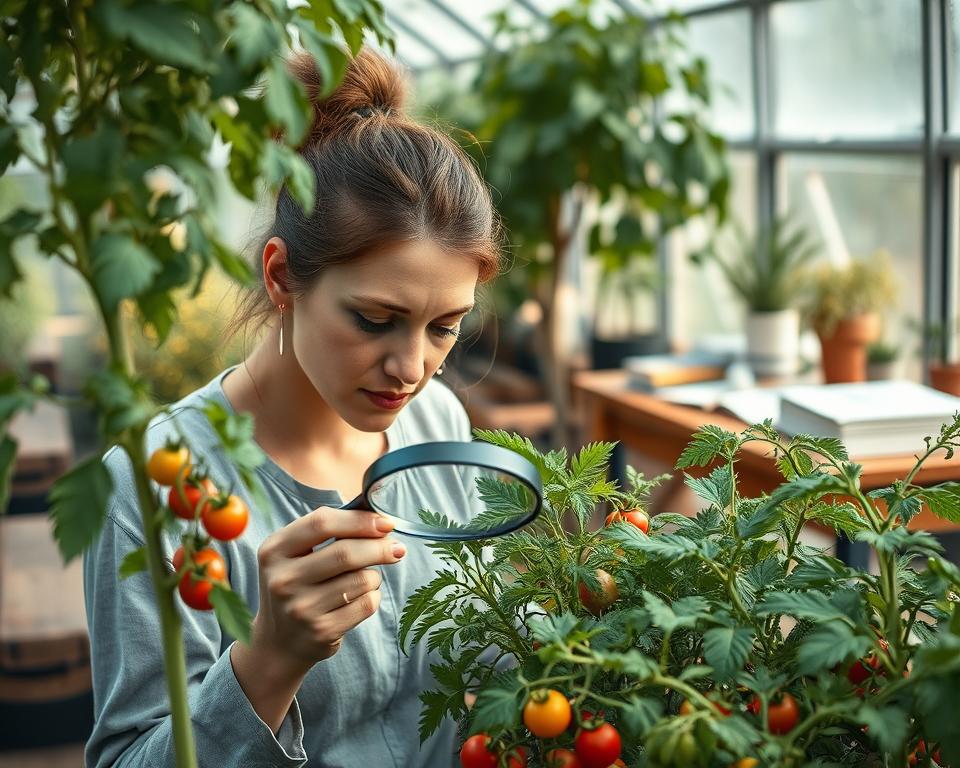
Whitefly infestations weaken plants through sap extraction. These pests may transfer viral diseases between specimens. Biological controls like Encarsia wasps offer effective management.
Moisture inconsistency causes significant fruit problems. Fluctuating water supply leads to splitting and blossom end rot. Maintain even soil moisture to prevent calcium uptake issues.
Good ventilation prevents many fungal diseases. Thin dense foliage to improve air movement. Remove affected leaves promptly to limit disease spread.
Companion planting with French marigolds deters whitefly. Their strong scent creates a natural pest barrier. This approach supports plant health.
Conclusion
Mastering the art of protected tomato production delivers exceptional results that justify the investment of time and effort. The comprehensive tips provided throughout this guide enable gardeners to achieve successful production from late February sowing through to the season’s end.
Choosing appropriate varieties ensures optimal use of greenhouse space while consistent care routines establish robust plant health. These practices translate directly into productive capacity throughout the entire growing season.
Environmental management creates stable conditions that allow tomato plants to reach their full potential. This approach yields abundant, flavourful fruits during summer and beyond.
Each season’s experience builds valuable knowledge that refines techniques for improved results. The final harvest provides immense satisfaction alongside tangible returns on the effort invested in creating optimal conditions.
FAQ
When is the best time to sow tomato seeds for greenhouse growing?
For an extended growing season, gardeners typically sow tomato seeds indoors from late February to early March. This timing allows seedlings to develop before transplanting into the greenhouse once the risk of frost has passed and temperatures are consistently favourable.
What are the key differences between cordon and bush tomato varieties?
Cordon, or indeterminate, tomatoes grow as a single, tall stem that requires support and regular pruning of side shoots. Bush, or determinate, varieties are more compact, stop growing earlier, and generally require less staking and minimal pruning, making them suitable for smaller spaces or containers.
How can one prevent common diseases like blight in a greenhouse?
A> Good ventilation is critical for preventing fungal diseases. Ensure adequate air circulation, avoid wetting the leaves when watering, and maintain stable temperatures. Using a soil-based compost and practising crop rotation can also significantly reduce the risk of soil-borne diseases.
What is the ideal temperature range for tomato plants in a greenhouse?
Tomato plants thrive in warm conditions. The optimal temperature range for fruit production is between 18°C and 25°C during the day. Night temperatures should not drop below 15°C, as cooler conditions can hinder growth and affect fruit set.
How often should tomato plants be watered in a greenhouse environment?
Watering frequency depends on the plant’s size, the weather, and whether it’s in a pot or the ground. The goal is consistent moisture; the compost should feel damp but not waterlogged. Plants in containers often need daily watering in summer, while those in greenhouse borders may require less.
Can tomatoes be grown successfully in pots inside a greenhouse?
Absolutely. Growing in pots or other containers offers excellent control over soil conditions and moisture. Choose a large pot (at least 30cm diameter) with good drainage, use a quality potting compost, and ensure consistent watering and feeding for a successful harvest.