Best Base for a Log Cabin: Expert Advice

Choosing the right foundation is the most critical step in constructing a durable timber building. Many enthusiasts focus on the design and size of their new structure, but the support beneath it dictates its long-term performance. A poor foundation choice can lead to significant issues, compromising the entire investment.
These buildings are substantial structures, often weighing several tonnes. Without proper support, logs can warp, roofs may crack, and doors or windows might fail to operate correctly. The correct base ensures the cabin remains level and stable for decades, protecting its structural integrity.
Several foundation options exist, each with distinct advantages. The ideal choice depends on ground conditions, budget, site accessibility, and the intended use of the building. This guide provides authoritative information, drawing on industry expertise relevant to construction in the United Kingdom.
Base preparation is an investment, not an area for cutting corners. It safeguards the considerable financial outlay of purchasing a quality log cabin. The following sections offer detailed comparisons and professional recommendations to help readers make an informed decision for their project.
Inhaltsverzeichnis
Key Takeaways
- The foundation is the single most important factor for a cabin’s longevity.
- Log cabins are heavy structures that require robust support to prevent damage.
- Multiple base options are available, each suited to different ground conditions and budgets.
- Proper base construction is a crucial investment that protects the value of the building.
- This guide offers expert advice tailored to construction practices in the UK.
Understanding the Importance of a Solid Cabin Base
Unlike many other garden structures, a log cabin’s entire weight is borne by its walls, not its floor. This fundamental engineering principle dictates the need for an exceptionally robust base. The flooring is added last and plays no part in supporting the structure’s load.
Consequently, the weight of the building concentrates around its perimeter. The edges of the base must be incredibly strong and sturdy, capable of supporting several tonnes without crumbling. Any weakness here can lead to significant structural damage over time.
Why a Level and Stable Foundation is Vital
Precision is paramount. The interlocking log profiles are manufactured to exacting tolerances. This leaves almost no room for error in the base preparation. The entire foundation must not deviate from a true level by more than 10mm from end to end.
Exceeding this tolerance triggers a cascade of problems:
- Logs will not interlock correctly, causing them to twist and warp.
- Gaps appear between the top logs and the roof.
- Doors and windows fail to open and close properly.
Long-Term Benefits of Proper Base Preparation
These initial issues are merely the beginning. As the timber expands and contracts with the seasons, any underlying instability is magnified. This leads to progressive splitting, cracking, and gaps that allow water and wind ingress.
The problems worsen with each passing year. Investing time and care into constructing a perfectly level and strong base is the only way to ensure a cabin remains sound and beautiful for many years. It protects your investment and validates manufacturer warranties.
What is the Best Base for a Log Cabin?
Identifying the most suitable underpinning method involves analysing ground composition and structural requirements. There is no universal solution that works for every installation. The optimal choice depends on specific site conditions, budget considerations, and long-term plans for the structure.
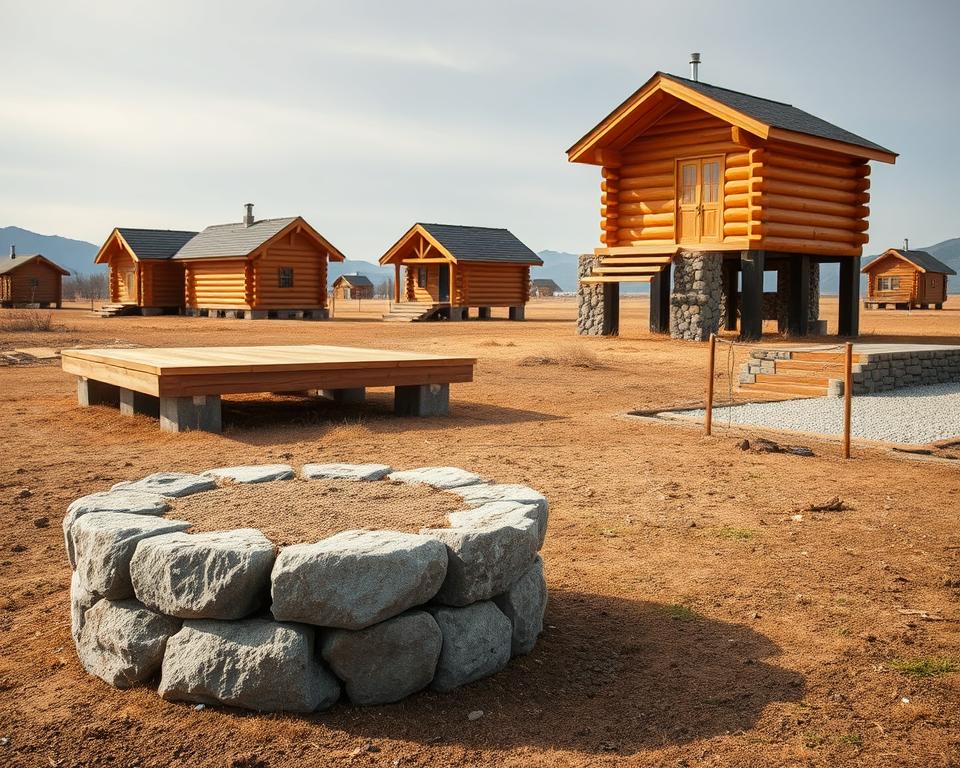
Three primary foundation systems dominate construction across the United Kingdom. Each offers distinct advantages tailored to different scenarios. Professional site assessment represents the crucial first step in selection.
Ground conditions serve as the primary determining factor. Soft or unstable terrain requires different solutions compared to firm, well-drained sites. The ideal platform provides perfect levelling and stable support for decades.
| Foundation Type | Best For Ground Conditions | Installation Time | Relocation Potential |
|---|---|---|---|
| Concrete Base | Soft, unstable terrain | Extended (curing required) | Permanent installation |
| Timber Frame | Minor irregularities | Moderate | Good flexibility |
| Ground Screws/Pillars | Sloping, difficult sites | Rapid installation | Adjustable options |
Concrete bases offer maximum permanence and excellent load distribution. However, they require significant curing time and represent fixed installations. Timber frames provide flexibility and environmental benefits, ideal for sites needing future adjustment.
Alternative systems like ground screws deliver rapid installation with minimal ground disturbance. They perform exceptionally well on challenging terrain. The perfect choice balances structural integrity with project constraints.
Exploring Concrete Bases for Log Cabins
Constructing a durable concrete base provides exceptional stability for timber structures on soft terrain. This foundation choice effectively distributes weight across unstable ground, preventing settlement issues.

Construction Techniques and Material Considerations
The process begins with creating a shuttered frame from timber or steel. Builders then lay compacted hardcore as the foundational layer, ensuring proper load distribution.
For the concrete component, two main approaches exist:
| Method | Concrete Depth | Preparation | Best Application |
|---|---|---|---|
| Monolithic Slab | 100mm minimum | Damp proof membrane + sand | Permanent installations |
| Pre-cast Slabs | Varies | Cemented on sharp sand | Simpler projects |
The concrete mix requires professional consultation to ensure proper curing. Reinforcement bars may be added for enhanced strength in challenging conditions.
Damp proofing is crucial. A membrane beneath the slab prevents moisture from reaching timber bearers. A protective sand layer prevents membrane damage during pouring.
Proper curing time is essential before installing the cabin. Rushing this stage compromises the entire foundation. The base should extend fully to support wall perimeters.
Timber Bases and Alternative Support Options
Innovative base systems deliver practical solutions for sites requiring adaptability and minimal environmental impact. These alternatives to concrete offer unique benefits for challenging terrain and specific project requirements.
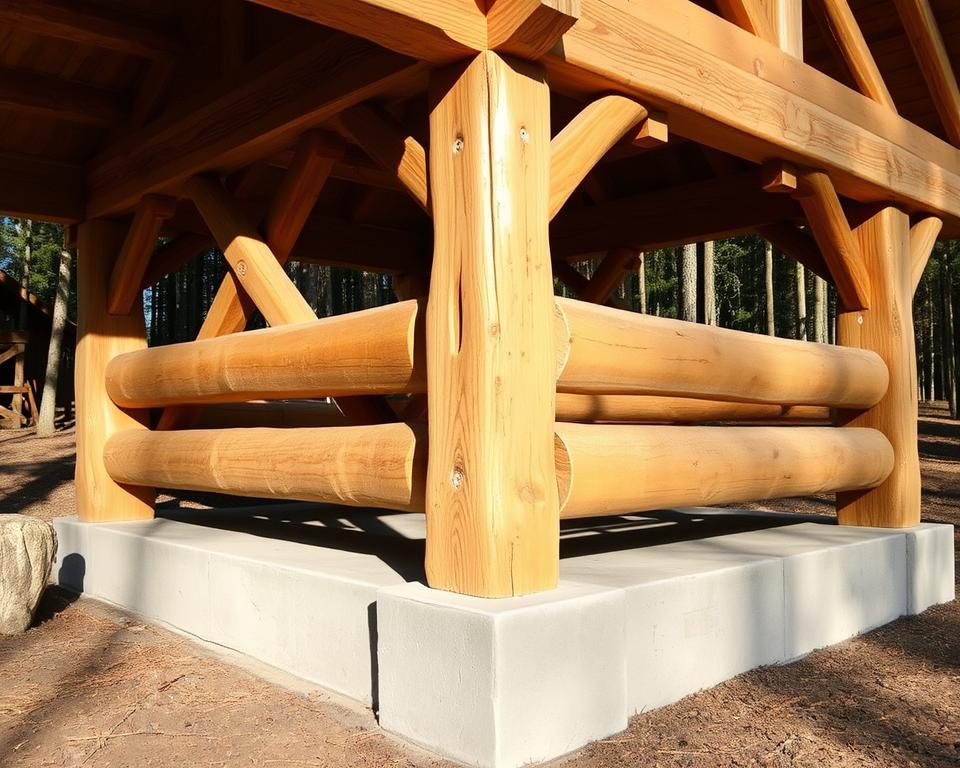
Advantages of Timber, Ground Screws, and Pillars
A timber frame base represents an eco-friendly option that elevates the structure above ground level. This design promotes vital air circulation beneath the cabin, significantly extending timber lifespan by preventing moisture accumulation.
The flexibility of timber bases allows for post-installation adjustments. Sections can be jacked up to compensate for minor subsidence or ground settlement. This makes them ideal for sites with slight irregularities.
Ground screw technology provides exceptional stability without excavation. These helical fasteners twist deep into the ground, creating solid anchor points. Installation is rapid, with construction commencing immediately after placement.
Pillar foundations excel on sloping sites where establishing a uniform level proves difficult. Concrete pad foundations topped with brickwork achieve specific heights at each corner. This system uses less material than solid concrete bases.
Comparative Analysis with Decking Solutions
Decking serves as a versatile foundation for particularly uneven ground. When built to cover a larger area than the cabin itself, it creates an attractive patio space. Properly distributed paving slabs ensure adequate load support.
This option offers excellent access underneath the structure for maintenance. The system is both affordable and environmentally conscious. Repositioning is straightforward if subsidence occurs or relocation becomes necessary.
Each alternative foundation provides distinct advantages based on site characteristics. Careful consideration of ground composition, slope, and environmental priorities guides the optimal choice.
Preparation and Levelling: Key Considerations
The final stage before construction begins involves meticulous preparation of the foundation area. Achieving a perfectly flat and stable base is an absolute requirement, not a suggestion. Modern manufacturing leaves no room for error.
High-precision CNC machinery mills each log to exact tolerances. They interlock with minimal clearance, creating a weather-tight seal. This engineering manages vertical weight superbly but cannot handle lateral forces from an unlevel base.

Site Assessment and Hardcore Preparation
A sloped surface introduces gravitational push, causing log walls to buckle and roofs to twist. This differs from a patio, which needs a slope for drainage. A cabin requires a perfectly flat slab.
Thorough ground preparation is essential. All loose soil and organic matter must be removed. The area is then filled with a compacted layer of hardcore. This creates a solid, immovable foundation that prevents slump.
Site drainage assessment is critical. Ensure surrounding raised ground does not channel water onto the slab or under the cabin. Moisture undermines stability and causes long-term damage.
Verification is the final step. The finished base must not deviate from level by more than 10mm across its entire length. Use a long spirit level and check at multiple points.
Also, confirm the base is perfectly square. Measure diagonally from corner to corner; both measurements must be equal. This ensures the cabin structure fits precisely without forcing components.
Expert Tips for Base Construction and Aftercare
Successful log cabin construction extends beyond the initial build to encompass careful planning and diligent aftercare. This phase ensures the structure’s longevity and protects the owner’s investment for many years.

Maintenance, Weatherproofing, and Longevity
Before starting the installation, always check the component list against the delivered parts. Notify the supplier immediately of any missing or damaged items. This simple step prevents costly delays mid-project.
The build process is manageable for those with good DIY skills. It requires a logical approach and basic carpentry knowledge rather than specialist training. Planning the delivery is crucial. Vehicles require kerbside access similar to a fire engine.
Health and safety rules mean drivers cannot enter your property. Ensure you have storage space ready. Allow time for inspection before booking help. Keep the transit packaging to protect materials.
After construction, immediate treatment is vital. Cabins arrive untreated, except for ground-contact bearers. Apply preservative within seven days to validate warranties and prevent damage.
| Treatment Stage | Product Type | Key Benefit | Application Area |
|---|---|---|---|
| Initial Preservation | Solvent-Based Preserver (e.g., Barrettine) | Fights fungi and insects | Exterior & Interior (two coats) |
| Final Finish | Exterior Timber Coating (e.g., Sikkens, Osmo) | UV protection & moisture control | Exterior & Interior |
Timber naturally expands and contracts with moisture changes. Untreated wood can warp, split, or bow. Quality finishes manage this movement. Sunlight causes greying, so UV protection is essential.
Seal all door and window frames with clear silicone. This prevents water ingress. Remember, the interior is classed as an exterior space. Always use exterior-grade products inside the cabin.
Conclusion
Ultimately, the longevity of any timber structure hinges on its underlying support system. The foundation represents the single most critical factor determining whether a cabin provides decades of service or becomes problematic. There exists no universal solution among available bases – the optimal choice depends entirely on specific ground conditions and project requirements.
Concrete offers permanence for soft terrain, while timber bases provide flexibility and environmental benefits. Ground screws deliver rapid installation with minimal disturbance. Regardless of the option selected, the non-negotiable requirement for levelness within 10mm remains paramount. This precision ensures proper log interlocking and structural integrity.
Proper preparation, including soil removal and hardcore installation, protects the substantial investment in quality timber. View this work as the foundation of long-term value rather than a cost to minimise. Even the best-prepared base cannot compensate for inadequate post-installation treatment and maintenance.
Armed with this expert information, readers can confidently select and prepare the ideal base for their garden cabin. Careful planning ensures these structures become valued features that enhance outdoor spaces for many years.
FAQ
Can a log cabin be built directly onto grass?
Constructing a log cabin directly onto grass is not advisable. Grass and soil compress over time, leading to an unstable foundation. This instability can cause the cabin to shift, potentially resulting in structural damage. A proper base, such as concrete or timber, ensures longevity and stability.
How thick should a concrete base be for a log cabin?
A concrete base for a log cabin should typically be at least 100mm thick. For larger cabins or those holding substantial weight, increasing the thickness to 150mm is recommended. This provides the necessary strength to support the structure securely for many years.
Are ground screws a good alternative to concrete?
Yes, ground screws offer an excellent alternative to concrete bases. They provide a strong, stable foundation with minimal ground disturbance. Their installation is quicker and often requires less excavation, making them a versatile choice for various garden landscapes.
Do I need planning permission for a log cabin base?
A> Planning permission requirements depend on the cabin’s size and intended use. Generally, smaller garden cabins fall under permitted development rights. However, it is always crucial to check with the local planning authority before starting any construction.
How long does it take for a concrete base to cure?
A concrete base requires approximately 24 to 48 hours to set sufficiently for light work. However, it needs about a week to cure properly before constructing the log cabin on top. Full strength is achieved after 28 days, but construction can proceed after the initial curing period.
Can an existing patio support a log cabin?
A> An existing patio may support a small, lightweight cabin if the patio slabs are laid on a full mortar bed and a substantial sub-base. However, it is essential to verify that the patio can bear the cabin’s load. For most situations, installing a dedicated base is the safer option.
What maintenance does a timber base require?
A timber base requires regular maintenance to ensure durability. This includes applying a wood preservative annually and checking for signs of rot or insect damage. Proper treatment helps the timber withstand moisture and decay, extending its lifespan significantly.