Expert Guide: How to Grow Plants and Vines on a Pergola
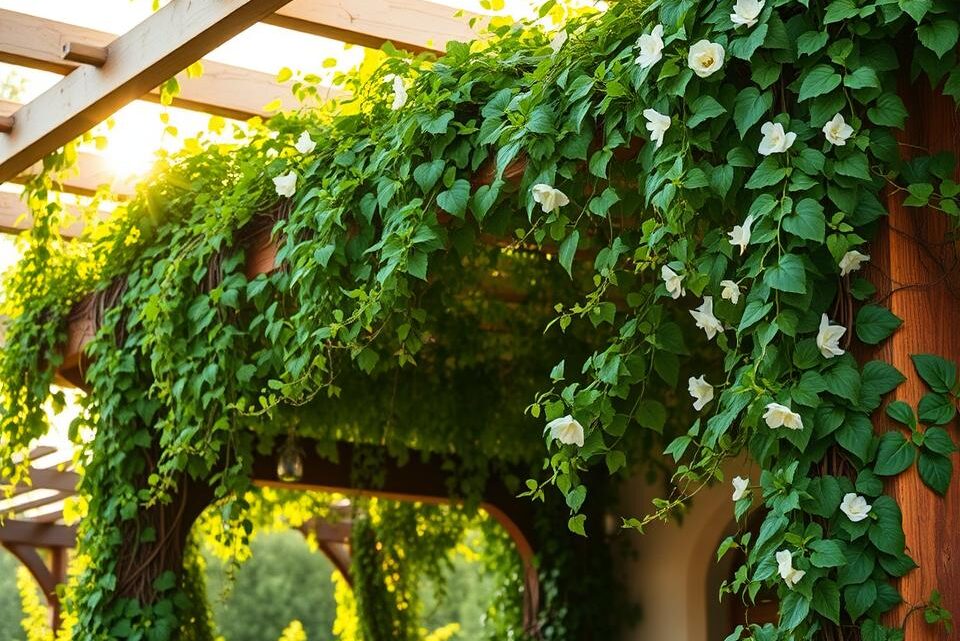
A pergola offers a fantastic opportunity to enhance any garden. This open-air structure provides a framework for creating a stunning vertical garden feature. By carefully selecting and cultivating climbing plants, gardeners can transform a simple pergola into a lush, shaded retreat.
The process involves more than just adding plants to a structure. It requires planning, from assessing the garden’s conditions to choosing the right species. This guide provides a clear path to success, whether you are a novice or an experienced gardener.
Utilising vertical space is a clever way to maximise a garden’s potential. A well-planted pergola creates a beautiful focal point that evolves with the seasons. It brings nature closer, offering a peaceful sanctuary right in your own outdoor space.
Inhaltsverzeichnis
Key Takeaways
- Pergolas serve as ideal supports for climbing plants, creating vertical interest.
- Adding suitable vegetation turns a pergola into a shaded, private garden room.
- Careful planning is essential for successful integration of plants with the structure.
- This approach is an effective method for maximising available garden space.
- The guide offers a structured approach suitable for various skill levels.
- A planted pergola creates a dynamic garden feature that changes throughout the year.
Understanding Your Pergola and Garden Environment
Before selecting any vegetation, a comprehensive evaluation of the pergola’s surroundings is essential. This preliminary assessment ensures the chosen species will thrive in their new vertical home.
Assessing Sunlight, Soil and Climate Conditions
Sunlight exposure varies significantly across different parts of the garden. Observe how light patterns change throughout the day in the pergola area. Some climbing species require full sun, while others prefer shaded positions.
Soil quality directly impacts plant health. Test drainage, nutrient levels, and pH balance around the structure. Regional climate conditions, including temperature range and rainfall, also influence which species will flourish.
Evaluating Structural Integrity and Support
The pergola must withstand considerable weight from mature vegetation. Carefully inspect posts, beams, and crossbars for strength. Identify any weak spots that could lead to structural damage.
Wooden pergolas require regular treatment to resist moisture and rot. Consider whether your structure’s materials can support the intended vegetation. Proper assessment helps prevent future issues.
How to Grow Plants and Vines on a Pergola
The success of a planted pergola largely depends on two key factors: plant selection and structural preparation. Getting these elements right from the start ensures a thriving, beautiful garden feature.
Selecting Suitable Plants and Vines
A wide range of climbers can adorn a pergola, each offering unique benefits. Flowering varieties like climbing roses and honeysuckle provide stunning colour and fragrance.
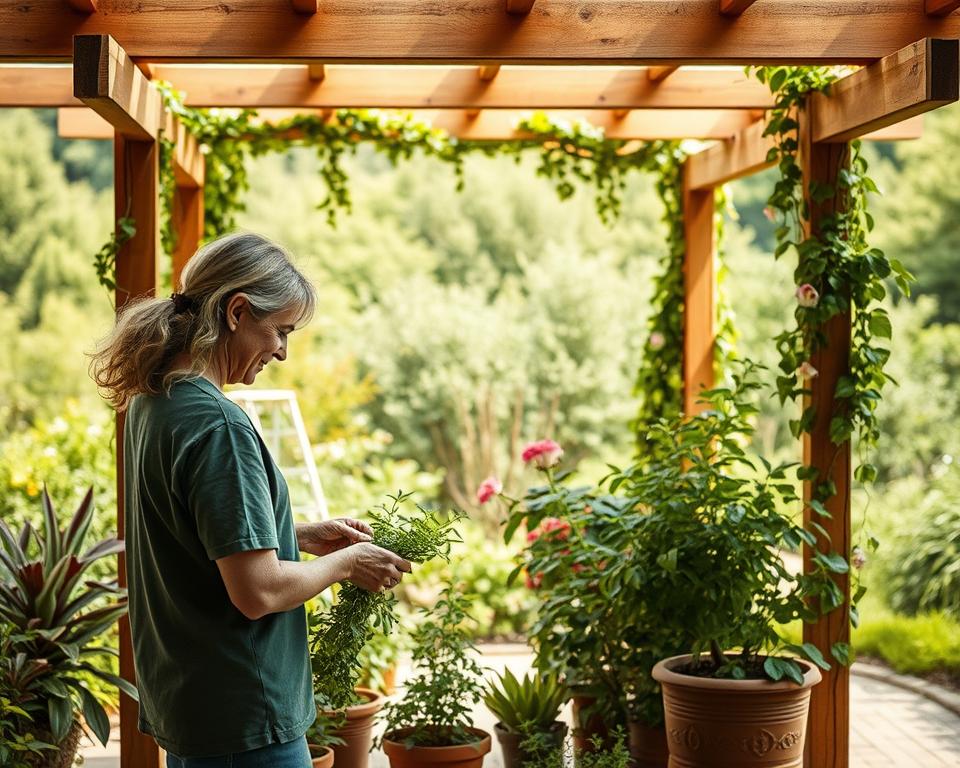
For year-round interest, evergreen clematis is an excellent low-maintenance option. Grapevines combine lush foliage with the bonus of edible fruit.
Annual climbers, such as sweet peas, offer a quick way to add seasonal colour. They are perfect for softening the look of a new structure.
| Plant Type | Key Features | Best For | Maintenance Level |
|---|---|---|---|
| Climbing Roses | Abundant flowers, romantic aesthetic | Sunny locations | Medium |
| Wisteria | Dramatic, hanging flower clusters | Creating dense shade | High (pruning) |
| Clematis | Varied flower forms, some evergreen | Shadier spots | Low |
| Grapevines | Edible fruit, Mediterranean style | Functional and decorative | Medium |
| Annual Climbers | Fast growth, seasonal colour | Quick coverage | Low |
Preparing and Enhancing the Pergola Structure
Before planting, the pergola itself needs attention. A thorough inspection for damage is crucial to support the weight of mature plants.
Installing additional supports, like trellis panels, guides growth effectively. This encourages climbers to cover the framework evenly.
For gardens with limited space, container planting is a smart solution. Compact varieties can flourish in pots placed at the base of the posts.
Planting Techniques and Training Methods
Effective establishment of pergola climbers depends on appropriate planting strategies and guidance systems. The choice between container and ground planting affects long-term maintenance and growth patterns. Proper training ensures vegetation covers the structure evenly while maintaining plant health.

Planting in Containers Versus Garden Beds
Container planting offers flexibility for gardens with limited space or poor soil conditions. Select pots with adequate drainage holes and use quality compost formulated for specific plant needs. Loam-based mixes like John Innes No. 2 retain moisture effectively.
Ground planting provides more root space for vigorous climbers. Ensure soil has good drainage properties to prevent waterlogging. Position plants close to upright supports on sunny aspects where most climbing varieties thrive.
Training Vines with Supports and Trellises
Gentle guidance encourages natural climbing behaviour without damaging plant tissue. Use soft ties or clips to secure vines loosely to pergola structures. Avoid tight binding that restricts growth and causes constriction.
Provide additional support with trellis panels, netting, or vertical wires held by vine eyes. Natural options like pea sticks create authentic garden aesthetics. Annual climbers can weave through established vegetation without extra help.
| Method | Best For | Soil Requirements | Maintenance Level |
|---|---|---|---|
| Container Planting | Limited space, poor soil areas | Quality potting compost | Medium (regular watering) |
| Ground Planting | Vigorous growers, permanent features | Well-draining garden soil | Low (established plants) |
| Mixed Approach | Combining annuals with perennials | Adapts to plant needs | Variable |
Maintenance, Pruning and Enhancing with Climbers
Proper maintenance transforms pergola climbers from mere vegetation into stunning garden features. Consistent attention ensures healthy development and abundant displays throughout the growing season.
Watering, Feeding and Fertiliser Guidance
Regular watering maintains consistent moisture levels essential for vigorous growth. Check soil moisture by feeling the top inch – water deeply when dry. During active periods, climbers require ample hydration.
Supplemental feeding every two weeks during the growing season replenishes soil nutrients. This promotes abundant flowers and healthy foliage. Balanced fertiliser supports continuous development.
Pruning, Pest Control and Seasonal Adjustments
Pruning controls size and encourages healthy development. Remove dead or damaged foliage to improve air circulation. This reduces disease risk and maintains attractive shapes.
Monitor for common pests like aphids and fungal issues. Use environmentally friendly control methods when needed. Seasonal adjustments accommodate changing growth patterns throughout the year.
Pinching new growth tips creates better shapes and multiplies flowering shoots. Well-maintained climbers provide months of colourful display, often continuing until autumn frosts.
Conclusion
Integrating climbing species into a pergola design transforms an ordinary garden structure into a vibrant, living feature. This approach elevates the entire outdoor area, creating a secluded sanctuary. Gardeners achieve a beautiful blend of form and function.
Following the steps in this guide ensures a successful project. From initial assessment to ongoing care, each phase is manageable. The right choices lead to a stunning vertical garden.
A diverse range of climbers exists for every preference. Options include fragrant flowering varieties like wisteria or productive grapevines. Evergreen clematis offers year-round foliage.
Proper preparation prevents structural damage from plant weight. Matching species to local conditions supports healthy growth. Consistent maintenance keeps the display looking its best.
The enhanced pergola becomes a cherished focal point. It provides shade, attracts wildlife, and maximises space. This rewarding project brings lasting enjoyment to any garden.
FAQ
What are the best plants for a pergola?
Excellent choices include flowering climbers like clematis and wisteria for colour, or grapevines for foliage and fruit. The selection depends on sunlight levels, local climate, and desired maintenance. It is essential to consider the plant’s mature weight to ensure the garden structure can support its growth.
Can I grow plants on a wooden pergola?
A>Yes, a wood pergola is an ideal support structure for many climbing plants. To protect the wood from moisture damage, proper care is recommended. Using trellis panels or wires can help guide the vines and minimise direct contact, preserving the pergola’s integrity over time.
How do I train a vine to climb my pergola?
Training involves gently tying new growth to the structure using soft ties. Providing initial support with a trellis or wires helps guide the plant upwards. Regular, light pruning encourages the vine to fill the designated space effectively.
Is it better to plant in the ground or in pots?
Planting directly into garden beds offers more soil volume and moisture retention, which is beneficial for vigorous climbers. Containers or pots provide flexibility and are a good solution for patios or areas with poor soil, though they require more attentive watering.
How much maintenance do pergola plants require?
Maintenance varies by species but generally includes regular watering, seasonal feeding with fertiliser, and annual pruning to control growth and encourage flowering. Pest control may also be necessary to keep the plants healthy and the structure clear.